 EN
EN
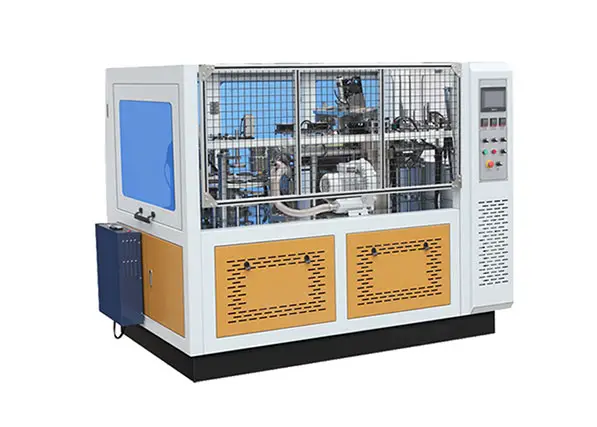
In the fast-paced world of modern industrial manufacturing, the ability to scale production while maintaining uncompromising quality is the defining factor of success. For businesses dealing with paper-based materials, the shift from traditional, labor-intensive methods to high-performance automatic paper roll die cutting machines is a strategic necessity. Large-volume production environments demand systems that offer both speed and reliability. As market demand fluctuates, the capacity to deliver massive batches without compromising precision becomes a significant competitive advantage. Automatic roll die cutting technology serves as the backbone of modern production lines, transforming how manufacturers approach high-throughput requirements and overall operational efficiency in an increasingly demanding global market.
Engineering Precision and System Reliability in High-Throughput Operations
At the core of an effective large-volume production line is the ability to maintain consistency at speed. Advanced paper roll die cutting machines are engineered with sophisticated programmable logic controllers (PLC) and high-performance sensors that monitor every aspect of the feeding and cutting process in real-time. Unlike manual or semi-automatic alternatives, these systems allow for rapid adjustments and sustained high-speed operation. The mechanical architecture is designed to handle continuous stress, ensuring that the machine remains stable even during 24/7 manufacturing cycles. By utilizing heavy-duty components and precision-balanced cutting dies, these machines eliminate the common vibrations and misalignments that plague lower-tier equipment. This engineering focus ensures that every piece—from the first to the hundred-thousandth—is cut to exact specifications, effectively standardizing the output across entire production runs.
Optimizing Throughput and Reducing Unit Costs Through Automation
Scaling production often leads to concerns regarding rising labor costs and potential operational bottlenecks. However, high-volume automated machinery is specifically designed to alleviate these pressures. By integrating automated roll-feeding and waste-stripping systems, Ruida equipment significantly reduces the need for manual handling, allowing a single operator to supervise multiple machines simultaneously. This increase in throughput, combined with the reduction of idle time, drastically lowers the cost per unit. Businesses that invest in these specialized machines find that the initial capital expenditure is quickly offset by the gains in production volume and the minimization of raw material waste. This operational agility is crucial for companies operating in sectors where profit margins are tied directly to speed and efficiency, making automation the most viable path to scalable growth.
Maintaining Unwavering Quality Control in Mass Manufacturing
Large-volume manufacturing often suffers from quality degradation caused by worker fatigue or inconsistent manual feeding. Automated die cutting technology mitigates these issues by enforcing a strict, standardized process. The integration of intelligent vision systems and tension-control mechanisms ensures that material alignment is perfect throughout the entire roll, regardless of the thickness of the paper or the complexity of the die shape. When a system removes the variability of human intervention, manufacturers can deliver a uniform product quality that satisfies even the most demanding international industry standards. This level of consistency is vital for maintaining brand reputation, as it ensures that clients receive products that match their design requirements exactly, every time, without the risk of batch-wide defects or costly re-processing that often burdens smaller, inefficient operations.
Strategic Sustainability and Long-Term Operational Health
Equipment reliability is the cornerstone of any sustainable manufacturing strategy. When purchasing for high-volume environments, durability and ease of maintenance are as critical as raw production speed. Ruida designs machinery with a focus on modularity and accessibility, ensuring that routine maintenance can be performed efficiently without extensive downtime. This proactive approach to machine maintenance prevents unplanned failures, which are the primary cause of production delays and profit loss. By partnering with a manufacturer that prioritizes long-term operational health, businesses secure a reliable asset that will contribute to their manufacturing capacity for years, rather than a short-term tool that requires frequent replacement. This long-term focus directly enhances the company’s bottom line by lowering the total cost of ownership.
The Ruida Advantage in Manufacturing Support and Global Integration
The value of a paper roll die cutting machine extends far beyond the hardware itself; it relies on the depth of technical support provided by the manufacturer. Ruida distinguishes itself in the global market by providing not just cutting-edge technology, but a comprehensive understanding of the entire manufacturing lifecycle. From initial equipment installation and operator training to long-term supply chain integration and readily available spare parts, the focus is on enabling clients to achieve seamless production. By leveraging advanced engineering and a deep commitment to technical excellence, Ruida empowers manufacturers to overcome the challenges of large-volume production and transition into a more efficient, profitable, and technologically advanced future. Through collaborative engineering, Ruida ensures that every factory floor is optimized for peak performance, enabling global brands to deliver quality consistently and reliably.
Table of Contents
- Engineering Precision and System Reliability in High-Throughput Operations
- Optimizing Throughput and Reducing Unit Costs Through Automation
- Maintaining Unwavering Quality Control in Mass Manufacturing
- Strategic Sustainability and Long-Term Operational Health
- The Ruida Advantage in Manufacturing Support and Global Integration