
 EN
EN

Cup machine built for multi specification paper vessel output
A cup machine is often described as either automatic or high speed, but that description does not answer the practical question behind a multi-specification project: can the platform repeatedly form the paper vessels you plan to sell, using the paper stock and production rhythm you actually have? From a packaging-equipment selection perspective, start with cup geometry, material and changeover requirements; only then compare configurations.
That order matters because a nominal cup volume does not fully define a vessel. Diameter, height, bottom profile, rim, sleeve requirement, paperboard construction and printing layout all affect the forming process. A paper drinking cup apparatus that makes one familiar size well is not automatically the right cup machine for a broader mix of hot-drink, cold-drink, sampling or food-service vessels.
Define multi-specification output before choosing a cup machine
Write the output brief as a set of finished-vessel requirements rather than a short list of ounce sizes. For every proposed cup, record the top and bottom diameters, height, rim style, bottom shape, paper stock, coating or barrier treatment, intended fill condition and print layout. This gives a supplier and your production team a workable basis for deciding which tooling and process settings need verification.
For example, public paper-cup references commonly group products into familiar 8 oz, 12 oz and 16 oz examples, yet even cups with a similar stated volume can have different diameters and heights. The useful conclusion is not that a particular mold will cover every size. It is that tooling compatibility must be checked against the full drawing and material specification.
Separate the forming process from printing and filling equipment
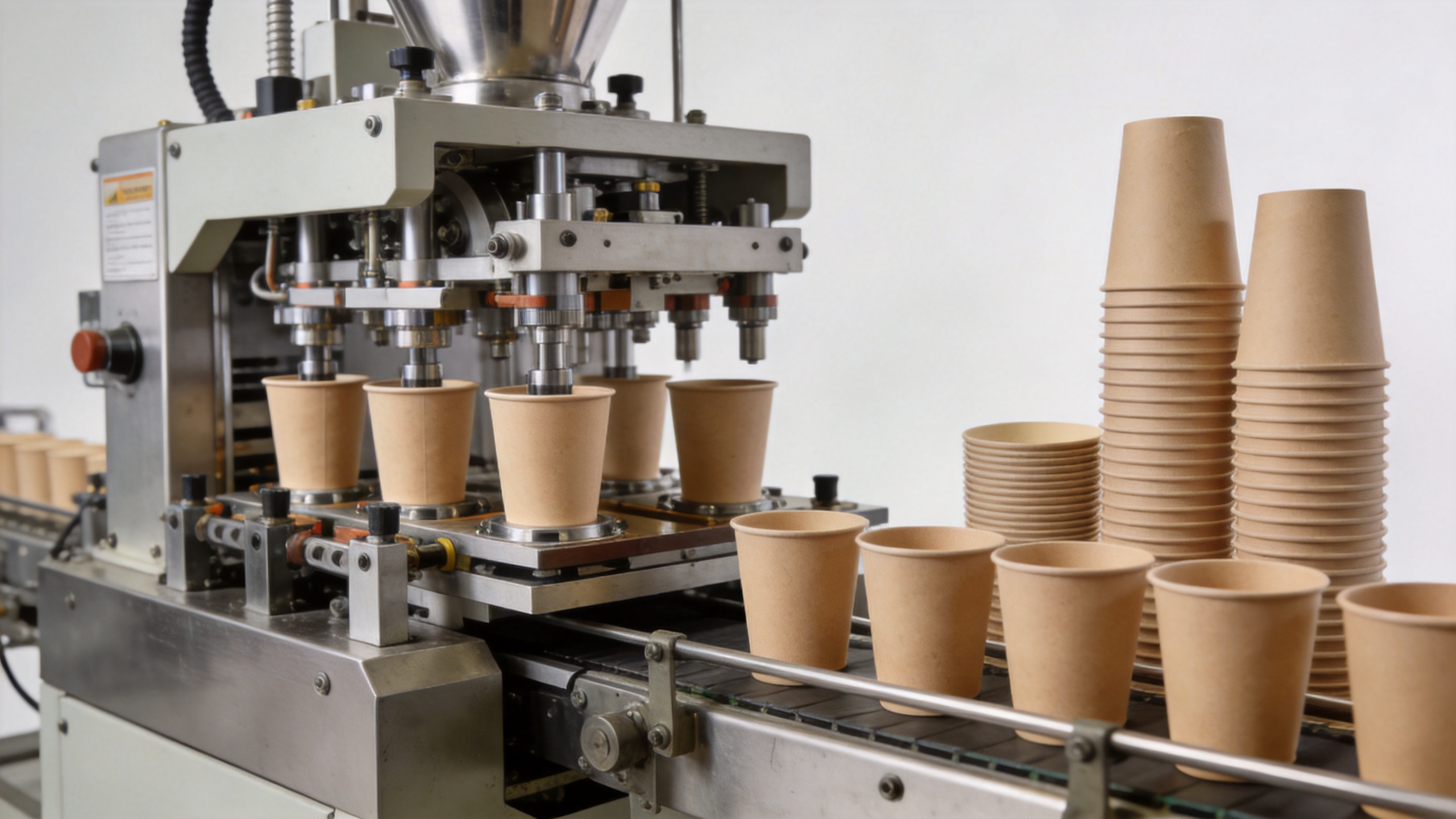
Search results for “cup machine” can mix paper-cup forming lines with K-cup filling and sealing systems. They serve different processes. A cup machine for paper vessels forms a sidewall from a prepared blank, joins the seam, forms and attaches the bottom, heats or seals relevant areas, then ejects the formed cup. A filling system handles product dosing and closure. Keeping these categories separate prevents a scope gap in the purchase brief.
The same distinction applies to a cup printing machine. Printing may be an upstream operation that prepares paper blanks or rolls before forming. If branded graphics, registration tolerance or multiple designs are important, map the handoff between the cup printing machine and the forming operation. Ask how blank orientation, print registration, storage and inspection will be controlled rather than assuming that “printed cups” are covered by the former alone.
Match tooling and changeover to the product plan
A multi-specification cup machine is a system of base platform, forming stations, tooling, material settings and operating procedures. The changeover question is therefore more useful than a generic claim of flexibility. Ask which components change between vessel families, how those components are identified, what adjustments remain, and what trial or acceptance process confirms a stable result after a change.
| Requirement to confirm | Why it affects multi-specification output | Useful evidence to request |
|---|---|---|
| Finished cup drawing | Volume alone does not define the forming geometry. | Approved dimensions and tolerance notes for each vessel. |
| Paper and barrier construction | Material behavior can affect heating, sealing and forming settings. | Paper specification, samples and a planned trial scope. |
| Mold and tooling set | Different diameters, heights or bottoms may require different tooling. | A tooling list showing what is included and what changes. |
| Changeover method | Frequent size changes can affect usable production time and traceability. | A documented changeover sequence and operator checklist. |
| Downstream handling | Counting, packing and inspection must suit each cup format. | Layout discussion and sample-handling review. |
Evaluate a paper drinking cup apparatus as a production workflow
It is tempting to compare a paper drinking cup apparatus by a single hourly figure. However, the more reliable question is what conditions support the stated output for the selected cup and paper. Different vessel geometries, materials, changeovers, operator routines and downstream interruptions can alter the production rhythm. Ask suppliers to state the conditions behind any quoted capability and include the intended cup set in the acceptance discussion.
Before approving the configuration, create a short validation sequence: run representative blanks; inspect side seams, bottoms and rims; confirm cup shape and stackability; review rejected pieces; and check whether the handoff to counting or packing is stable. This is not a substitute for your own product-quality requirements. It is a way to make the cup machine evaluation specific to the output you intend to make.
Include food-contact and market requirements early
For food-service vessels, equipment selection cannot replace material compliance. The paper, coating, inks and other materials in contact with food need to be reviewed for the target market and intended use. If you place products on the EU market, the European Commission identifies Regulation (EC) No 1935/2004 as the framework for food-contact materials. Confirm the applicable obligations for your complete material system with the relevant supplier and compliance adviser; do not infer compliance from the cup machine alone.
Questions to put in the supplier brief
- Which exact vessel drawings and paper constructions are included in the proposed scope?
- Which molds, forming parts and settings change for each specification?
- What must be confirmed through samples or trials before finalizing the cup machine?
- How will the cup printing machine or blank-printing workflow align with the forming process?
- What inspection points will be used for seam quality, bottom formation, rim shape and appearance?
- What spare, tooling and training items are needed to keep future specification changes manageable?
Build the decision around verification, not assumptions
A cup machine built for multi specification paper vessel output should be selected as a verified fit between product drawings, material, tooling and operating workflow. Start with the vessel family, define the print and material handoffs, then review changeover and acceptance evidence. That approach gives purchasing, technical and production stakeholders a shared checklist—and makes it easier to distinguish a useful flexible platform from a broad claim that has not been tested against your actual cups.
 ONLINE