
 EN
EN

Key Structural Features of High Speed Cup Manufacturing Machine
A high-speed cup manufacturing machine is easier to evaluate when you look beyond a headline output figure. In paper-cup production, the structure must keep material handling, forming, sealing, and discharge synchronized through every cycle. From a packaging-equipment selection perspective, start with the cup format, paper or coated-board condition, and planned production rhythm; then compare the configuration. This sequence is more useful than treating speed as a stand-alone promise.
The core modules generally include the frame and base, material feed, heating or sealing area, forming stations, bottom-making and knurling section, and control system. The exact layout varies by machine and cup specification, so every feature below should become a question for technical confirmation rather than an assumed model specification.
1. Rigid frame and indexed drive layout
The frame is the reference structure for a cup manufacturing machine. It supports the forming stations and helps keep their relative positions stable while the machine cycles. A sound base, guarded transmission area, and accessible adjustment points make alignment easier to inspect during commissioning and routine maintenance.
For high-speed work, ask how the main motion is indexed and where timing adjustments are made. Mechanical cams, gear trains, and servo-driven axes can all be used in cup equipment, but their suitability depends on the cup geometry, material, target rhythm, and maintenance capability. More accurately, no drive concept is automatically better without those operating conditions. Request a station layout and identify which movements are mechanically linked and which are independently controlled.
2. Blank feeding and sidewall handling
Stable feeding is the first structural requirement for consistent forming. The feed section of a cup manufacturing machine should separate blanks, present them at a repeatable position, and transfer them without scuffing or skewing the printed or coated surface. Guides, magazine adjustment, sensors, and transfer fingers all matter because a small positioning error can follow the blank into the side-seam and bottom-forming stages.
During a supplier discussion, provide the blank dimensions, board grade, coating type, print coverage, and allowed tolerances. Then ask for a live run or acceptance plan using comparable material. This is particularly important where frequent cup-size changes are planned: quick adjustment is valuable only if the setup can be repeated and verified.
3. Side-seam heating or sealing station
The sidewall seam is where material behavior meets machine structure. Depending on the cup material and process, a cup manufacturing machine may use a heat-based or ultrasonic approach to prepare and seal the side seam. Retrieved technical material highlights consistent heat sealing as an important factor in liquid-tight paper-cup joints, but it does not make one method universally correct.
Look for guarded heating zones, clear access for inspection, and controls that can be checked against the material supplier’s recommendations. Ask which parameters are adjustable, how seam quality is monitored, and how the machine responds if a blank is misfed. A dependable seam station should support repeatable setup; it should not force operators to chase variations caused upstream by poor blank presentation.
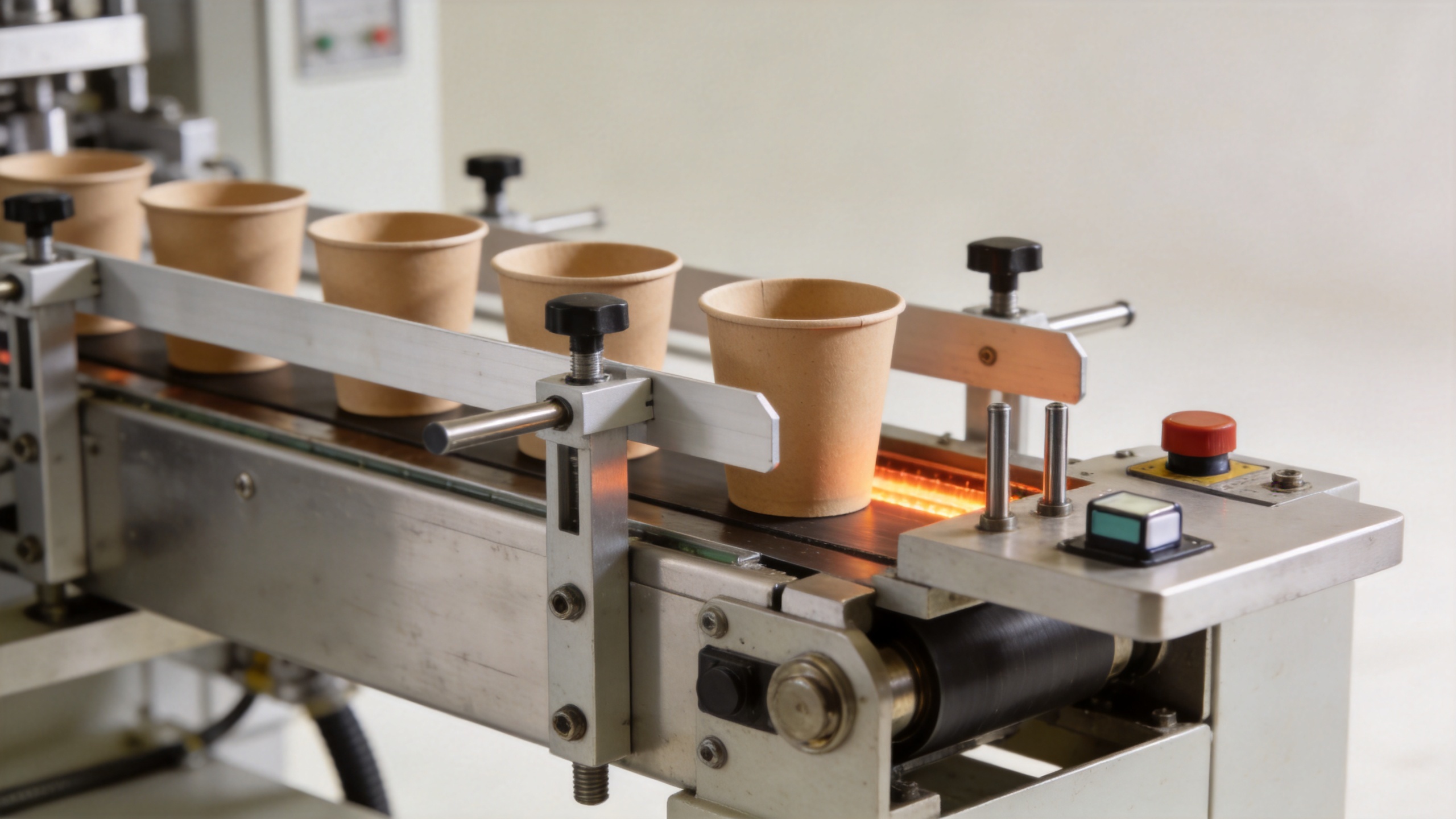
4. Forming turret, mandrels, and bottom insertion
The forming section turns a prepared sidewall into a cup body and brings the bottom blank into position. Structural accuracy here comes from the relationship among the turret or indexing mechanism, mandrels, bottom-feed components, and guides. The question is not simply how many stations a machine has. It is whether each handoff is controlled well enough for the intended diameter, height, taper, and paperboard stiffness.
When comparing equipment, ask to see the change parts associated with your cup size and the process used to confirm their fit. A machine can look fast on a demonstration cup yet need a different setup for another rim shape or bottom diameter. If the cup format and paper material are already confirmed, this comparison becomes far more meaningful.
5. Bottom preheating, folding, and knurling
Bottom-making is a sequence, not a single contact point. In many paper-cup processes, the bottom is positioned, prepared for bonding, folded into the body, and knurled. Retrieved process descriptions identify bottom knurling as a stage that reinforces the connection between the cup wall and bottom. That makes the geometry and adjustment of this station a practical inspection item for a high-speed cup manufacturing machine.
Ask how temperature, pressure, dwell, and knurling settings are matched to the cup material. Also ask how operators inspect seal consistency and how rejected cups are handled. These questions connect a structural feature to an acceptance condition rather than treating a knurling tool as a marketing label.
6. Rim curling, discharge, and downstream rhythm
After the bottom is completed, a cup usually passes through rim curling and discharge. The curl tooling needs to suit the finished rim profile, while the discharge path must move cups away without crushing or nesting them incorrectly. At this point, move the discussion from single-machine speed to line rhythm. A high-speed cup manufacturing machine can only deliver useful throughput if collection, inspection, packing, and any downstream handling can accept the same rhythm.
For operations considering a cup filler packaging machine after cup production, define the handoff condition early. Confirm whether cups will be accumulated, sleeved, conveyed, or manually transferred, and whether the dimensional and cleanliness requirements of the filling stage affect the forming-machine setup. The two machines should be assessed as connected process steps, not as unrelated purchases.
7. Electrical cabinet, sensors, and control architecture
The control architecture coordinates each structural module. A clear electrical cabinet layout, documented sensor positions, fault indications, safety interlocks, and accessible diagnostics can reduce the time required to identify a process interruption. Servo systems may allow more independent station control in some designs, while conventional transmission systems may be appropriate in others; the right choice depends on the cup range and the support resources available.
Ask a cup filling and sealing machine manufacturer or cup-forming-equipment supplier to explain the control boundaries in plain terms: which station alarms stop the machine, what settings are recipe-based, and what maintenance checks are required after a format change. It is also reasonable to request electrical drawings, a spare-parts list, and an agreed acceptance checklist before final selection.
Structural review checklist before you compare quotations
- Confirm the target cup diameter, height, taper, rim profile, and bottom geometry.
- Provide paperboard grade, coating, blank tolerances, and artwork or print constraints.
- Review the feed path, side-seam station, forming mandrels, bottom process, rim tooling, and discharge route in order.
- Ask which adjustments are mechanical, which are parameter-based, and how settings are recorded for repeat production.
- Define inspection criteria for seams, bottom integrity, rim finish, cup dimensions, and rejected pieces.
- Map the output to any cup filler packaging machine, packing equipment, or manual collection process downstream.
- Request evidence for the proposed configuration with comparable material and cup geometry, rather than relying on a generic speed claim.
Conclusion
The most important structural features of a high-speed cup manufacturing machine are the ones that preserve control at every handoff: a stable frame, reliable blank feed, compatible seam preparation, accurate forming and bottom-making stations, protected curling and discharge, and an understandable control system. Reviewing these modules in process order gives buyers a better basis for selection than comparing output figures alone. Before committing to a configuration, turn each module into a documented question tied to your cup specification, material, quality checks, and downstream production plan.
 ONLINE