
 EN
EN

Paper cup making machine to craft custom paper drinkware
Custom paper drinkware starts with more than a logo or a cup size. A paper cup making machine has to turn approved paper stock and prepared blanks into a cup shape that suits the drink, the customer experience, and the production plan. From a packaging-equipment selection perspective, the sensible order is simple: define the cup, paper, and production rhythm first; then compare configurations.
That approach matters when the range includes hot coffee cups, cold-drink cups, branded takeaway cups, or insulated ripple designs. A machine may be capable of forming paper cups in general, but the useful question is whether its forming process, tooling, heat settings, and handling sequence fit the drinkware you actually intend to supply.
Start with the drinkware brief, not a speed claim
Before reviewing a paper cup making machine, write a short production brief. List the cup’s rim diameter, bottom diameter, height, nominal volume, paperboard type, coating or barrier requirements, and whether the design needs a single wall, an outer sleeve, or a ripple wall. This moves the conversation away from a generic “high-speed” request and toward the conditions that affect forming quality.
For custom work, include the artwork process too. Decide whether printed cup fans will arrive ready for forming, how registration and seam placement will be checked, and how many cup sizes or designs will need changeovers. If paper stock and cup geometry are already confirmed, a configuration discussion becomes much more meaningful. If they are not, treat proposed settings as points to verify rather than promises of final output.
- Drink use: hot beverages, cold beverages, sampling, takeaway, or event service.
- Construction: single-wall, double-wall, ripple-wall, or a cup plus separate sleeve.
- Material: board grade, coating system, blank stiffness, and food-contact documentation needed for the destination market.
- Operations: planned shifts, operator training, inspection method, and expected changeover frequency.
Map cup geometry to the forming process
A paper cup is made from a sidewall blank and a bottom blank that must be positioned, sealed, and shaped consistently. For that reason, cup dimensions are not simply artwork specifications; they influence the tooling and process checks for a paper cup making machine. A buyer should ask how the proposed setup will be validated for the chosen rim curl, bottom seam, side seam, and finished stack handling.
It is helpful to review the process in stages: blank feeding, sidewall forming, bottom insertion, heating and sealing, knurling, rim curling, and collection. The exact arrangement varies by machine design, so it should not be assumed from a catalog image. Instead, ask the supplier to relate each stage to your cup drawing and paper sample. This is especially valuable when a new cup shape or a heavier board is involved.
One practical shift in thinking is to move from comparing one machine number to checking the whole production rhythm. A forming station can be only one part of the job. Blank supply, inspection, packing, and the availability of correctly prepared materials may set the pace just as often.
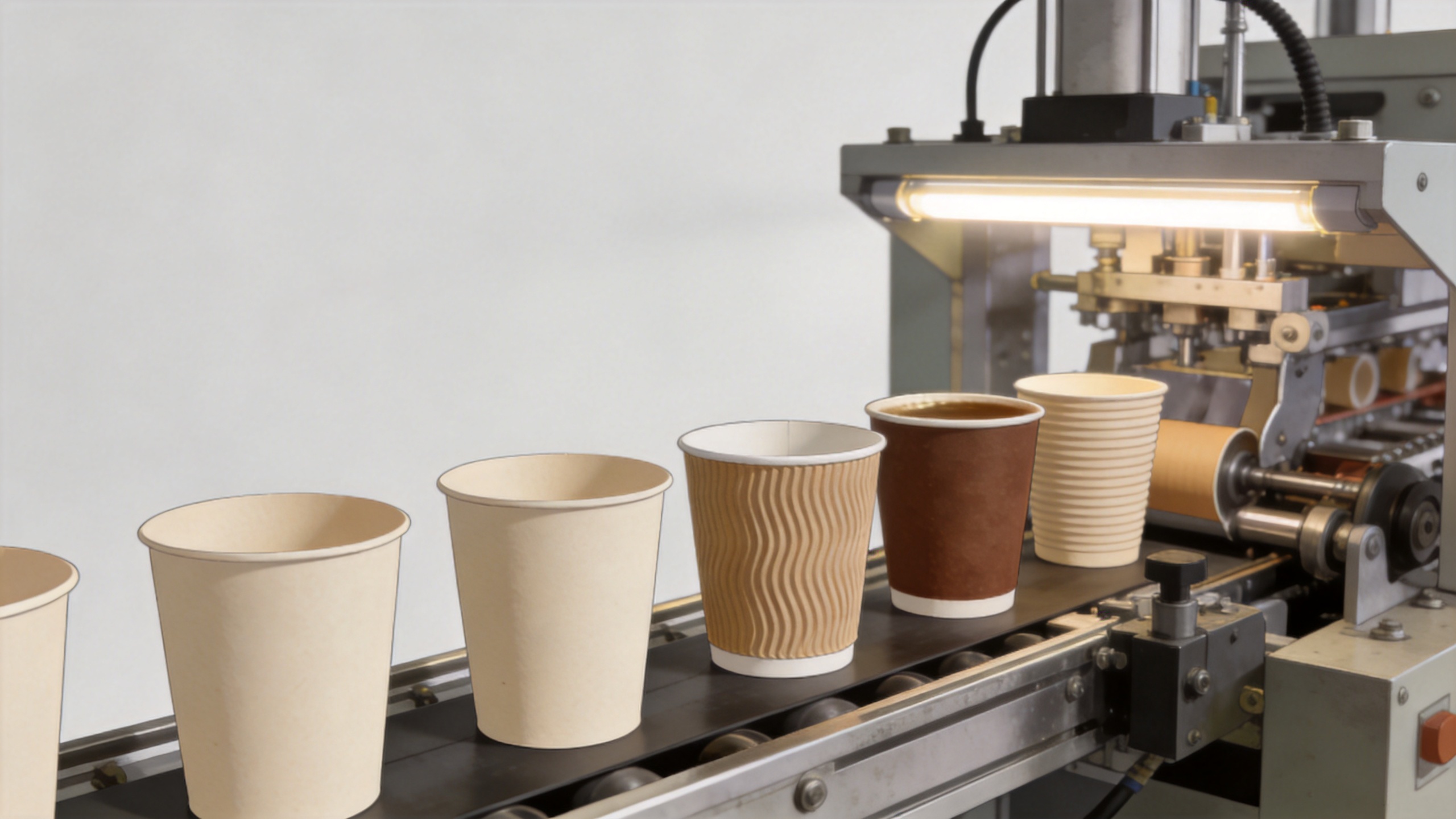
Planning a coffee paper cup making machine project
A coffee paper cup making machine project should begin with the beverage conditions rather than a decorative finish. Hot drinks can make customers more sensitive to insulation, grip, seam integrity, and lid fit. The cup producer therefore needs to confirm the intended paperboard, coating, cup structure, and testing routine with the material supplier and the relevant market requirements.
For United States-bound paper and paperboard components, 21 CFR 176.170 is a useful item for the material-compliance checklist because it addresses paper and paperboard components intended for contact with aqueous and fatty foods. For EU-bound drinkware, Regulation (EC) No 1935/2004 provides general food-contact material safety principles. These references do not certify a cup or a machine by themselves. They are prompts to verify the finished material system, documentation, and destination-market responsibilities before commercial production.
When discussing a coffee paper cup making machine, ask for a trial plan that covers the exact cup sample. Check seam appearance, bottom bonding, rim quality, nesting, and handling after the cup has cooled. If the product will use lids, include a lid-fit check in the acceptance plan. Small details discovered before a run are easier to resolve than repeat issues found after printed blanks have been committed.
When a ripple paper cup making machine is the right direction
A ripple paper cup making machine is relevant when the finished drinkware needs an insulating outer texture or a ripple-style construction. However, “ripple” can describe different production approaches. Some programs form an inner cup and add a separate outer layer; others rely on a distinct converting or assembly sequence. Clarify the intended construction before selecting equipment or estimating labor and materials.
For a ripple paper cup making machine discussion, separate these questions:
- Is the outer layer formed on the same equipment, a linked process, or a separate operation?
- Which parts require dedicated tooling for the cup size and texture?
- How will the inner cup and outer layer be aligned and inspected?
- What changeovers are expected when graphics, sizes, or board specifications change?
- What samples will be approved before the project moves to routine production?
This distinction prevents an otherwise common mistake: treating a ripple cup as a standard single-wall cup with a different print design. The material flow, inspection points, and quotation scope may be different.
Build a realistic validation plan
The most useful paper cup making machine evaluation ends with a written validation plan. Include the cup drawing, approved blank specification, target material supplier, tooling list, quality criteria, and operator responsibilities. Ask which items require confirmation during a trial and which details must be agreed before equipment is built or shipped.
| Checkpoint | Why it matters | What to confirm |
|---|---|---|
| Blank and paperboard | Material behavior affects forming and sealing. | Dimensions, grain direction if applicable, coating system, and approved documentation. |
| Cup tooling | Tooling has to suit the requested geometry. | Sizes, drawings, change parts, and trial samples. |
| Process acceptance | A visual check alone may miss an issue. | Seam, bottom, rim, nesting, print position, and any agreed leak or lid-fit checks. |
| Production handoff | Stable running depends on people and workflow. | Training, maintenance points, spare-parts discussion, and packing flow. |
Choose a supplier conversation that produces usable answers
ZheJiang RUIDA Machinery Co.,Ltd focuses on paper-cup and food-packaging equipment. For a custom drinkware inquiry, the most productive first conversation is one built around your cup drawings, materials, and changeover needs—not an assumption that one standard configuration solves every job. Share the intended application, destination market, and sample requirements, then ask for the points that need technical confirmation.
A good brief also helps compare proposals fairly. Rather than choosing solely by a headline speed or a broad machine label, compare what each proposal says about cup range, tooling, materials, process verification, operator workflow, and support needed for your own program.
Final takeaway
A paper cup making machine can support custom paper drinkware when the cup design, material system, tooling, and production workflow are evaluated together. For coffee cups, focus on beverage conditions and food-contact verification. For ripple cups, define the insulation construction and assembly sequence early. In every case, use samples and a documented acceptance plan to turn a general equipment inquiry into a practical manufacturing decision.
 ONLINE