
 EN
EN

What Defines a Cup Machine for Disposable Vessel Fabrication?
A cup machine is more than a device that turns a paper blank into a container. In disposable vessel fabrication, it is the coordinated set of stations that feeds material, forms a sidewall, joins a bottom, seals critical seams, shapes the rim, and releases a cup that can move into inspection or packing. From a packaging-equipment selection perspective, the useful definition starts with the intended vessel: its diameter, height, bottom profile, paperboard, coating, use temperature, and required production rhythm.
That distinction matters because two machines may both be described as automatic paper cup equipment while serving very different production conditions. A reliable comparison asks what the machine must form, what material behavior it must manage, and how consistently it must repeat the process. Speed is important, but it is only one part of the answer.
A cup machine is a forming system, not just a speed rating
At its core, a cup machine converts die-cut sidewall and bottom blanks into a finished disposable vessel through a controlled sequence. Exact layouts vary by manufacturer and cup design, yet the working logic is familiar: the sidewall blank is fed and wrapped, the longitudinal seam is sealed, the bottom is inserted and joined, and the top rim is curled or finished. Handling, heating, tooling, and timing all affect the outcome.
For that reason, an equipment description should identify the forming task before it highlights a headline output figure. A machine intended for a straight-wall hot-drink cup may need different tooling, heating conditions, or downstream handling than equipment for a tall cold-drink cup, a bowl-shaped container, or a cup with an insulating outer sleeve. If paperboard and cup geometry are already confirmed, a capacity comparison becomes more meaningful. If they are not, the same capacity claim may not describe the same production reality.
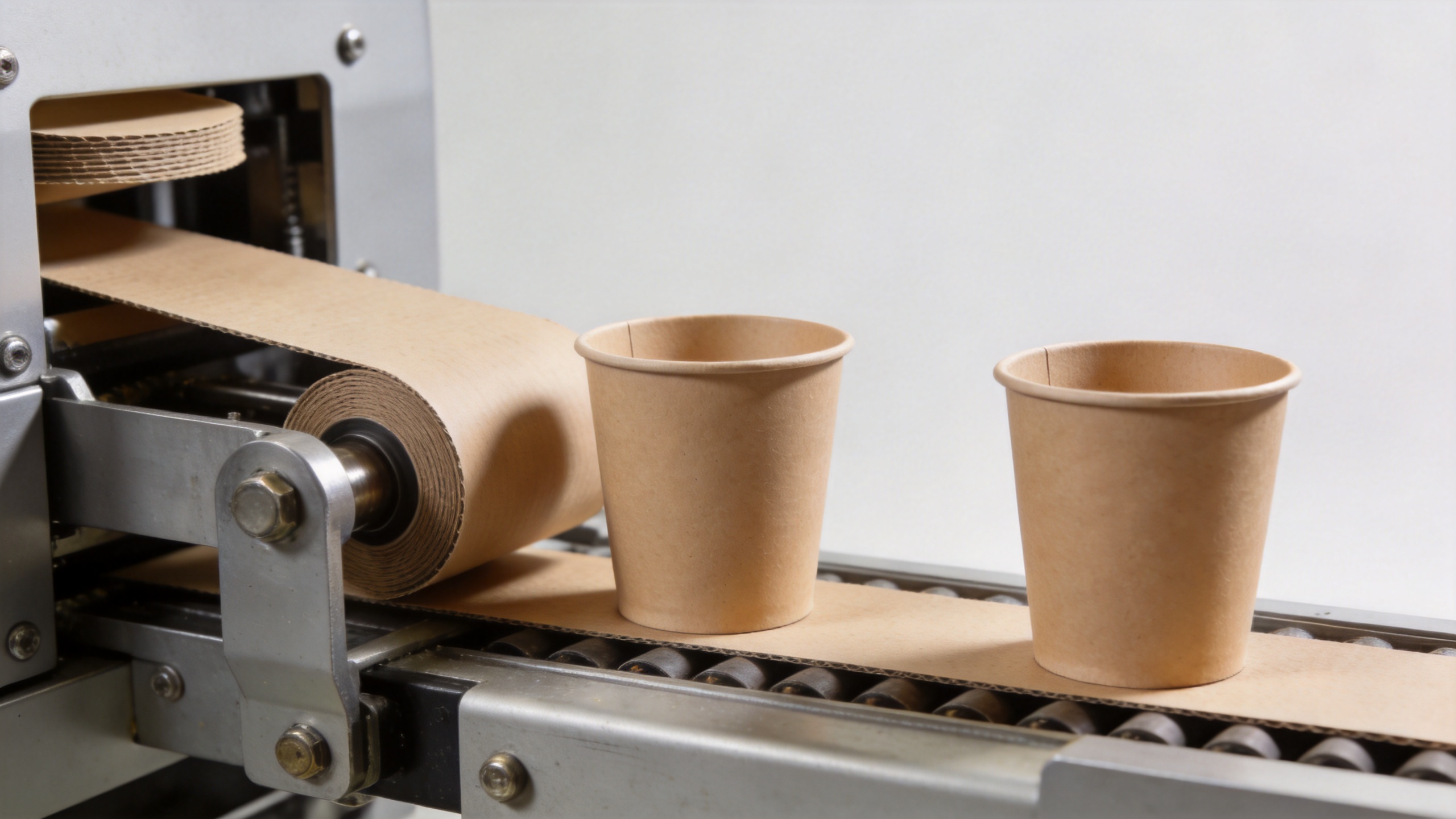
The fabrication conditions that define the machine
1. Cup geometry and tooling
Diameter, height, taper, bottom shape, and rim design determine the forming envelope. These features influence the mandrel, mold set, feeding alignment, and the dimensions that must be held during sealing. A buyer should ask whether the proposed tooling covers the target cup range and what a changeover involves. It is easy to choose equipment by nominal cup volume alone; however, two cups with similar volumes can have different diameters, sidewall tapers, or rim requirements.
2. Paperboard and coating behavior
A disposable vessel is made from a material system, not simply “paper.” Paperboard stiffness, thickness, moisture condition, print treatment, and the type of barrier coating can affect feeding, seam formation, and the finished shape. The cup machine must be evaluated with the actual or representative material specification. In practical terms, this means confirming how samples behave through the side-seam and bottom-sealing stages rather than assuming one setting works for every coated paperboard.
Material questions also protect against overpromising. A compostability or end-of-life claim belongs to the finished cup specification and the relevant material system; it should not be inferred from the presence of a cup machine. Where a project has regulatory, food-contact, or compostability requirements, the buyer and supplier should document which requirements must be verified for the target market.
3. Sealing, heating, and process control
The value of a cup machine lies partly in how it controls the interfaces that keep the vessel intact. Sidewall and bottom seams need the appropriate combination of formed overlap, heat or other joining method, pressure, dwell time, and timing. The correct conditions depend on the substrate and cup construction. Rather than treating a heater or a control screen as a stand-alone feature, ask how the proposed process supports repeatable seam formation for the planned paperboard and production conditions.
Operators also need a practical way to notice drift. Clear access for routine checks, understandable adjustment points, and a defined response to a seam or shape issue make the forming process easier to manage. More accurately, not every leakage or deformation issue originates in the equipment; material variation, tooling condition, and operating setup should be checked together.
4. Output must fit the whole production rhythm
A high speed cup machine can be understood as equipment designed to sustain a faster, controlled forming cycle for a defined cup, material, and quality target. It is not automatically the right choice for every factory. Higher output can be useful when demand is stable, blank supply is consistent, inspection and packing can keep pace, and the team can support planned maintenance. If frequent format changes or small orders dominate the schedule, flexibility and changeover discipline may deserve as much attention as the maximum rate.
When comparing a high speed cup machine, request the test conditions behind the stated rate. Useful questions include: Which cup dimensions were used? Which paperboard and coating were tested? Is the figure a mechanical maximum or a sustained production target? What quality checks were applied? These questions turn a broad speed claim into an engineering discussion.
Where a double wall cup machine fits
A double wall cup machine addresses a different fabrication task: adding or forming an outer insulating wall around a cup construction. This can improve the hand-feel of a hot beverage cup, but it adds material handling and alignment requirements. The correct solution depends on whether the product needs a separate sleeve, a particular decorative treatment, a specific gap or insulation effect, and a compatible upstream cup format.
It is therefore better to see a double wall cup machine as a configuration for a particular product architecture rather than a universal upgrade. Before selecting one, define the inner-cup dimensions, outer-wall material, bonding method, design registration needs, and expected throughput. The line should also be reviewed as a system: inner-cup supply, outer-wall preparation, assembly, inspection, and packing must be matched to avoid creating a bottleneck after the forming stage.
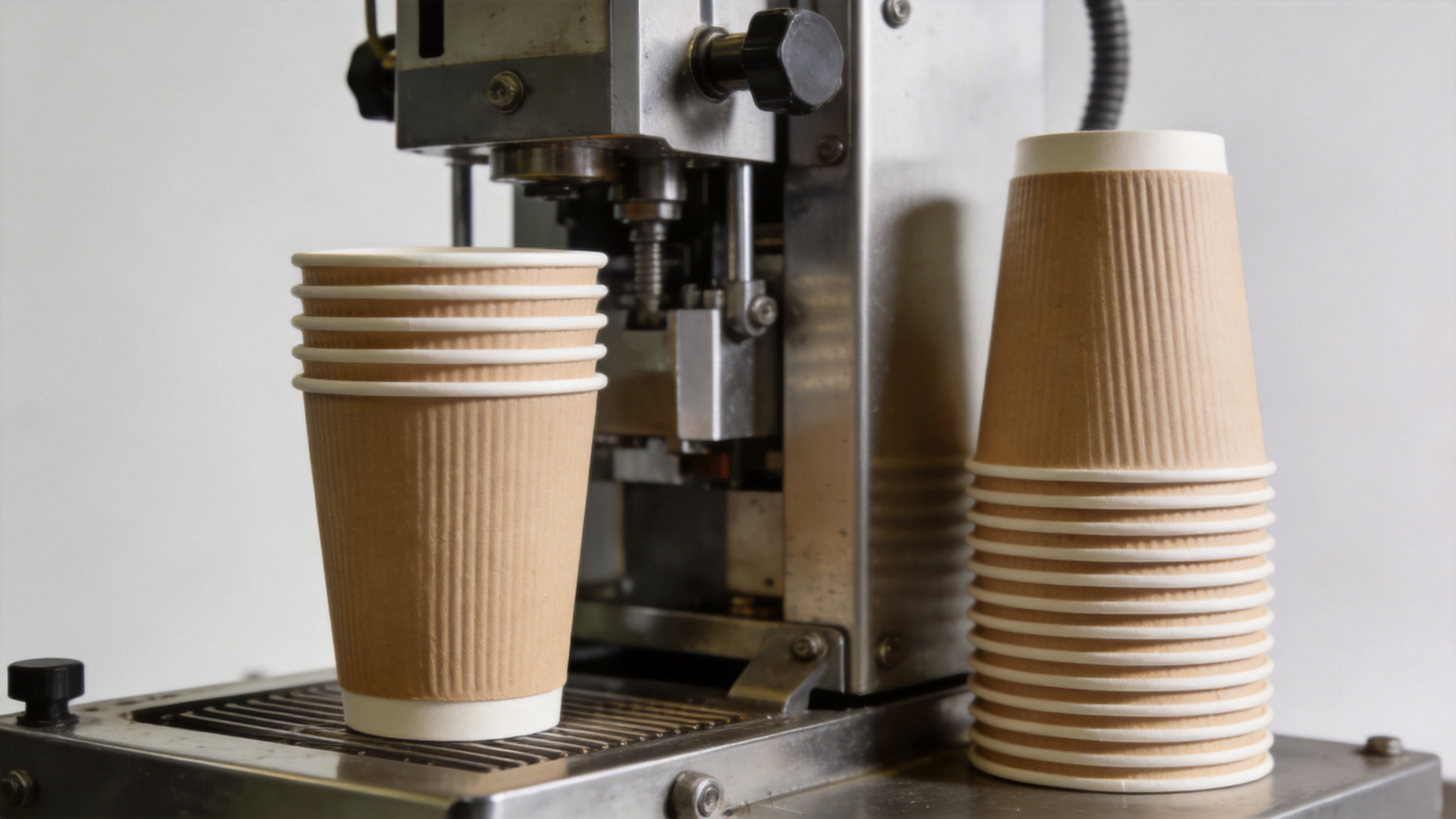
A practical definition checklist for buyers
Before asking for a technical proposal, organize the project around the questions below. This gives a supplier enough context to recommend a relevant cup machine configuration without relying on vague assumptions.
- Product: What cup or disposable vessel shapes, sizes, rim profiles, and wall constructions are required?
- Material: What paperboard, coating, printing treatment, and sample information are available?
- Process: Which forming, seam, bottom, rim, and inspection steps must be included?
- Output: What sustained production target is needed, and what mix of formats or changeovers is expected?
- Quality: What acceptance checks will cover seam integrity, shape, appearance, and application-specific requirements?
- Operation: Who will set up, clean, inspect, maintain, and troubleshoot the equipment?
- Integration: How will blanks, finished cups, packing, utilities, and service support connect to the machine?
How to evaluate a proposal without reducing it to a brochure
A sound proposal should connect each stated configuration choice to a production condition. For example, tooling should be tied to the requested cup geometry; sealing arrangements should be discussed in relation to the supplied material; and output should be framed around a defined test condition. Ask for a clear boundary between standard supply, optional equipment, commissioning support, spare parts, and acceptance criteria. That approach is more useful than assuming a longer feature list guarantees better production results.
At ZheJiang RUIDA Machinery, the starting point for a paper cup project is to align cup geometry, paperboard behavior, and the intended line rhythm before discussing configuration. The company’s experience in automatic paper cup machinery and servo paper cup formers can support a structured technical conversation, while final suitability should be confirmed against the buyer’s actual samples and operating requirements.
Conclusion
What defines a cup machine is its ability to repeatedly form a specific disposable vessel from a specified material under controlled process conditions. Feeding, tooling, seam formation, bottom joining, rim finishing, and handling must work as one system. A high speed cup machine may be appropriate when sustained demand and the wider line can support it; a double wall cup machine is appropriate when the product construction calls for an added insulating wall. Start with the cup, material, quality target, and production plan. Then compare the configuration that can be verified against those conditions.
 ONLINE