
 EN

Disposable Paper Cup Making Machine Benefits
For a paper-cup producer, a machine is more than a way to shape paperboard. It is the point where material handling, forming quality, labor planning, and delivery reliability meet. A disposable paper cup making machine can bring those activities into a more repeatable workflow when its configuration is matched to the cup design, material structure, and real production plan.
From a production-manager viewpoint, the strongest benefit is not a headline speed figure. It is the ability to run a controlled process: feed the correct blank, form a sound side seam and bottom, create a consistent rim, inspect the output, and hand stable cups to packing. That discipline helps a factory make practical decisions about capacity, staffing, maintenance, and customer requirements.
1. A disposable paper cup making machine organizes the forming process
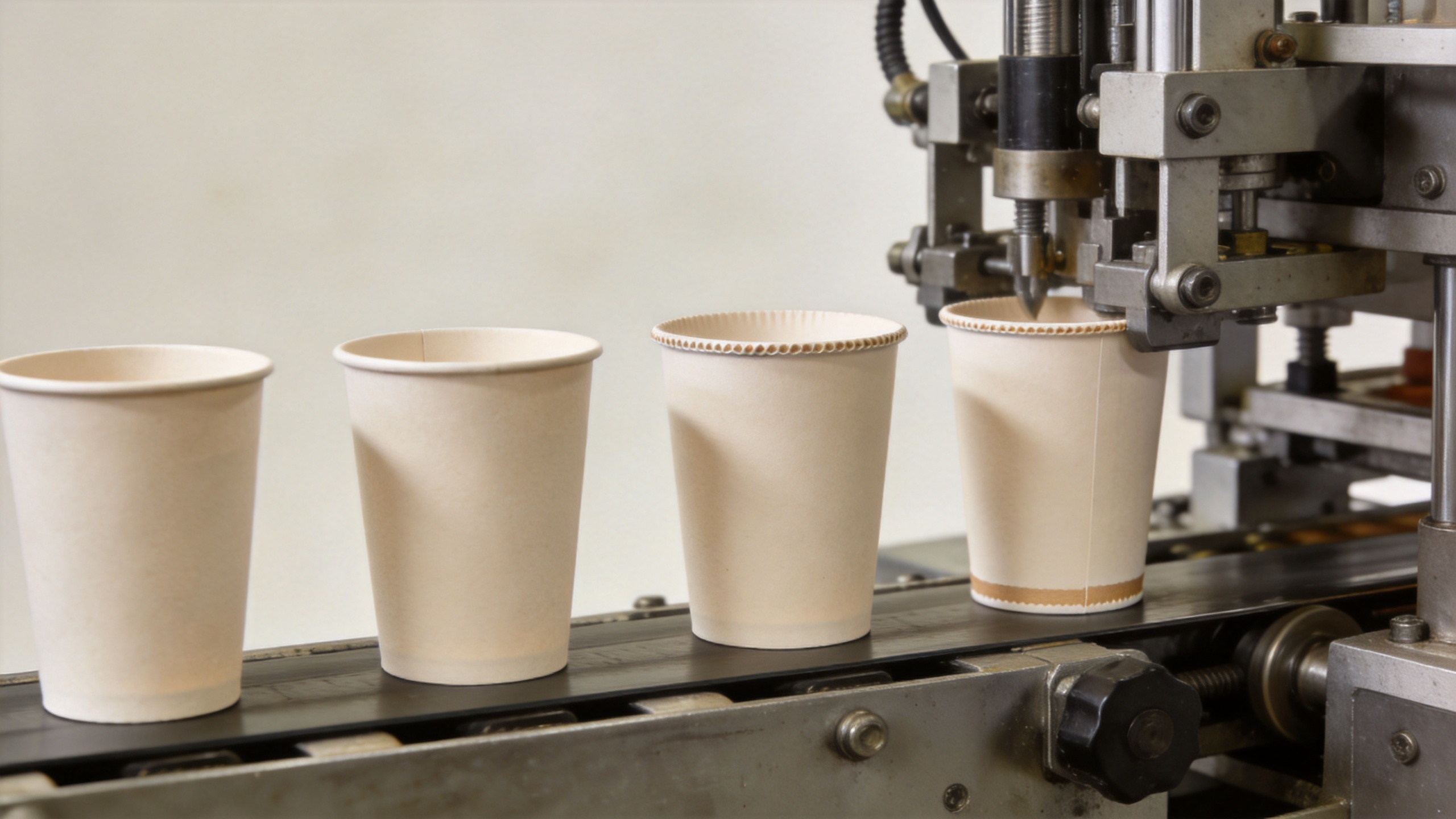
Paper cups pass through a sequence of dependent operations. Depending on the machine design and cup specification, those operations can include blank feeding, side-wall forming and sealing, bottom insertion and sealing, knurling, heating, curling, and discharge. An automatic disposable paper cup making machine coordinates these stages in a defined order, which reduces the variation that can arise when operators must manage several manual handoffs.
The gain is especially useful when the factory produces recurring orders. Once the team has validated settings for a particular cup size, paperboard, and coating structure, it can document the setup and check the same process conditions on the next run. That does not remove the need for skilled operators; it gives them a repeatable baseline from which to monitor material behavior and finished-cup quality.
2. Better labor allocation without treating automation as “hands-free”
A disposable paper cup making machine can reduce the amount of repetitive handling around individual forming steps. The labor benefit is usually a reassignment benefit: operators can spend more time loading approved materials, confirming first-off cups, checking seam and rim quality, separating nonconforming output, and keeping the line supplied.
This matters because quality issues often begin before a visible defect reaches packing. A roll or blank that is not suited to the approved setup, an incorrect forming adjustment, or a missed cleaning task can affect a whole production interval. Automatic sequencing gives the team more consistent checkpoints, but a disciplined operating procedure still needs clear responsibilities for start-up, in-process checks, and changeovers.
3. More consistent cups support practical quality control
Consistency is one of the most valuable benefits of a disposable paper cup making machine. Uniform forming helps the factory assess cups against the same expectations for side seams, bottom seals, rim shape, dimensions, and fit with the intended lid. A machine cannot by itself prove food-contact compliance, yet it can make the physical manufacturing process easier to control and document.
For example, a production plan may include first-piece approval after a changeover, periodic visual and dimensional checks during the run, and a defined response when a seam, curl, or bottom shows an issue. Testing should reflect the actual use condition of the cup, including the liquid type, temperature, and hold time the customer expects. That is more meaningful than relying on an unqualified claim that a cup is leak-proof.
Material compliance should be handled separately from forming performance. Food-contact paper and paperboard requirements vary by market and construction. In China, GB 4806.8-2022 is a national food-safety reference for food-contact paper and paperboard materials and products; buyers should confirm the applicable requirements, supporting documentation, and market-specific rules for their own products.
4. Production planning becomes easier to measure
A rated speed is only one input to capacity planning. Actual sellable output depends on cup size, material response, tooling condition, operator routine, planned maintenance, reject handling, and downstream packing. Still, a disposable paper cup making machine gives a factory a defined production center around which it can record run time, downtime reasons, scrap observations, and accepted output.
These records help managers distinguish a material issue from a tooling or setup issue. Over time, they can use the information to schedule maintenance before an avoidable interruption, estimate realistic delivery windows, and compare the effect of a process change. For a growing producer, this is often more useful than choosing equipment only by the highest advertised number of cups per minute.
5. Flexible tooling can support a clearer product mix
Demand for cold-drink, hot-drink, sampling, and food-service cups can vary by size, shape, print design, and rim or lid requirement. A disposable paper cup making machine may be a good fit when the producer has a defined family of cup formats and can plan tooling, material, and changeovers around that family. Before purchasing, ask which cup diameters, heights, paper grades, and coating structures the proposed configuration is designed to handle—and request a demonstration using representative materials where possible.
Changeovers should be considered honestly. A machine that supports more than one format still needs setup verification. The useful question is not simply whether the format is possible, but what needs to be changed, how the first acceptable cup is verified, and how the factory will keep settings traceable between runs.
6. The machine should fit the material supply chain
Paper-cup production begins upstream of the forming station. Approved paperboard and barrier materials, blank quality, storage conditions, printing alignment, and cutting accuracy all influence the result. This is also where related equipment decisions matter. A tissue paper production machine or tissue making machine serves a different paper-product workflow; it should not be assumed to supply cup-grade material without a separate technical review of fiber, basis weight, barrier requirements, and food-contact suitability.
Keeping those distinctions clear prevents an expensive planning mistake. The disposable paper cup making machine should be selected for its intended converting task, while raw-material sourcing and any upstream paper-production project should be evaluated on their own specifications and compliance evidence.
7. What to verify before investing
- Representative samples: Confirm that the machine can form the intended cup sizes and material structures under agreed test conditions.
- Quality checkpoints: Define how seams, bottoms, rims, dimensions, appearance, and lid fit will be checked and recorded.
- Capacity basis: Ask for a production estimate that separates rated output from expected accepted output, planned stops, and changeovers.
- Operator and service plan: Clarify training, preventive-maintenance tasks, spare-parts planning, and fault-response support.
- Downstream fit: Review collection, inspection, packing, and storage so the forming machine does not become an isolated bottleneck.
- Compliance evidence: Match materials and finished-product documentation to the target market rather than assuming one test or statement covers every destination.
Making the benefit measurable
A practical way to evaluate a disposable paper cup making machine is to connect it to a small set of operating measures: accepted cups per shift, first-pass quality, changeover time, unplanned downtime, material waste, and on-time handoff to packing. Review those measures after a controlled trial, then use them to define the configuration and support level needed for the next stage of growth.
For manufacturers building a food-packaging line, automated cup forming can provide a more stable process, better use of labor, and clearer quality checkpoints. The result is not automatic success; it is a more manageable foundation for producing cups consistently when equipment, materials, operating procedures, and verification methods are planned together.
 ONLINE