
 EN

Disposable Paper Cup Making Machine Market Growth
Market growth around the disposable paper cup making machine is not simply a reason to buy more equipment. It is a reason to define the production mix, material plan, quality controls, and changeover rhythm that an operation will need. For converters and food-packaging manufacturers, demand is being shaped by takeaway beverages, quick-service restaurants, institutional catering, and the search for alternatives to some plastic formats. The more useful question is not merely whether demand is rising, but which cup formats and operating conditions the next line will need to handle.
A third-party 2026 market report estimates that the global paper-cups market was worth about USD 11.35 billion in 2025 and projects moderate growth through 2034. That figure is a directional signal rather than a machine-market forecast, and it should be validated for a particular region. Still, it aligns with what production teams can observe: beverage service is expanding across more channels, while buyers are asking closer questions about coatings, recyclability claims, insulation, and consistency.
Why disposable paper cup demand changes equipment decisions
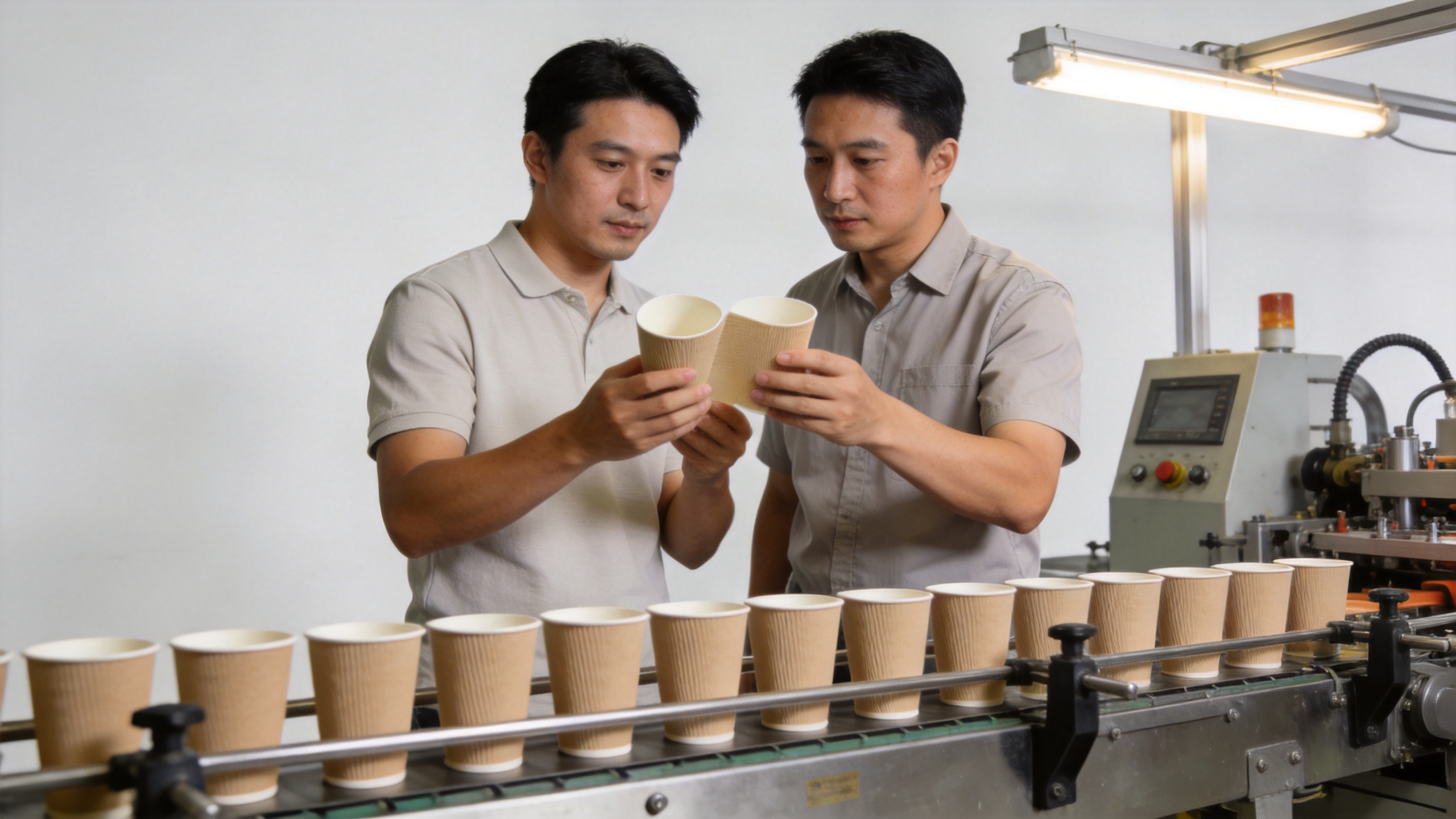
A disposable paper cup making machine turns paperboard blanks into a finished container through coordinated steps such as feeding, side sealing, bottom forming, heating, knurling, and curling. Market growth matters because it can shift the balance among those steps. A business serving hot drinks may need different cup diameters, wall constructions, and rim expectations from a business supplying cold beverages. A line that is adequate for one steady SKU can become a bottleneck when customers request smaller runs, seasonal graphics, or additional cup sizes.
Quick-service restaurants are often cited as a major paper-cup demand segment in market research. For a manufacturer, that does not automatically mean every contract requires a high-output configuration. It means the quotation should start with a credible production scenario: cup sizes, paper grades and coatings, anticipated order pattern, downstream packing, and the acceptance criteria that define a sellable cup. Those details make it easier to assess whether a disposable paper cup making machine is suited to the planned business rather than merely attractive on a specification sheet.
Four forces behind the market-growth discussion
1. Beverage service is becoming more distributed
Cafés, delivery-oriented food brands, workplace canteens, events, and convenience channels all use cups differently. Some value a stable high-volume format; others value the ability to change size or artwork without long interruptions. This broadening demand makes flexibility part of capacity planning. Before selecting a disposable paper cup making machine, map which orders are repeat runs and which are likely to demand frequent tooling or material changes.
2. Packaging claims require process discipline
Paper cups are often discussed alongside recyclable, compostable, or lower-plastic packaging goals. The practical implication is not to promise a claim based on the forming machine alone. Compliance and end-of-life performance depend on the complete cup specification: paperboard, barrier material, inks, local collection systems, and the relevant customer or regional requirements. Ask material suppliers and customers to document the intended claim, then verify that the forming process can run the approved material consistently.
3. Quality expectations rise with foodservice volume
When cup volumes increase, small variations can become expensive through leakage, poor seams, unstable bottoms, or inconsistent rims. The value of a disposable paper cup making machine should therefore be assessed with a verification plan. Define the paper range, cup dimensions, sample rate, defect categories, and handling conditions before commissioning. A production-speed figure by itself does not demonstrate usable output across the specific cup mix.
4. Adjacent packaging creates planning opportunities, not shortcuts
Demand for takeaway packaging can prompt a producer to investigate a paper food box making machine as well as cup-forming equipment. That may be a sound diversification path, but cup and box projects should be evaluated separately. Paper grades, forming geometry, sealing requirements, tooling, and downstream handling can differ materially. A common customer base is useful; assuming one machine or one setup covers both product families is not.
Translate market demand into a line brief
Use a written line brief before comparing suppliers. It creates a shared reference for engineering, purchasing, and sales teams and reduces the temptation to select on headline speed alone.
- Product mix: List cup volumes, diameters, heights, wall construction, and the share of each SKU expected per month.
- Material plan: Identify paperboard and barrier specifications that customers have approved or are considering. Keep sustainability claims separate from unverified material assumptions.
- Capacity logic: Calculate capacity against planned sellable output, allowing for changeovers, sampling, maintenance, rejects, and downstream packing—not only theoretical cycle rates.
- Quality gates: Establish checks for side seams, bottoms, rim formation, appearance, and leak resistance under the agreed test method.
- Service readiness: Define commissioning support, operator training, spare-parts planning, fault records, and the response path for recurring defects.
This approach lets a disposable paper cup making machine purchase support a wider market plan rather than create capacity that is difficult to sell or maintain.
Where tissue and cup production differ
It is also important to avoid linking unrelated machines solely because both use paper. A tissue paper production machine belongs to a different process chain from cup converting. Tissue production concerns fiber preparation, web formation, drying, converting, and softness or absorbency targets; paper-cup forming depends on suitable cupstock, blank conversion, sealing, and shape control. A company considering both should build two investment cases, then look for shared benefits only where evidence supports them, such as procurement relationships, factory logistics, or sales channels.
Questions to ask before committing capital
- Which cup formats are already supported by confirmed customer demand, and which are only exploratory?
- What approved materials and barrier systems must the line process?
- How often will tooling, cup size, or print design change in a normal month?
- What is the expected sellable-output target after allowance for setup, testing, and rejects?
- Which acceptance tests will be witnessed at commissioning?
- What training, maintenance records, and critical spares are required for the operating team?
These questions turn a market-growth narrative into an actionable technical conversation. They also make comparisons between a disposable paper cup making machine and alternative capacity plans more transparent.
A measured view of growth
The disposable paper cup market has credible demand drivers, particularly foodservice expansion and continuing interest in fiber-based packaging. Yet growth is uneven by region, cup format, regulation, and customer requirement. The strongest investment case is built on verified orders and a clear operating brief, not on a generic market statistic.
For manufacturers serving international food-packaging projects, the next step is to share the target cup specification, material information, desired production rhythm, and acceptance expectations. That enables a focused discussion of whether a disposable paper cup making machine can fit the proposed production plan and what information should be confirmed before a final equipment decision.
 ONLINE