
 EN

Disposable Paper Cup Making Machine Features
Buyers get a clearer comparison when they start with the cup they intend to make rather than the largest number on a brochure. For a technical buyer, the practical question is whether the machine can repeatedly form the specified diameter, height, rim style, paper stock, coating, and production rhythm. That is more informative than treating every disposable paper cup making machine as an interchangeable high-speed asset.
From a packaging-equipment selection perspective, begin with the finished cup, then check the paper and operating rhythm, and only then discuss configuration. A supplier can use that sequence to clarify options, while a buyer can turn it into a more reliable request for quotation and acceptance plan.
Start with the cup specification, not the headline speed
The first feature set to assess on a disposable paper cup making machine is format capability. Record the target cup volume, top and bottom diameter, overall height, sidewall shape, and rim requirement. A straight drinking cup, a taller cold-drink cup, and a heavier soup container can place different demands on the forming tooling and the settings around sealing and curling.
Ask what tooling is included, which formats require a change part, and what must be adjusted when the cup size changes. A machine that suits one established format may still require a different mold set or validation work for another. In practical terms, the more useful disposable paper cup making machine feature is not “many sizes” in the abstract; it is a documented, testable path for your planned sizes.
- Confirm the cup drawing or sample before configuration is finalized.
- Identify tooling, adjustment points, and the expected changeover procedure.
- Define which appearance and leakage checks will be used during trial runs.
Paper feeding and material compatibility are core features
A disposable paper cup making machine forms a container from a specific paperboard and coating combination, so the feed system should be reviewed with the material rather than in isolation. Paper thickness, stiffness, printing, grain direction, moisture condition, and the inner coating can affect how blanks travel and how reliably the side seam and bottom are formed.
For example, PE-, PLA-, and water-based coating systems may behave differently in a particular process. That does not mean one material is universally better. It means the proposed disposable paper cup making machine should be evaluated using representative blanks and the intended cup geometry. Ask the supplier to state the paper range and the material conditions that must be confirmed before a performance commitment is made.
Look for orderly blank feeding, a way to detect poor feeding or a missed blank, and clear access for cleaning and adjustment. When comparing a paper cups making machine, it is worth asking how the feeding area is checked during commissioning and what operators should inspect at the beginning of a shift.
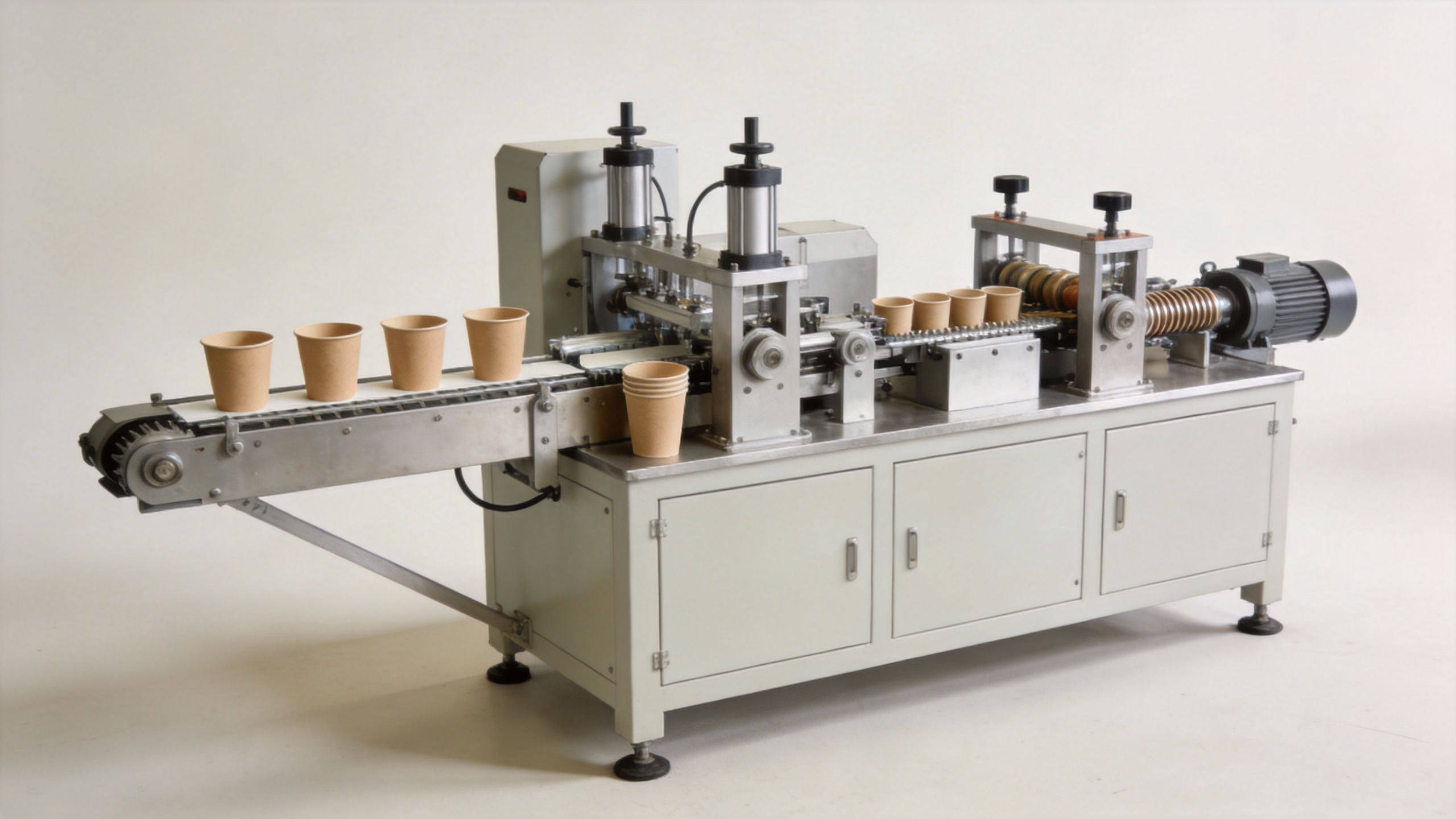
Examine the forming sequence feature by feature
The useful features of a disposable paper cup making machine follow the forming sequence: blank feed, sidewall forming, side-seam sealing, bottom feeding, bottom sealing, knurling, curling, and cup discharge. The names can vary by design, but the buyer should understand where each operation happens and which settings influence the finished cup.
Sealing and heating control
Side-seam and bottom-sealing arrangements deserve particular attention because material and process conditions affect them together. Ask whether the design uses the sealing method appropriate to the intended cup stock, how temperature or energy settings are controlled where applicable, and how the operator recognizes an incomplete seal. A well-described disposable paper cup making machine proposal explains the verification process instead of promising leak-free output under every condition.
Knurling and rim curling
Knurling helps secure the bottom area, while rim curling affects both comfort and stiffness. On a disposable paper cup making machine, inspect whether these stations are accessible for adjustment and whether the supplier can show acceptable and unacceptable sample conditions. A cup may look acceptable at first glance yet fail a defined leakage, rim, or dimensional check; acceptance criteria should therefore be agreed before installation.
Controls should help operators see exceptions early
A modern disposable paper cup making machine should offer controls that make daily operation understandable, not merely automatic. Review the operator interface, production counter, alarm history, fault messages, speed adjustment, and safe restart procedure. The value of an alarm is not its presence alone: the message should point operators toward a sensible inspection action.
Ask, too, which settings sit in a recipe, which need mechanical adjustment, and who is authorized to change them. If your production schedule involves frequent size changes, this can matter as much as the nominal output. Before comparing speed, it is often wiser to document changeover requirements and downstream collection conditions. In other words, assess the disposable paper cup making machine as part of a production rhythm, not as an isolated number.
Safety, access, and maintenance belong in the feature checklist
Treat machine guarding as part of the evaluation, not as an item left for the end of the discussion. General machinery-safety principles call for guarding around hazards such as points of operation, in-running nip points, and rotating parts. For a disposable paper cup making machine, ask to review guards, interlocks, emergency stops, electrical isolation, safe cleaning access, and the restart sequence after a guard is opened. The applicable rules depend on the destination and installation, so compliance should be confirmed for the project rather than assumed from a generic description.
Maintenance features should be equally concrete. Identify lubrication points, wear parts, inspection intervals, fault-diagnosis support, spare-parts lead times, and the access required for routine service. A lower initial quotation can be less useful if change parts, service access, or planned maintenance were not considered. This is also why a tissue making machine price is not a meaningful benchmark for a cup-forming project: tissue production equipment and a disposable paper cup making machine serve different processes, materials, tooling, and operating requirements.
Use a realistic acceptance checklist
Before selecting a disposable paper cup making machine, turn the feature discussion into a written acceptance checklist. Include the agreed cup samples, paper specification, planned format, production conditions, operator training scope, safety checks, and the quality criteria for the finished cup. This helps both parties separate confirmed requirements from items that need a trial.
- Provide the cup drawing, sample, and target paper/coating details.
- Request a station-by-station explanation of the proposed disposable paper cup making machine.
- Confirm the settings, tooling, and change parts needed for every planned cup format.
- Define how seam, bottom, rim, dimension, and leakage quality will be inspected.
- Review controls, safety devices, training, maintenance access, and spare-parts support.
Choose features that fit the actual production plan
The right disposable paper cup making machine is the one whose forming sequence, material window, controls, safety provisions, and service plan can be verified against your cup program. RUIDA Machinery focuses on paper-cup and food-packaging equipment discussions, so a productive inquiry starts with samples and operating conditions rather than an assumption that one configuration fits every cup.
When evaluating a paper cups making machine, bring the complete specification to the technical conversation: cup format, paper stock, coating, target production rhythm, changeover frequency, utilities, destination requirements, and acceptance test. That approach makes the listed features useful decision tools and gives your team a clearer basis for comparing a disposable paper cup making machine.
 ONLINE