
 EN

Introducing Disposable Paper Cup Making Machine
A disposable paper cup making machine turns pre-cut or printed paper blanks into finished cups through a linked forming sequence. For a buyer, speed is only one question. The more useful question is whether the machine, the cup design, the paper-and-coating structure, and the expected operating routine can work together. In food-packaging applications, that fit matters because a cup that looks acceptable at the discharge end may still reveal seam, rim, or leak issues during handling and use.
From a food-packaging application perspective, start with the intended cup before comparing a disposable paper cup making machine. Confirm the beverage type, cup volume, rim profile, base-paper specification, coating, artwork, and whether the plant expects one stable format or frequent changes. Those details make a configuration discussion more productive than comparing a headline speed alone.
What a disposable paper cup making machine does
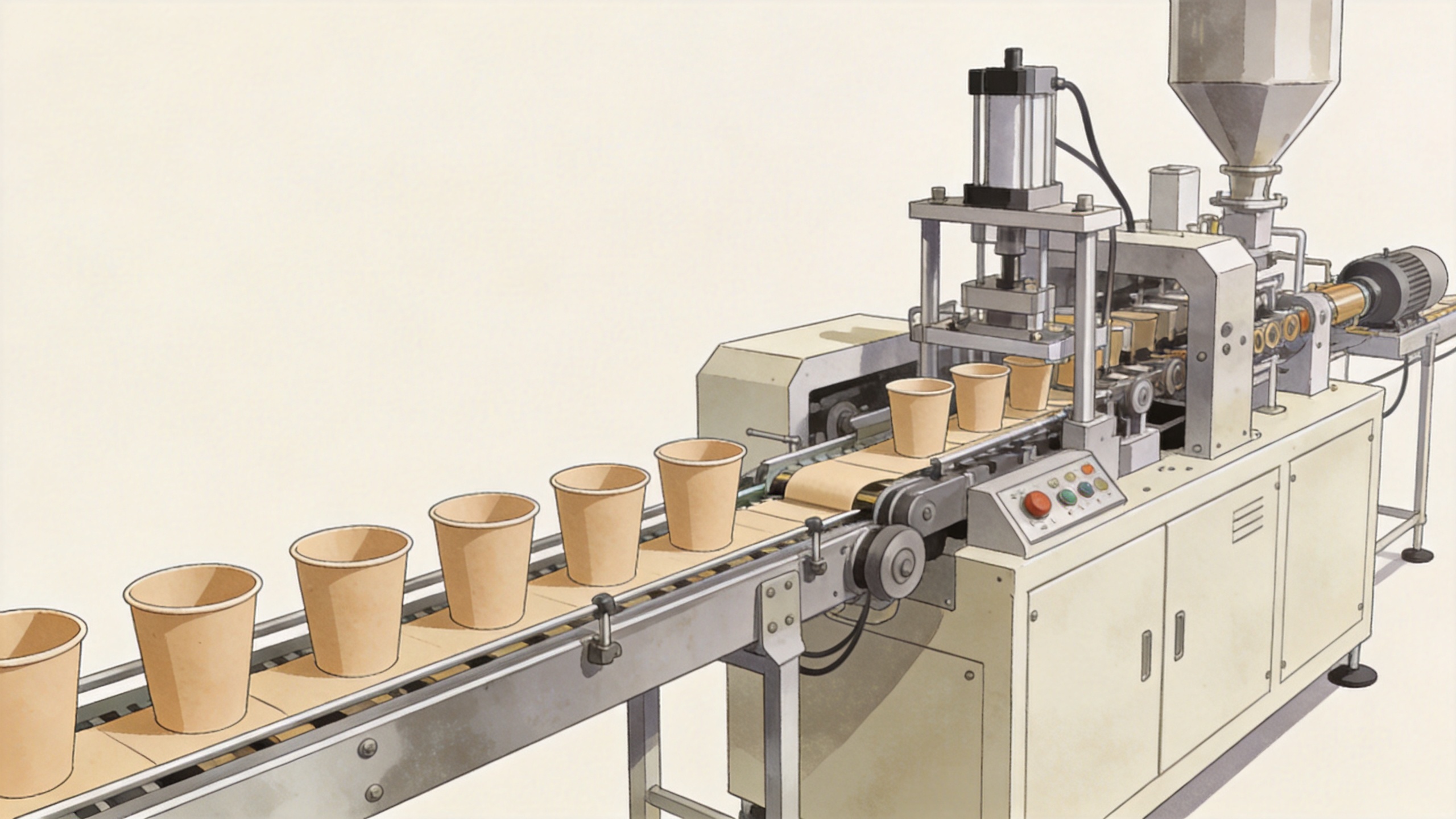
A typical disposable paper cup making machine receives cup-wall blanks, forms a cylindrical body, seals the side seam, feeds and joins the bottom, then performs bottom knurling and top curling before collection. The exact station layout varies by model and cup design, but the workflow is helpful for understanding where quality is created. Feeding must present blanks consistently; the seam must close correctly; the bottom joint needs to be secure; and the curled rim has to feel even rather than sharp or distorted.
That is why material trials should be part of the conversation. Published process discussions identify side sealing, bottom sealing, knurling, and curling as critical stages, and material behavior can affect the result. A disposable paper cup making machine should therefore be reviewed with representative blanks and the intended coating structure whenever possible, rather than with an unrelated sample alone.
Start with the end-use requirements
Before selecting a disposable paper cup making machine, make a short application sheet. Include cup diameter and height, top and bottom diameters, paper thickness or grammage range, coating type, print treatment, required finish, target production rhythm, and changeover expectations. If cups will be used for hot drinks, cold drinks, or products with special barrier needs, clarify the material requirement first. Food-contact documentation should match the actual paper, coating, ink, lid, and destination market; it should not be inferred from a generic statement.
This approach also prevents a common mismatch: choosing the machine only by cup capacity. Two cups with similar volumes may behave differently if their blank shape, material stiffness, coating, or rim requirement differs. A suitable disposable paper cup making machine is one whose forming route fits the confirmed cup specification and the production team’s ability to run it consistently.
How the forming workflow affects cup quality
Feeding and body forming
Blank feeding sets the rhythm for the entire disposable paper cup making machine. Operators should be able to observe whether blanks separate cleanly and enter the forming path without skewing. When reviewing a machine, ask how a misfeed is indicated, how accessible the feed area is, and what adjustment is expected when blank batches change.
Side sealing and bottom joining
The side seam and bottom joint deserve close inspection during sampling. Rather than accepting a general assurance, define what the team will check: seam appearance, bond continuity, bottom fit, and whether cups remain stable after the expected handling steps. A disposable paper cup making machine may have different heating or sealing arrangements depending on the material and design, so the supplier and buyer should confirm the compatible paper structure before finalizing the configuration.
Knurling, curling, and collection
Knurling reinforces the bottom-area joint, while rim curling creates the finished drinking edge. Inspect several cups across a trial, not just one. Look for an even rim, a clean base area, and orderly collection. This is especially important when printed blanks are involved, because print registration and blank preparation still need to align with forming. A paper cups printing machine is a separate upstream consideration: printing capability does not by itself prove that the printed blank will run smoothly in the cup former.
Automation is useful only when it matches the operating plan
Automation can reduce repetitive handling and make a production rhythm easier to manage, but it does not remove the need for checks, cleaning, changeover, and maintenance. Compare a disposable paper cup making machine by asking who will load materials, perform first-piece checks, respond to alarms, and inspect finished cups. If multiple cup formats are planned, ask for the expected change parts, adjustment sequence, training needs, and a demonstration of the changeover path.
It is also worth separating the cup-forming decision from adjacent equipment. An automatic paper bag making machine may sit within a broader paper-packaging investment, but it has a different converting task and material path. Evaluate it on its own workflow rather than assuming that automation in one paper product line transfers directly to cup production. The same principle applies to a paper cups printing machine: coordinate artwork and blank supply, yet validate each machine against its own acceptance conditions.
A practical buying checklist
- Confirm the cup specification: Share drawings, blank samples, material details, and expected end use before comparing a disposable paper cup making machine.
- Define a trial plan: Ask for representative material, agreed inspection points, and a record of any adjustment made during the run.
- Review the operator path: Check access for loading, cleaning, observation, adjustment, and safe response to a stopped cup.
- Discuss changeovers honestly: A line for one stable cup format may be evaluated differently from one that changes format often.
- Clarify support boundaries: List commissioning scope, training, recommended spares, manuals, electrical requirements, and the response path for troubleshooting.
- Keep related equipment distinct: Compare an automatic paper bag making machine and a paper cups printing machine on their own output, material, and maintenance requirements, even when they are part of the same project.
Questions to settle before placing an order
Ask the supplier to explain the proposed disposable paper cup making machine configuration against your real cup sample, not a generic product description. Which materials have been confirmed for the proposed setup? What conditions are needed for a meaningful acceptance test? Which parts change with cup size? How are routine lubrication, cleaning, and inspection handled? Which wear parts should be held on site? Clear answers make the project easier to validate and reduce assumptions after delivery.
For a packaging business that also considers an automatic paper bag making machine or a paper cups printing machine, plan the interfaces early: blank supply, print approval, storage, inspection, and the production schedule. A well-defined interface is more valuable than treating separate machines as a single automatic solution.
Final perspective
A disposable paper cup making machine is more usefully introduced as a forming system, not merely a speed figure. Start with the cup and its end use, verify the material route, inspect the seam, base, and rim during trials, and make maintenance and changeover part of the buying decision. That sequence gives buyers a sounder basis for choosing equipment and gives operators a clearer path to stable cup production.
 ONLINE