
 EN

How to Choose Disposable Paper Cup Making Machine?
Choosing a disposable paper cup making machine is easier when you start with the cup you need to make, rather than the highest speed printed in a brochure. A machine that looks efficient on paper can still be a poor fit if its forming process, tooling, paper range, or changeover routine does not match your order mix. From a packaging-equipment selection perspective, the practical sequence is simple: define the cup, confirm the material and production rhythm, then compare the configuration and acceptance plan.
This approach also applies when evaluating a tea disposable paper cup making machine. Tea service may require a particular rim feel, cup size range, print presentation, and hot-fill suitability. For buyers planning fiber-based packaging, a biodegradable paper cup maker should likewise be assessed against the actual cupstock and coating system, not only against a marketing label.
1. Define the cup before comparing the machine
Write a short product brief before asking suppliers for a proposal. Include the cup volume, top and bottom diameters, height, paper weight range, intended beverage temperature, and whether the cup has a single or double wall. Also note your expected order pattern: one high-volume size is a different operating case from frequent small batches across several cup formats.
That brief changes the selection conversation. The right disposable paper cup making machine is the one that can form the required geometry consistently with your selected paper and coating, while allowing a realistic changeover process. If a supplier quotes capacity without first checking the cup drawing and stock specification, treat the figure as a starting point for verification rather than a final production commitment.
2. Map the forming process to your quality requirements
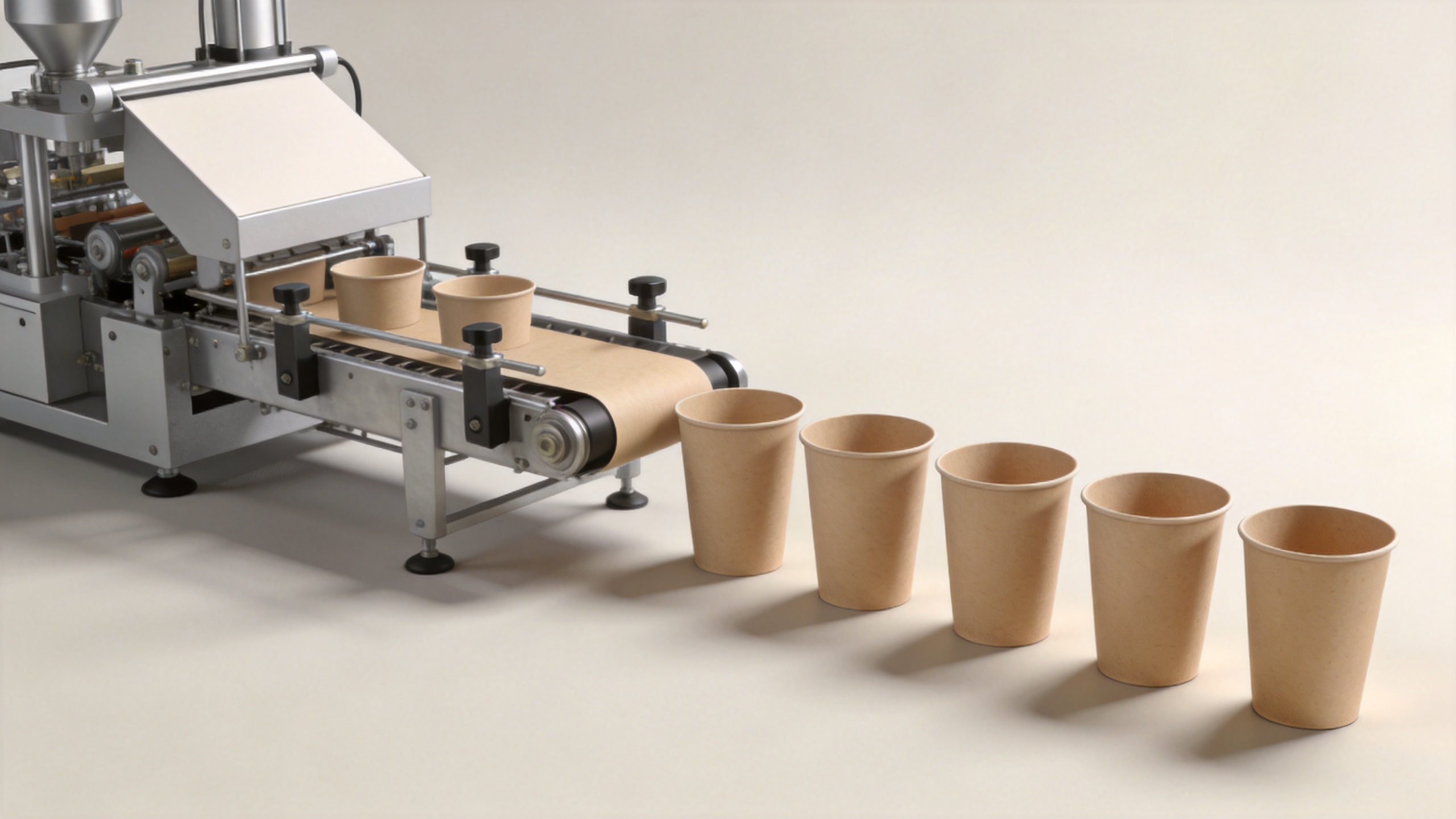
Most paper-cup forming lines involve paper feeding, side-wall sealing, bottom feeding and forming, heating or bonding, knurling, curling, and cup collection. The names vary by supplier, and not every configuration uses the same method. What matters is how the equipment controls the steps that affect seam integrity, bottom attachment, rim shape, and stable release of finished cups.
Ask for a clear explanation of the proposed process for your material. For example, compare the sealing method with the coating or barrier layer you plan to run; ask how heat is managed; and request a demonstration using a representative blank if possible. A disposable paper cup making machine should be evaluated through the cups it produces, not through a component list alone.
- What paper weight and coating types are within the proposed operating window?
- Which stations are adjusted for a new cup size, and which parts require replacement tooling?
- How are side seams, bottom knurling, and rim curling checked during a trial?
- What happens when a blank is misfed or a finished cup does not release cleanly?
3. Treat output speed as a verified range, not a headline number
Speed is relevant, but it needs context. A quoted cycle rate may depend on one cup size, one paper grade, a trained operator, and steady conditions. Instead of asking only, “How many cups per minute?”, ask which cup was used for the test, how long the run lasted, what rejection criteria applied, and whether the stated rate includes normal stops and quality checks.
For a tea disposable paper cup making machine, consider the pace of your filling and packing stages too. A faster former does not automatically improve line output if inspection, packing, or downstream handling becomes the bottleneck. Match planned output with staffing, space, collection method, and the time needed to replenish blanks and remove finished cups.
4. Check material and food-contact requirements early
The machine and the cup material are linked decisions. Confirm the source and specification of the cupstock, barrier layer, inks, and adhesives used in the finished cup. For destination markets, ask your compliance team or qualified adviser which food-contact obligations apply to the finished article and its supply chain. In the EU, Regulation (EC) No 1935/2004 provides general safety principles for food-contact materials; it is a market-compliance checkpoint, not proof that a particular machine or paper cup is compliant.
A buyer considering a biodegradable paper cup maker should also define what “biodegradable” means for the target market and material system. Do not assume the term alone establishes a disposal claim, a certification, or compatibility with every paper stock. Request material documentation and test the proposed blank on the actual machine configuration before finalizing a purchase.
5. Evaluate automation, controls, and changeover work
Automation should reduce repeatable manual work without making faults difficult to diagnose. During a machine review, ask to see the operator controls, alarm logic, lubrication points, safety guarding, and the sequence for restarting after a stoppage. These details influence the daily usability of a disposable paper cup making machine more than a single headline feature.
Changeover deserves the same attention. List each action required to move from one cup format to another, including tooling swaps, guide adjustments, parameter changes, and first-piece approval. If you will run many sizes, request a documented changeover procedure and clarify which tools are included in the quotation. If you will run one main size, prioritize stable setup and accessible maintenance instead.
6. Compare total operating risk, not just the purchase price
The lowest initial quotation may not produce the lowest operating cost. A useful comparison includes startup support, spare-parts availability, training, electrical requirements, wear items, expected maintenance tasks, and the process for remote troubleshooting. Ask suppliers to separate included items from optional items so that two proposals can be compared on the same scope.
For a disposable paper cup making machine, the most useful questions are often practical: Which parts are expected to wear? What drawings and manuals are supplied? How are replacement parts identified? Who can assist during commissioning? Clear answers reduce uncertainty even when the final configuration is still being refined.
7. Build a factory-acceptance checklist
Before placing an order, convert your requirements into measurable acceptance points. Agree on the cup drawing, paper specification, test quantity, visual criteria, leak or seam checks where appropriate, and the evidence you expect from the trial. This is more reliable than treating an online specification as a guarantee.
- Provide the target cup dimensions and representative paper blanks.
- Confirm the test configuration, tooling, and process settings to be used.
- Observe cup formation, seam appearance, bottom attachment, rim curl, and rejection handling.
- Record the trial conditions, output observation period, and any adjustments made.
- Agree on packing, delivery scope, installation support, training, and spare-parts documentation.
Make the final choice around your actual production case
A sound choice is not automatically the fastest or least expensive option. It is the disposable paper cup making machine whose tooling, forming method, controls, and support plan match your cup design, paper material, order mix, and verification process. Start with the finished cup, request a transparent trial plan, and compare proposals by the risks they reduce as well as the features they list.
For a tea disposable paper cup making machine or a biodegradable paper cup maker, keep the same discipline: confirm the use case, validate the actual material, and document the acceptance criteria before committing to a configuration. That preparation makes supplier discussions clearer and helps turn a machine quote into a workable production plan.
 ONLINE