
 EN

Disposable Paper Cup Making Machine Uses
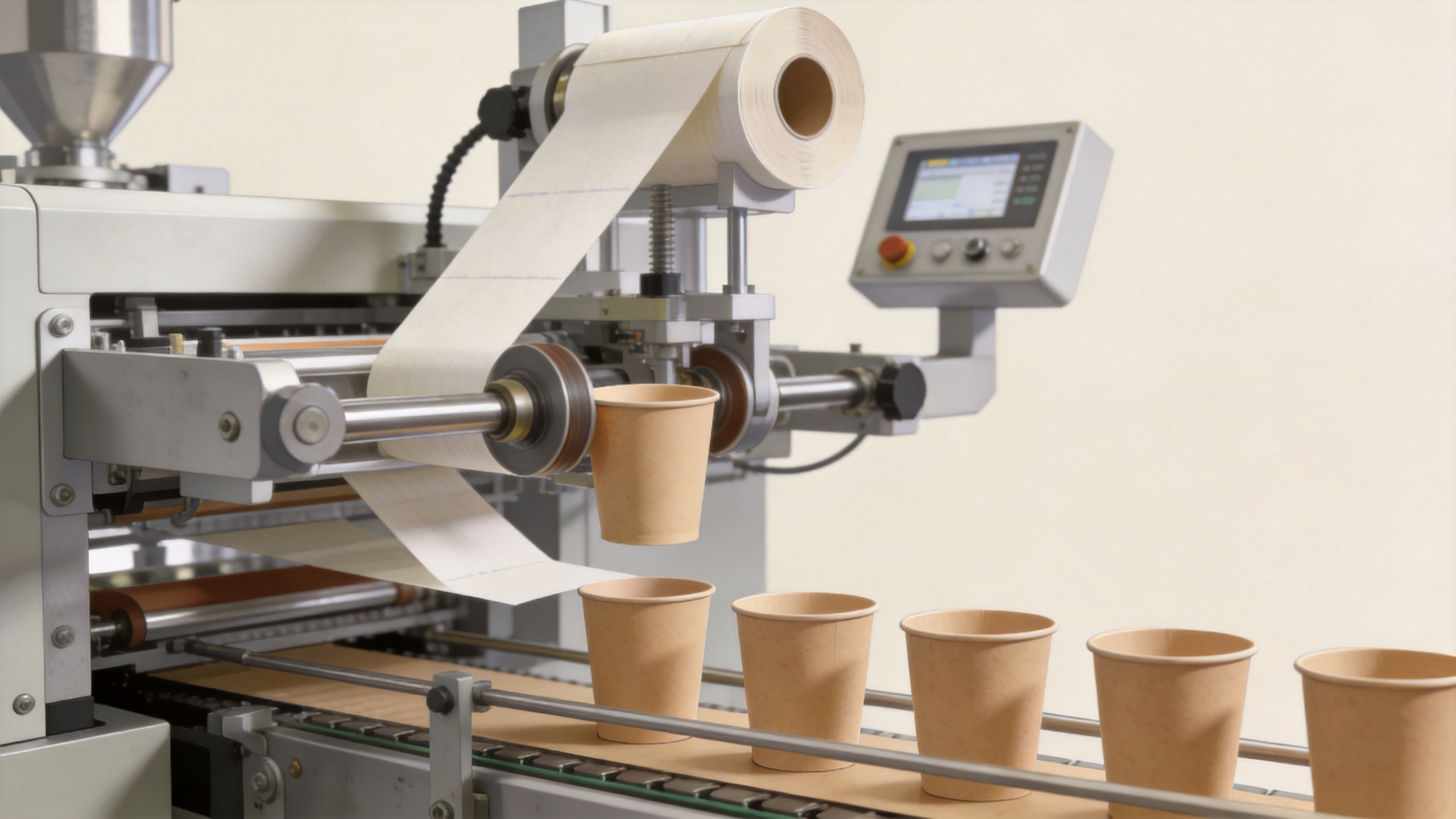
A disposable paper cup making machine turns pre-printed or plain cup-stock blanks into finished paper cups through a sequence of forming, side sealing, bottom insertion, heating, knurling, rim curling, and discharge. Its value is not limited to “making cups.” It helps a converter build a repeatable process for serving beverages, sampling food, supporting takeaway programs, and supplying branded packaging—provided the cup design, paper material, coating, and production rhythm are matched before equipment is selected.
For food-packaging buyers, the more useful question is: which cup uses must the line support consistently? That question changes the priorities. A short cold-drink cup, a hot beverage cup, and a promotional tasting cup can each place different demands on cup geometry, paperboard, sealing conditions, and inspection. If the paper stock and cup format are already defined, the equipment discussion becomes far more practical.
What a Disposable Paper Cup Making Machine Does in a Packaging Workflow
A disposable paper cup making machine is a converting unit between cup-stock preparation and finished-cup packing. Operators feed die-cut fan blanks and bottom discs, then the machine shapes and joins them into cups. In a typical workflow, the machine must keep the side seam, bottom seam, knurling, and curled rim aligned well enough for the intended use and for downstream counting or packing.
That is why a speed figure alone is not a complete buying criterion. A realistic evaluation starts with the entire line rhythm: blank supply, material handling, changeover time, sampling checks, defect segregation, sleeve or bag packing, and the handoff to warehousing. A line with a suitable nominal output can still be a poor fit if the chosen cup sizes change frequently or if the receiving operation cannot keep pace.
Common Uses by End Market
Hot beverage cups for cafés, offices, and hospitality
Coffee, tea, and other hot-drink programs are a common use for paper cups. Here, the cup-making process needs to be evaluated against the planned cup size, wall construction, lid interface, and intended beverage temperature. The forming line does not decide food-contact suitability by itself; the selected paperboard, coating system, ink, and finished cup must be verified for the target market and application. For example, U.S. projects may need to review the relevant food-contact framework, including 21 CFR §176.170 for paper and paperboard components used with aqueous and fatty foods.
For a converter serving several beverage formats, it is wise to confirm which changes require tooling, what trials are needed after a changeover, and how rim quality will be checked. Those answers matter more than a generic promise that one machine fits every cup.
Cold drinks, smoothies, and event service
A disposable paper cup making machine can also support cold-drink cups for juice bars, quick-service outlets, stadium concessions, and event caterers. These programs often require branded print, predictable cup stacking, and a packing plan that protects rims during transport. When condensation or longer holding times are expected, material and coating choices should be reviewed with the cup-stock supplier and the project’s compliance requirements in mind.
Seasonal event work highlights a practical capacity issue: output should be assessed against the peak order window, not only the annual average. Ask how many cup formats are needed during the busy period, how quickly trained staff can switch formats, and where in-process cups will be inspected before packing.
Food sampling, tasting, and portion control
Small paper cups are widely used for product sampling, tasting portions, condiment service, and controlled-volume distribution. In these applications, cup stability and consistent forming can matter as much as appearance because the cups are often handled rapidly by staff or guests. A buyer should define the target fill volume, product temperature, rim feel, and packing quantity before comparing configurations.
This is a useful case for moving from a fixed configuration mindset to material-and-format fit. The same forming approach may not suit every small cup blank, especially when graphics, coating, or the intended product changes. Sample trials with the actual blank design are a more reliable decision input than an assumption based on a similar cup.
Where Related Paper-Container Equipment Fits
Many packaging projects include adjacent products, but they should not be treated as interchangeable. An automatic paper plate making machine is generally evaluated around plate shape, depth, paperboard behavior, and its own forming or pressing process. A paper food box making machine addresses folded or formed food containers with different blank geometry and sealing requirements. These machines may share upstream material planning, printing coordination, and quality-control routines with cup production, yet each product family needs its own tooling and process validation.
For a growing converter, the advantage of reviewing these lines together is operational rather than mechanical: a common plan can coordinate artwork approvals, paper-stock purchasing, floor layout, operator training, and finished-goods packing. It should not lead to unsupported assumptions that one cup machine can make plates or boxes.
Match the Machine to the Intended Cup, Not the Other Way Around
A useful requirements sheet for a disposable paper cup making machine includes the cup diameters and heights, paper or board specification, coating details, print orientation, planned order sizes, target markets, and packing method. It should also identify which points need verification: side-seam appearance, bottom integrity, rim curl, cup stacking, and acceptance criteria for the finished cup.
| Requirement to define | Why it affects the project | Question to ask before purchase |
|---|---|---|
| End use and beverage or food conditions | Guides material, coating, and compliance review | What product, temperature, and holding conditions will the cup face? |
| Cup size and geometry | Influences blank, bottom, tooling, and changeover needs | Which formats must run now, and which may be added later? |
| Production rhythm | Determines whether nominal output supports the whole workflow | Can feeding, inspection, and packing keep pace during peak demand? |
| Quality checks | Prevents an attractive sample from masking process variation | How will seams, rims, and stackability be sampled and recorded? |
Practical Pre-Purchase Checks
- Start with real samples. Provide representative fan blanks, bottoms, and printed artwork where available. This makes discussions about fit more useful than a generic specification comparison.
- Map the full process. Include material storage, blank feeding, forming, inspection, packing, and dispatch. The bottleneck may sit outside the forming station.
- Separate verified facts from targets. Request project-specific confirmation of output, acceptable materials, utilities, tooling, and after-sales scope rather than treating broad marketing ranges as project-specific results.
- Plan acceptance criteria early. Define what constitutes an acceptable seam, rim, printed alignment, and packed bundle before the line is commissioned.
- Keep compliance responsibility visible. The finished package needs a market-specific material and regulatory review; equipment selection is only one part of that work.
Conclusion: Use the Machine as a Controlled Converting Step
The strongest use case for a disposable paper cup making machine is not simply high-volume cup output. It is a controlled way to produce the cup formats your customers need while keeping material selection, forming conditions, quality checks, and packing aligned. Whether the target is coffee service, cold drinks, sampling, or a broader food-packaging range, begin with the end use and work backward to the configuration.
When discussing a new project, prepare the intended cup drawings, samples, material details, target market, and expected order pattern. That gives a packaging-equipment supplier a sound basis to assess fit and to identify the technical points that still need confirmation.
 ONLINE