
 EN

What Is Manual Paper Cup Machine and Uses?
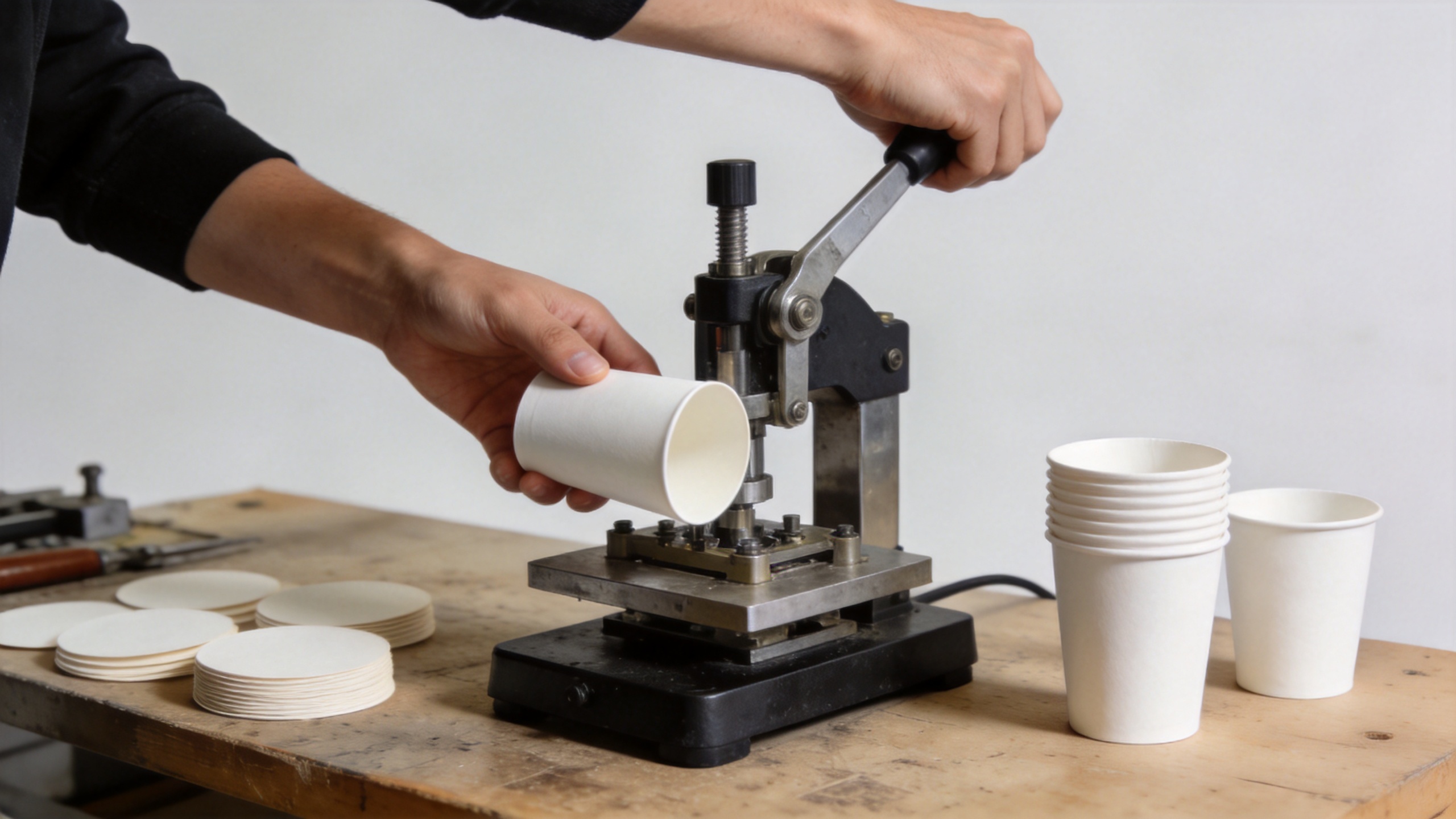
A manual paper cup machine is a cup-forming unit in which an operator carries out some or all of the feeding, positioning, forming, sealing, or finishing work by hand. The label is not a single technical standard. One manual paper cup machine may use a hand lever and simple heated tooling, while another uses assisted heat or pneumatic functions but still relies on the operator to load blanks and move the cup through each stage. For that reason, buyers should ask which operations are manual before comparing prices or capacity.
For training, samples, trials, or a limited product range, a manual paper cup machine can be a practical way to understand the forming process without moving directly to a continuous production line. It is not a substitute for an automatic former when the required output, consistency controls, and labor plan call for automation. The useful question is not whether a manual machine is “better,” but whether its workflow fits the intended cup, material, and production purpose.
How a Manual Paper Cup Machine Forms a Cup
Paper cups begin with prepared cup-wall blanks and bottom discs. A typical manual paper cup machine guides the operator through a simplified version of the familiar forming sequence: place the blank, shape it around a mandrel or mold, join the side seam, add the bottom, form or secure the bottom seam, and finish the rim. Depending on the mechanical paper cup machine design, heating, pressure, rolling, and ejection can be hand-controlled, mechanically assisted, or partly automated.
That sequence explains why paper stock and cup geometry matter. The operator must align the blank consistently, and the tooling must suit the intended diameter, height, bottom shape, and rim. A mechanical paper cup maker may appear straightforward, yet a small change in coating, blank cut, or cup size can change the way the seam and bottom behave. Confirm the material and format with the equipment supplier rather than assuming that any paper blank will work.
What Is the Difference Between Manual, Semi-Automatic, and Automatic Equipment?
The distinction is mainly about how much work the operator performs and how continuously the machine runs.
- Manual paper cup machine: The operator loads and positions materials and may actuate each forming step. It is usually considered for learning, sampling, repair work, or limited runs.
- Mechanical paper cup machine with assisted functions: A machine may use powered heating, pressing, or a simple mechanical cycle while still requiring frequent manual handling. Suppliers may describe this differently, so confirm the actual workflow.
- Semi-automatic equipment: Some operations are powered or repeatable, but loading, transfer, inspection, or collection may remain operator-dependent.
- Automatic paper cup former: The process is organized as a continuous cycle with substantially less manual handling. Its suitability still depends on tooling, material, utilities, quality checks, and the required production rhythm.
These categories overlap in market language. A mechanical paper cup maker is not automatically a fully manual unit, and a manual paper cup machine is not automatically suitable for every small business. Request a step-by-step operating description and, where possible, a demonstration with the relevant cup stock.
Common Uses of a Manual Paper Cup Machine
Product samples and market testing
A manual paper cup machine can help a new food-service concept, packaging studio, or local brand make small sample sets before committing to larger production. It gives the team a chance to assess cup shape, print placement, rim feel, and basic assembly. The result should be treated as a sample-validation exercise, not as proof that a design will perform identically on a high-speed line.
Operator training and process learning
Because the steps are visible, a manual paper cup machine can make operator training more concrete. Teams can see how blank alignment, heat exposure, pressure, and bottom seating affect the cup. This is especially useful when a buyer needs to define an inspection routine before specifying more automated equipment. The most useful training record notes the material used, cup format, tooling, settings, defects observed, and corrective action.
Low-volume or specialized work
For occasional orders, prototypes, demonstrations, or one cup format, a manual paper cup machine may offer a controlled, hands-on workflow. Labor time, repeatability, and changeover effort should be calculated honestly. If the operator must perform each cycle, output can be constrained by handling and inspection time even when the forming action itself is quick.
Maintenance and process trials
A mechanical paper cup machine can also serve as a bench-scale aid for checking a new blank, coating combination, or rim profile. It cannot replace a full production acceptance trial, but it may reveal whether the paper feeds, wraps, and seals as expected. Keep conclusions conditional until the same material and cup geometry have been tested under the intended production conditions.
What to Check Before Choosing One
Before purchasing a manual paper cup machine, turn the project into a short confirmation list:
- Cup format: Define top diameter, bottom diameter, height, rim, and intended capacity. Ask whether dedicated tooling is needed.
- Paper and coating: Confirm the approved cup stock, thickness range, and sealing approach. For food-contact packaging, material compliance must be verified for the target market and finished cup system; it is not established merely by buying a machine.
- Operating sequence: Ask exactly who loads, heats, presses, trims, rolls, removes, and inspects the cup during each cycle.
- Utilities and safety: Check electrical supply, heating controls, guarding, hot-surface precautions, workspace ventilation, and operator instructions.
- Quality checks: Agree on how to inspect the side seam, bottom joint, rim, shape, and leakage performance using an appropriate test plan.
- Support scope: Clarify startup training, spare parts, documentation, and the conditions for a sample or acceptance review.
For buyers moving from manual work toward automation, this checklist also improves communication with a paper cup machine supplier. It converts a vague request for a mechanical paper cup maker into a usable description of the cup, materials, workflow, and acceptance conditions.
When a Manual Paper Cup Machine May Not Fit
A manual paper cup machine may be the wrong choice when output demand is steady, labor availability is limited, multiple cup sizes are changed frequently, or consistent forming quality must be maintained over a large run. In those situations, compare semi-automatic and automatic options on the complete workflow rather than on headline speed alone. Material feeding, quality inspection, collection, maintenance, and changeover all affect the final production rhythm.
Likewise, do not choose a manual paper cup machine solely because it appears to have a lower initial cost. The right comparison includes usable output, scrap handling, labor, tooling, training, utilities, service access, and the evidence required to approve the finished cup.
Final Takeaway
A manual paper cup machine is a hands-on cup-forming solution for controlled learning, samples, limited runs, and selected process trials. Its value comes from visibility and flexibility, not from a promise of universal productivity. If the cup material and format are already defined, ask for a workflow review that covers tooling, heat-sealing method, operator tasks, safety, and the quality checks required for your application. That is a more reliable starting point than choosing a manual paper cup machine by name alone.
 ONLINE