
 EN
EN

Distinct operational features of automated paper cup making machine
An automated paper cup making machine is easiest to evaluate when you follow the cup through the machine rather than starting with a headline output number. From an operations viewpoint, the important question is not simply whether the equipment is automatic. It is whether feeding, forming, heating, finishing, inspection, and collection remain understandable and repeatable under the paperboard, cup format, and staffing conditions you actually expect to run.
This matters because paper cup forming is a linked process. A clean result at collection depends on what happened earlier at feeding, blank positioning, side-seam heating, bottom insertion, and curling. The distinct value of a well-configured paper cup making machine is the way it coordinates those steps while giving operators usable places to observe, adjust, and record deviations.
1. Indexed motion turns separate forming actions into one repeatable sequence
Many automated machines use an indexed arrangement to move cup blanks through defined stations. In an open cam paper cup making machine, the cam-driven motion is intended to coordinate repeated actions such as blank transfer, side-wall forming, bottom placement, and rim work. The practical advantage is not a promise that every machine will run at the same speed. It is that the relationship between stations can be inspected as a sequence.
For an operator, this sequence creates a useful troubleshooting path. If the cup body is inconsistent, start by checking whether the blank is being presented consistently. If the bottom joint needs attention, inspect the handoff and heating conditions before assuming the final curling station is responsible. A paper cup making machine with clear, accessible motion zones supports this kind of cause-and-effect check better than a line that only exposes a finished cup at the end.
- Repeatable station timing: each operation has a defined point in the cycle.
- Visible motion relationships: technicians can compare an abnormal cycle with a normal one.
- Structured maintenance conversations: observations can be tied to a station instead of described only as “poor cup quality.”
2. Paper feeding is an operational checkpoint, not a background task
A paper cup making machine cannot produce consistent cups if paper blanks arrive inconsistently. Feeding involves more than delivering a blank: the machine must present the correct piece, in the correct orientation, at a time that matches the forming cycle. This is why operators should observe the feed path, blank separation, and transfer behavior during trial runs.
Paperboard batches, print treatment, coating, and blank geometry may change how material behaves. That does not mean the machine is necessarily at fault when a forming issue appears. It means a good operating review separates material behavior from mechanical timing. For a paper beverage container device, documenting the blank specification and the observed issue together makes later adjustments more reliable than changing several settings at once.
3. Seam and bottom forming must be judged as a linked quality loop
The central work of a paper cup making machine is transforming a flat blank and a bottom disc into a container with stable joins. Side-seam preparation, heating or sealing conditions, bottom insertion, and knurling or finishing are interdependent. A cup can look acceptable immediately after forming while still showing an issue when the process conditions or material combination are not aligned.
That is why a sensible acceptance discussion should define what will be checked, with which paperboard and coating combination, and at what point in a trial. For cups intended for food or beverage use, equipment alone does not establish food-contact suitability. Buyers should verify the paperboard, coatings, inks where relevant, and documentation against the requirements of the destination market. In the United States, for example, 21 CFR 176.170 addresses components of paper and paperboard in contact with aqueous and fatty foods; it is a material-compliance reference, not a machine certification.
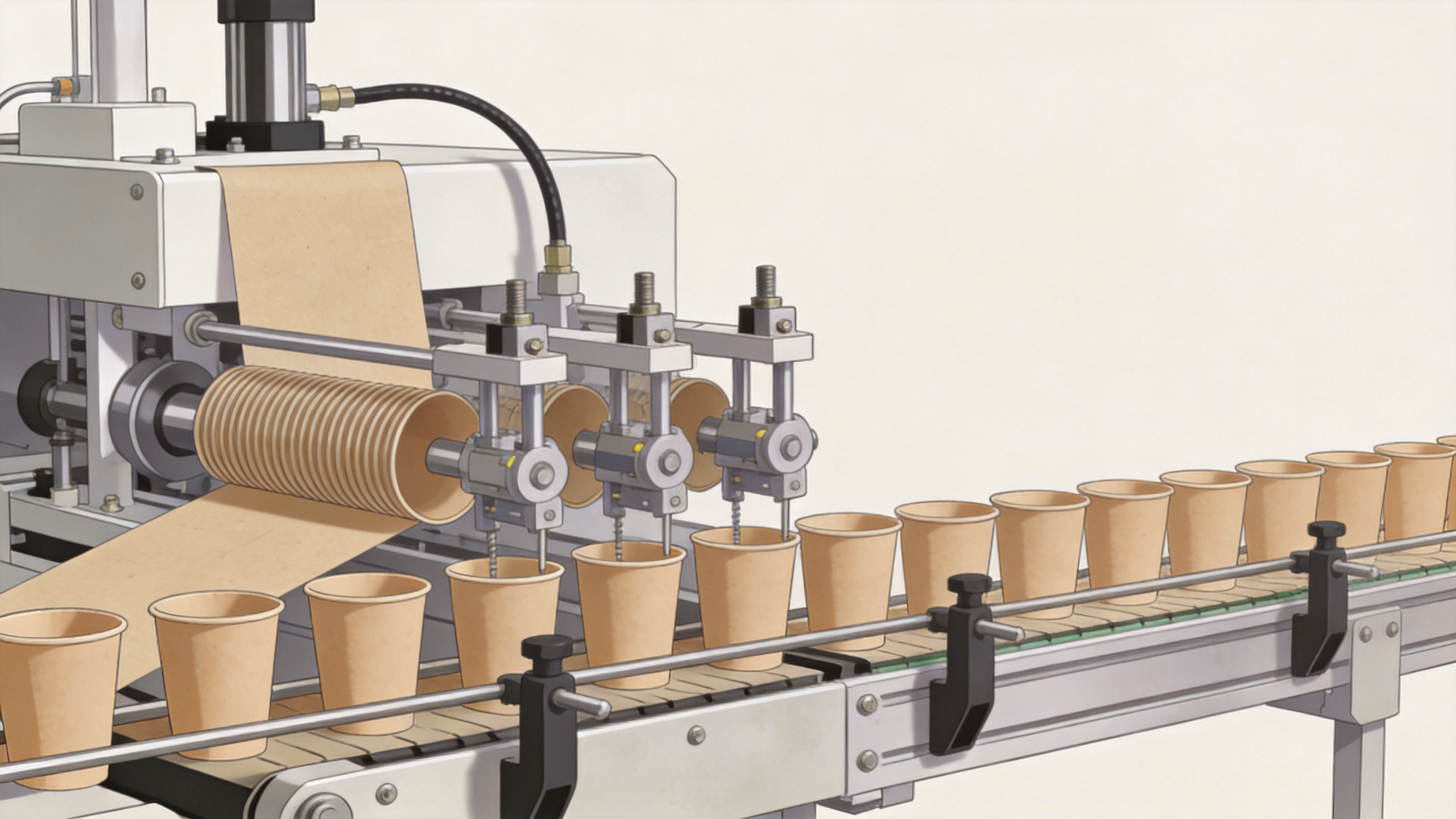
4. Automation should improve operator visibility, not remove judgment
A useful automated paper cup making machine reduces repetitive manual handling while preserving meaningful feedback. Controls, sensors, and alarms are most helpful when an operator can connect a message to a physical station and a corrective check. An unclear alarm may stop a line, but it does not necessarily help the team return the line to stable operation.
When reviewing a machine, ask practical questions: Can an operator identify the active station? Are routine cleaning and inspection points reachable? Is there a sensible way to record an abnormal cup, the time it appeared, the paper batch, and the station checked? These questions are especially relevant when comparing a conventional layout with an open cam paper cup making machine, where the operational value may include easier observation of mechanical movement. The exact accessibility still needs to be verified on the proposed configuration.
5. Cup collection is part of throughput stability
Collection is often treated as the last, simple step, yet it can expose a mismatch between forming rhythm and downstream handling. A paper cup making machine should be assessed as a workflow: are cups released cleanly, kept orderly enough for the next operation, and transferred without creating a pile-up that masks an earlier issue? The answer affects staffing, inspection practice, and integration with packing or counting equipment.
Rather than accepting a capacity claim in isolation, ask suppliers to describe the conditions behind it. Useful questions include the cup format, paper specification, test duration, operator involvement, rejection handling, and what happens after collection. This approach turns a headline number into an operating scenario that can be compared fairly across proposals.
6. Changeover readiness distinguishes a single-format line from a flexible operation
Every paper cup making machine needs a defined approach to tooling, setup, and verification when cup dimensions or materials change. The right level of flexibility depends on the production plan. A plant focused on one stable cup format may value a tightly controlled, repeatable setup. A business with several sizes or changing beverage programs may place more weight on the sequence and training required for changeover.
Before purchase, turn this into a short checklist:
- List each target cup format, including dimensions and intended use.
- Provide representative paper and coating information for a trial discussion.
- Ask which tooling, settings, and inspection points change between formats.
- Define who performs the changeover and how the first acceptable cups are confirmed.
- Plan spare and wear-part discussions before commissioning rather than after an interruption.
7. What to verify before selecting a paper cup making machine
A reliable comparison is rarely a feature checklist alone. It is a verification plan that connects the machine to your cups, materials, people, and downstream flow. Ask for a clear explanation of the forming path; observe how a paper beverage container device handles representative blanks; and agree on what acceptable seams, bottoms, rims, and collection behavior look like for the application.
In short, automation is valuable when it makes a process more controllable, not merely more complicated. An open cam paper cup making machine may offer a useful operating view of indexed actions, while other architectures may suit different maintenance or layout priorities. The selection decision should rest on a documented trial, accessible checks, material compatibility, and acceptance conditions—not on an unqualified speed claim.
FAQ
What makes an automated paper cup making machine operationally different?
Its main difference is coordinated station-by-station forming. The machine sequences feeding, body forming, bottom work, finishing, and collection so the process can be monitored and managed as a connected workflow.
Is an open cam paper cup making machine the right choice for every operation?
Not automatically. An open-cam layout can support observation of mechanical movement, but suitability depends on the cup format, material, maintenance capability, safety design, and the specific configuration offered.
Can a paper cup making machine guarantee food-contact compliance?
No. The machine supports forming; compliance must be verified for the complete cup system, including paperboard, coatings, inks where relevant, and the applicable destination-market requirements.
 ONLINE