
 EN
EN

What Is a Paper Cup Making Machine and How Does Its Working Flow Operate?
A paper cup making machine is automated forming equipment that turns prepared paperboard blanks and bottom discs into finished disposable cups. It is not simply a paper feeder with a mold: each station has to pass a partly formed cup to the next one while keeping the seam, bottom, and rim aligned. From a packaging-equipment selection perspective, the useful starting point is the cup specification, paper structure, and expected production rhythm—not a speed number alone.
That distinction matters when buyers compare a paper cup making machine with an automatic cup filling and sealing machine. The first forms empty cups; the second typically fills a product into a ready cup and applies a lid or seal. They can sit in the same production plan, but they solve different process steps.
What a Paper Cup Making Machine Does
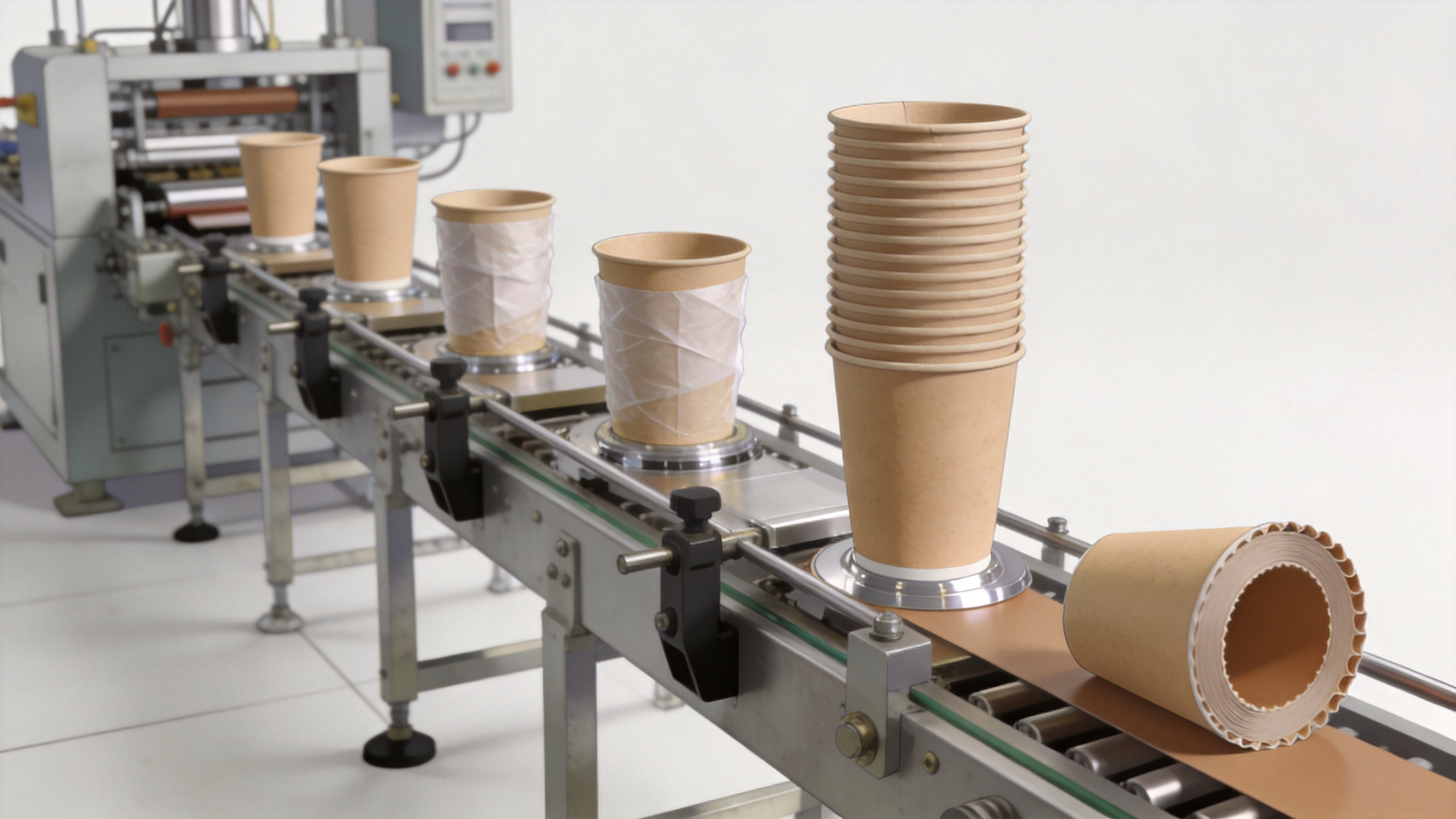
A paper cup making machine forms a cup from sidewall blanks and separate bottom blanks. The exact station arrangement differs by model, cup diameter, paper grade, coating, and tooling. Still, the production logic is consistent: feed material, form a cylindrical cup body, join the side seam, insert and seal the bottom, shape the rim, then inspect and collect the cup.
Most machines are configured around a particular cup-size range. Before comparing configurations, confirm the cup’s top diameter, bottom diameter, height, paperboard weight, coating type, intended beverage temperature, and whether frequent size changes are expected. If these conditions are not fixed, an attractive machine specification may not translate into stable production.
The Typical Working Flow, Step by Step
- Prepared blank feeding. Die-cut sidewall blanks are separated and fed into the forming section. Consistent blank shape and stack condition help the feeder present one piece at a time.
- Cup-body wrapping. A blank is wrapped around a forming mandrel to create the cup wall. The printed or coated side must be oriented correctly for the intended cup design.
- Side-seam heating and sealing. The overlap at the cup wall is heated and pressed so the coated layers bond. In practice, sealing settings must suit the material; more heat is not automatically a better result.
- Bottom-disc feeding. A circular bottom blank is introduced after the body has been formed. Timing between the body and bottom feed is critical because a misaligned disc can affect the following sealing steps.
- Bottom heating, pressing, and knurling. The bottom is joined to the cup wall, then mechanically worked to create a secure edge. Paper-cup process references commonly describe bottom sealing and knurling as key stages before final rim finishing.
- Top-rim curling. The open edge is curled to create a smoother drinking rim and add stiffness. Depending on the machine and cup format, there may be preheating or more than one curling-related station.
- Discharge and inspection. Finished cups are transferred to collection. Operators should inspect seam appearance, bottom attachment, rim shape, cleanliness, and stackability before the cups move to packing or a downstream filling line.
This is why a paper cup making machine should be evaluated as a timed sequence rather than as isolated parts. A feeder adjustment can show up later as a side-seam issue; a material change can affect both sealing behavior and rim formation.
Where the Auxiliary Equipment Fits
An automatic cup filling and sealing machine is normally downstream from cup forming. Once empty cups have passed visual and leak-related checks appropriate to the product, they may be conveyed or manually supplied to a filler. The filler doses the intended product, then a sealing station applies the specified closure. The two machines need compatible cup dimensions, handling method, and line rhythm, but neither replaces the other.
A tea paper cup making machine usually refers to a paper cup forming configuration intended for tea-service cup formats, rather than a machine that makes tea. For a hot-tea application, the buyer should define the cup size, paperboard/coating specification, lid approach, and target market’s food-contact requirements. For example, U.S. food-contact paper and paperboard applications may need to be assessed against applicable requirements such as 21 CFR 176.170; that is a material-and-market checkpoint, not a blanket certification statement for every cup or machine.
What Controls Consistent Output?
- Paper and coating compatibility: the material needs to seal properly under the selected heat and pressure conditions.
- Tooling matched to the cup: cup diameters, height, and shape must align with the forming tooling and stations.
- Clean, stable feeding: warped, poorly separated, or inconsistent blanks make timing harder to control.
- Controlled heat and pressure: side seams and bottom joints require a validated process window for the material.
- Planned changeovers: where multiple cup formats are required, ask what tools, adjustments, and trial checks are needed at each switch.
- Routine checks: inspection should include seam, bottom, rim, and overall cup appearance instead of relying only on the machine display.
A Practical Evaluation Checklist
When discussing a paper cup making machine with a supplier, provide real samples or fully dimensioned drawings. Then ask for the proposed material range, compatible cup sizes, station layout, changeover scope, electrical and air requirements, operator tasks, routine maintenance points, spare-part recommendations, and the acceptance checks that will be used during testing. It is also sensible to clarify whether the future line will connect to an automatic cup filling and sealing machine, because cup handling and downstream timing should be considered early.
Do not treat a quoted output rate as a promise for every cup. A realistic production decision considers the actual paper, cup geometry, sealing validation, planned stoppages, changeovers, and inspection routine. More accurately, not every issue originates with the equipment: blank quality, material storage, setup, and operator practice can all affect the finished cup.
Conclusion
A paper cup making machine transforms prepared sidewall and bottom blanks through feeding, body forming, seam sealing, bottom insertion and sealing, knurling, rim curling, and collection. Once that flow is clear, buyers can distinguish cup forming from filling and sealing, define their cup requirements more precisely, and ask better configuration questions. If your priority is a tea paper cup making machine or a line that later includes filling, start with the material, cup drawing, and downstream handling requirements; those details give a technical discussion a firmer basis than headline speed alone.
 ONLINE