
 EN
EN

Global market shifts within paper bowl machine industry
The market conversation around a paper bowl machine is changing. Buyers are no longer comparing a single headline speed or an entry price in isolation. They are weighing foodservice demand, bowl applications, paper and coating choices, regional service expectations, and the cost of changing formats. For a packaging-equipment buyer, that shift matters because a paper bowl machine is purchased to support a production workflow, not merely to make a container.
Search results still focus heavily on speed, bowl sizes, controls, and coating compatibility. Those are useful starting points, but they do not explain why demand is shifting or how the evaluation of a paper bowl machine should change. This article looks at the market forces behind that gap and turns them into practical questions for manufacturers, converters, and procurement teams.
Why market shifts are reshaping the paper bowl machine conversation
Foodservice packaging demand is one important backdrop. A Freedonia search result forecasts U.S. demand for single-use paper and paperboard foodservice products to grow 3.3% annually to US$16.0 billion in 2027. That figure concerns a wider foodservice-paper category, not global output from every paper bowl machine. Still, it signals why processors are examining bowl formats alongside cups, lids, and other takeaway packaging.
At the same time, third-party market pages publish differing estimates for bowl-forming equipment. One search result estimates the paper bowl forming machines market at US$156.89 million in 2025 and US$170.53 million in 2026. It should be treated as a directional estimate rather than an independently verified market fact. The more durable takeaway is that buyers are asking how a paper bowl machine fits an application mix that may change by region, customer channel, and meal type.
Growth in delivery, prepared foods, and convenience retail can favor soup, salad, grain, snack, and noodle formats. However, demand is not uniform. A bowl program intended for hot noodles creates different forming, sealing, handling, and material questions from one intended for cold salads. Before comparing suppliers, teams should translate the target food application into a usable brief for the paper bowl machine.
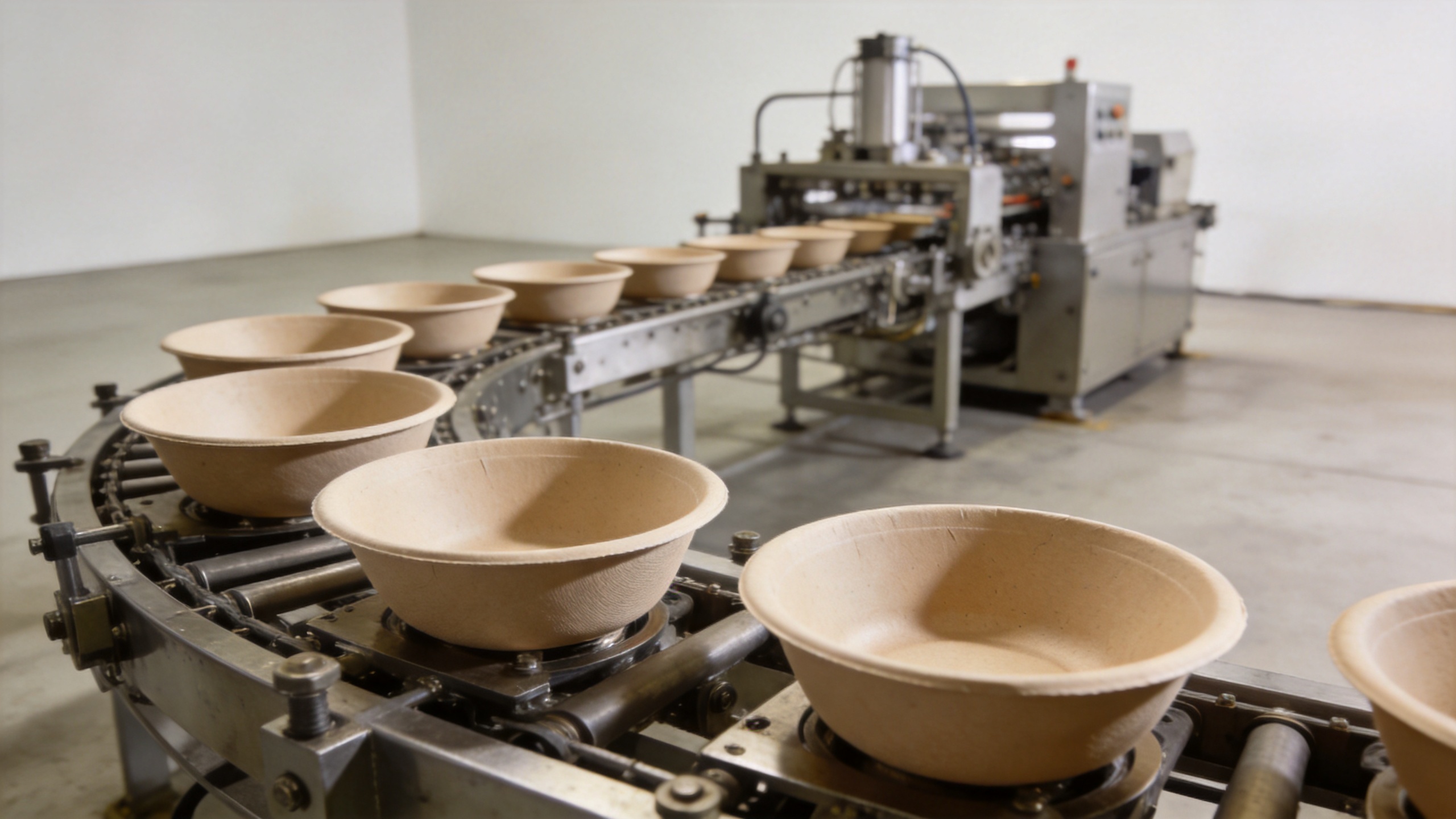
Application mix is replacing one-size-fits-all thinking
A noodle paper bowl machine is often discussed as though it were simply a bowl former with a different label. In practice, the relevant question is whether the proposed configuration and process have been reviewed for the intended bowl geometry, paper specification, coating arrangement, filling temperature, and downstream handling. Those conditions should be confirmed with sample material and an agreed acceptance process; a generic product claim cannot settle them.
This is why the market is moving from “What speed can the machine reach?” to “Which formats can we run reliably within our operating plan?” A paper bowl machine may look suitable on a brochure yet create avoidable changeover pressure if the plant expects frequent shifts between sizes, shapes, or paper constructions. Conversely, a focused format program may justify a simpler operating plan. The right answer depends on production priorities, not on an assumed universal configuration.
- Map every planned bowl size and shape, including likely next-year additions.
- Document paper grade, coating structure, and supplier variation before equipment discussions.
- Define the food application and filling conditions rather than describing the product only as a “paper bowl.”
- Include changeover frequency and downstream packing rhythm in the requirement sheet.
Material and sealing choices deserve earlier review
Material discussion has become more important as buyers pursue packaging strategies that balance product protection, fiber content, sourcing availability, and local expectations. A paper bowl machine must be assessed against the actual material plan, because bowl performance is shaped by the interaction of paper, coating, forming process, and use conditions. It is more accurate to say that a material requires validation than to promise that any paper construction will perform equally well.
An ultrasonic paper bowl machine may be relevant where ultrasonic sealing is under consideration. But “ultrasonic” is not a shortcut for suitability. Procurement teams should ask which interfaces are being sealed, what sample validation is planned, how the process is controlled, and how the selected paper structure responds. If the business is also evaluating conventional approaches, compare them against the same material, bowl design, quality criteria, and operator workflow.
That disciplined approach protects against a common mistake: treating a feature list as proof of finished-bowl performance. The better sequence is to confirm the use case, review the material, then test the forming and sealing process.
Regional purchasing criteria are becoming more operational
Global sourcing has expanded the candidate list for a paper bowl machine, but it has also made implementation details more visible. A procurement decision should include shipping terms, installation responsibilities, spare-parts planning, remote support, training language, utilities, electrical requirements, and the people who will approve samples. These are not secondary commercial details. They influence how quickly a new line can move from delivery to stable production.
For this reason, purchasing teams increasingly compare total operating readiness rather than only quotation totals. A lower initial quote may be less useful if format parts, documentation, support response, or acceptance criteria remain unclear. The point is not that one sourcing route is inherently better. It is that the decision framework for a paper bowl machine needs to expose these conditions early.
What suppliers and converters should monitor next
Market shifts favor organizations that can turn broad demand signals into a specific production plan. For suppliers, that means asking better discovery questions before recommending a paper bowl machine. For converters, it means building a requirement sheet that connects sales forecasts to bowl formats, materials, quality checks, and staffing realities.
| Market signal | Operational question | Decision evidence to request |
|---|---|---|
| More hot-food and noodle applications | Which bowl structures and filling conditions are planned? | Material samples, forming trial scope, and quality criteria |
| More format variety | How often will formats change? | Tooling list, changeover sequence, and operator plan |
| Cross-border sourcing | Who owns installation and post-delivery support? | Commissioning scope, documentation, parts plan, and acceptance terms |
| Cost pressure | What costs persist after purchase? | Consumables, maintenance tasks, spares, training, and downtime assumptions |
A practical response to a moving market
The global market does not call for a universal paper bowl machine. It calls for a better match between application demand and production conditions. Start with the intended bowl program, verify the paper and sealing assumptions, and define what stable production means for your team. Then evaluate configuration, service, and total operating readiness against that brief.
That approach makes room for an ultrasonic paper bowl machine or a noodle paper bowl machine when the use case supports it, while avoiding the mistake of treating either label as a complete technical specification. In a changing market, the strongest purchasing decision is usually the one that makes its conditions visible before the order is placed.
 ONLINE