
 EN
EN

What tasks can machine for paper cup production handle?
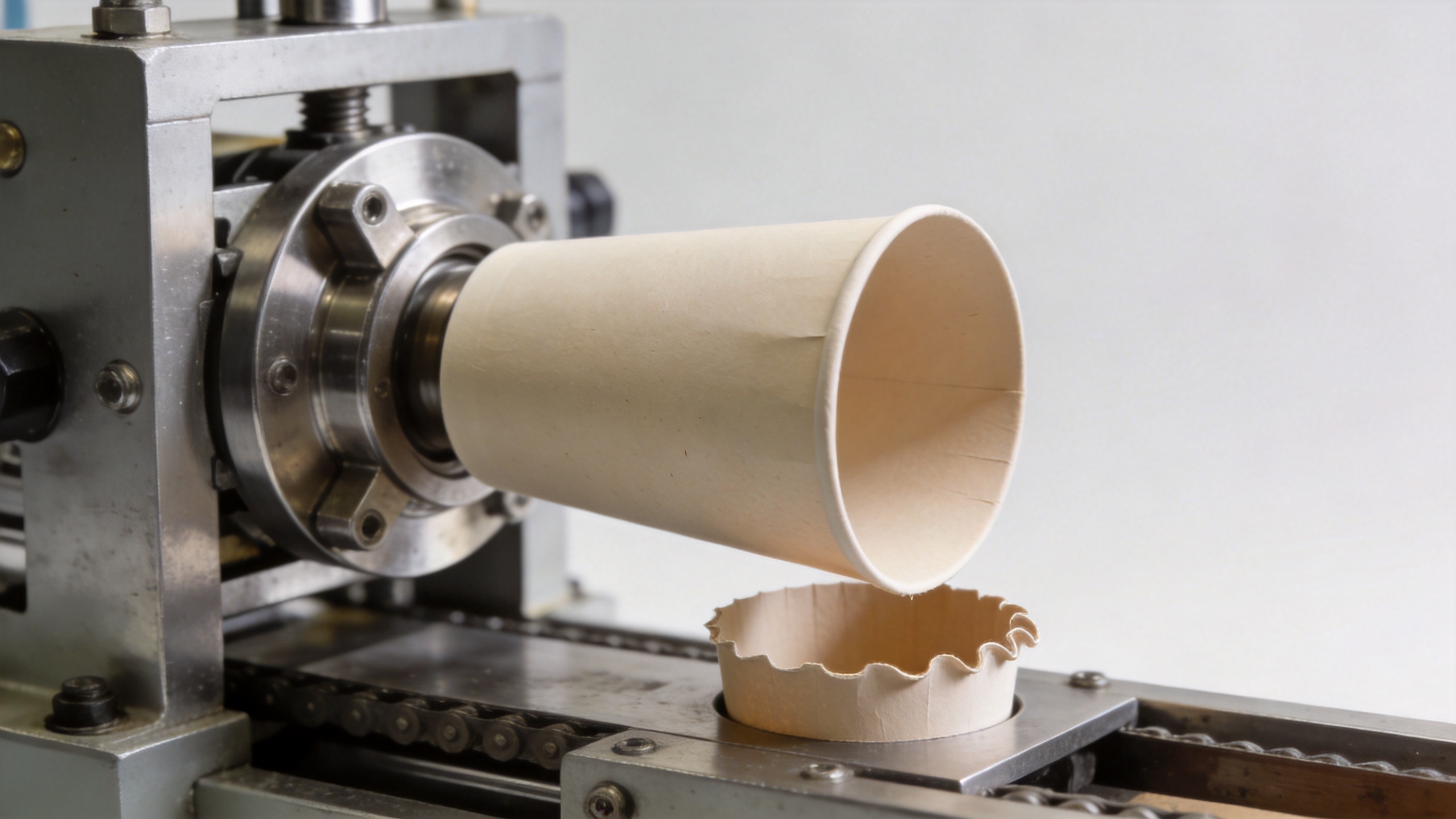
A machine for paper cup production is built to turn prepared paper components into usable cups through a linked sequence of feeding, forming, sealing, finishing, and inspection tasks. From a packaging-equipment selection perspective, the useful question is not simply whether the machine “makes cups.” It is whether its stations match the cup size, paper structure, print workflow, output rhythm, and changeover requirements of a specific project.
In a typical paper cup manufacturing plant, the cup-forming machine works after the sidewall blanks and bottom pieces are ready. Some suppliers provide separate equipment for printing, die cutting, and blank preparation; others help coordinate those upstream processes. Separating these tasks before comparing configurations makes the production route easier to evaluate.
Where a machine for paper cup production fits in the workflow
Paper cups are commonly made from coated paperboard sidewall blanks plus circular bottoms. The forming machine takes these prepared components and performs the assembly work. Depending on the model and material, sealing may use heat or another configured activation method. Material coating, cup geometry, and intended use should be confirmed before treating a process setting as final.
A practical workflow has two boundaries:
- Upstream preparation: artwork, printing, cutting, and delivery of correctly shaped cup blanks and bottom stock.
- Cup forming and finishing: feeding, body forming, side-seam sealing, bottom insertion, bottom sealing, rim curling, discharge, and inspection.
This distinction matters when a buyer also asks about a digital flexo plate making machine. Plate making supports the printing preparation chain; it does not replace the cup-forming stations that assemble and finish the cup. A project may need both capabilities, but they solve different tasks.
Core tasks handled on the forming line
1. Feed and position the sidewall blank
The first task is controlled feeding. A blank must arrive at the forming position consistently so its printed side, overlap area, and orientation are correct. This is more than a transport step: poor blank alignment can show up later as an uneven seam or a visibly inconsistent cup. Before selecting a machine for paper cup production, confirm the blank range, coating type, and how often the plant will switch cup formats.
2. Shape the cup body and seal the side seam
The machine wraps each blank around a forming tool to create the tapered body, then closes the side seam. The seal area must suit the paperboard and coating used in the project. More accurately, not every seam concern is caused by the machine alone; blank quality, overlap design, material variation, heating conditions, and operator setup can all affect the result. For that reason, buyers should ask for a sample-based validation plan instead of relying on a generic output claim.
3. Feed, insert, and attach the bottom
After the body has been formed, the line feeds a bottom disc into position and joins it to the cup wall. This station coordinates timing between the body and the bottom component. If the bottom stock does not match the specified diameter or coating behavior, a well-configured machine may still require adjustment. In a paper cup manufacturing plant, the bottom-material specification belongs on the same requirement sheet as the target cup size and sidewall blank.
4. Seal and knurl the bottom area
Bottom sealing is one of the most important functional tasks. The bottom joint is processed so the connection between the body and disc is secure; knurling is commonly used as part of this operation. A consistent knurling result helps support the intended leak-resistance of the finished cup, but it is not a substitute for checking the complete material-and-process combination. The correct approach is to define the inspection method, sampling conditions, and acceptance boundary before production starts.
5. Curl the top rim
The rim-curl station rolls the upper edge into a smoother rim. It affects handling, lid compatibility where relevant, and the visual finish of the cup. For projects with a special rim profile or a frequent size change, the buyer should confirm which tooling is needed and what must be adjusted between formats. This is a good example of why comparing speed alone is not enough: a line optimized for one stable cup format may be a different fit from a line that changes tools frequently.
6. Discharge, count, and prepare cups for downstream handling
Once formed, cups are discharged for collection, counting, packing, or transfer to a downstream operation. The handoff should be reviewed as part of the entire production rhythm. A machine for paper cup production may perform its own forming tasks reliably, while an undersized collection or packing arrangement becomes the real bottleneck. Look at the route from blank supply to packed cup, not only the central forming station.
Tasks that need separate equipment or coordination
A cup-forming machine does not necessarily print the graphics, manufacture flexographic plates, or convert parent rolls into all required blanks. Printing can be handled by a flexographic press and related prepress workflow. If the design calls for flexographic artwork, a digital flexo plate making machine may be part of the upstream print-preparation discussion. Die cutting or blank conversion may also be separate from cup forming.
That separation is useful for planning. It lets the team define who owns artwork approval, blank dimensions, print registration, material delivery, forming trials, and finished-cup inspection. For international projects, documentation, installation scope, training, and destination requirements should likewise be confirmed rather than assumed.
What to verify before choosing the equipment
- Cup specification: list the diameter, height, volume, taper, rim requirements, and intended use.
- Material specification: identify the paperboard structure, coating, blank design, and bottom-stock details to be tested.
- Production rhythm: define target output together with changeover frequency, staffing, collection, and packing capacity.
- Quality checks: agree how side seams, bottoms, rim finish, appearance, and dimensional consistency will be evaluated.
- Upstream coordination: clarify whether printing, plates, blank conversion, and forming are supplied as separate workstreams.
Turn the task list into a practical brief
A useful brief for a machine for paper cup production is a process brief, not just a request for a price. Include cup drawings or samples, paper and coating information, expected format changes, the desired print workflow, and the inspections that matter to your customer. ZheJiang RUIDA Machinery focuses on paper-cup and food-packaging equipment, including automatic paper cup machine, servo paper cup former, and flexographic printing press product directions. A technical discussion can then focus on the conditions that need confirmation rather than making assumptions about capability.
In short, the machine can feed prepared materials, form and seal the cup body, attach and process the bottom, curl the rim, and release finished cups for the next handling step. The upstream printing and plate-making route, as well as the final quality standard, should be planned alongside it. Start with the intended cup and material, then verify the stations, tooling, and acceptance checks that support that production plan.
 ONLINE