
 EN
EN

Emerging Global Trends for the Paper Cup Machine Sector
The paper cup machine sector is being reshaped by a simple commercial reality: foodservice buyers no longer ask only for more cups. They ask for a broader range of formats, more credible material choices, dependable print quality, and predictable output across markets. For a converter, that changes the brief for every paper cup machine investment. The relevant question is not “How fast can it run?” but “How well can it keep a profitable mix of products moving?”
From a food-packaging application perspective, the strongest global trends are converging around flexibility, process control, and export readiness. A manufacturer serving cafés, quick-service restaurants, distributors, and regional brand owners needs a paper cup machine plan that can respond to those pressures without turning every new order into a long setup exercise.
1. Sustainability is becoming a manufacturing specification
Sustainability is often discussed as a material story, but it is increasingly a production story too. A paper cup may use different board grades, barrier systems, print designs, or collection claims depending on the destination market. The European Commission continues to publish rules related to reducing consumption of single-use plastic food containers and beverage cups. That does not make one substrate automatically compliant everywhere; it does mean converters need tighter control of the materials and documentation flowing through a paper cup machine line.
For equipment buyers, the practical implications are clear:
- Ask whether the paper cup machine can be set up consistently for the board and coating combinations your customers actually approve.
- Check how stable forming, curling, bottom sealing, and leak testing remain when material behavior changes.
- Build traceability into material receiving, job setup, and finished-carton release rather than relying on a marketing description after production.
A market-research forecast cited in Step 3 places the global paper-cups market at USD 11.35 billion in 2025, with quick-service restaurants among the major end-use segments. Forecast totals differ by methodology, but the direction is useful: high-volume foodservice demand and waste-policy pressure are arriving together. The result is more scrutiny on how a paper cup machine handles quality, not just capacity.
2. The winning paper cup machine is more flexible, not merely faster
Large cup runs still matter. Yet many converters now need to produce hot-drink cups, cold-drink cups, promotional runs, and regional formats in the same operating week. That makes changeover discipline a competitive variable. A paper cup machine that delivers impressive nominal speed but loses hours to adjustments can be less useful than a stable line with repeatable tooling changes and clear operator settings.
When comparing a paper cup machine, map the likely product mix before comparing brochure speeds. Include cup diameters, heights, paper weights, print complexity, and anticipated seasonal peaks. Then ask operators and suppliers where the process is most sensitive: blank feeding, side-seam alignment, bottom insertion, heating, knurling, rim curling, or final discharge. These are the places where scrap and rework usually reveal whether the line matches the business model.
| Trend signal | What it changes on the shop floor | Paper cup machine question |
|---|---|---|
| More SKU variation | More setup and verification events | How are recipe settings, tooling changes, and first-off checks managed? |
| Material experimentation | Different forming and sealing windows | Which trials are needed before a new board or barrier is released? |
| Shorter campaign runs | Higher value placed on uptime between jobs | What is the realistic changeover sequence and operator workload? |
| Export orders | More customer-specific inspection requirements | What quality data can the paper cup machine team record per batch? |
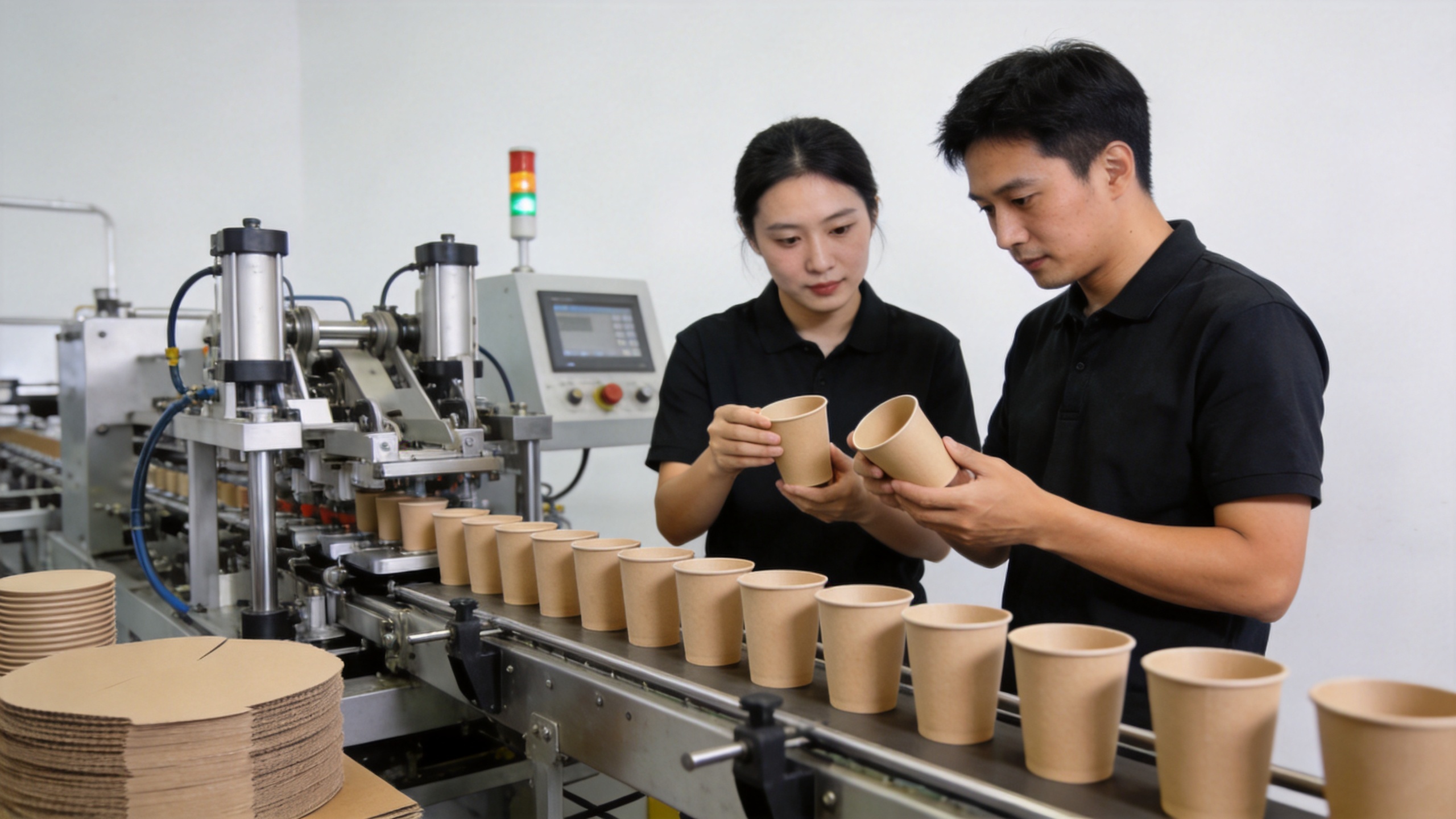
3. Printing and cup forming are being planned as one workflow
Branded beverage packaging increasingly carries seasonal artwork, local-language information, QR-led promotions, and differentiated cup sizes. That is why the rise of the digital paper cup printing machine is relevant even when a converter continues to use conventional printing for core volume. Digital capability can suit short runs, artwork validation, or responsive local programs; conventional processes may remain appropriate for stable, longer runs. The important point is workflow compatibility, not a blanket claim that one print route replaces another.
A reliable paper cup machine program therefore starts upstream. Print registration, ink or coating suitability, blank die-cut accuracy, and curing or finishing decisions should be reviewed with forming in mind. A visually attractive blank that varies at the seam or curl can create avoidable waste later. Teams benefit from a joint pre-production review in which print, converting, and paper cup machine operators agree on samples, tolerances, and escalation rules.
4. Food-container diversification is expanding the equipment conversation
Cup converters are also watching adjacent formats. Demand for takeaway meals, bakery items, and delivery-friendly packaging means some buyers evaluate a paper food container making machine alongside cup-forming equipment. The products are not interchangeable, and the tooling, forming geometry, material behavior, and quality checks may differ. Still, the commercial logic is familiar: customers prefer suppliers who can discuss a coordinated packaging range without losing control of process detail.
For that reason, a sector trend worth tracking is modular planning. Rather than assuming one line must make every product, assess whether a paper cup machine platform, separate food-container equipment, and compatible print workflow can share upstream planning, maintenance practices, spare-parts discipline, and operator training. This approach avoids both extremes: underinvesting in adjacent demand or buying complexity before the order pipeline justifies it.
5. Quality data is moving closer to the machine
Global buyers increasingly want evidence that the products they receive were made under controlled conditions. In practice, that means the paper cup machine sector is moving toward more structured in-process checks: seam appearance, bottom integrity, rim consistency, dimensional verification, and leak-test sampling. The exact inspection plan should reflect the cup design and customer agreement, but the direction is consistent. Quality is no longer a final inspection department’s concern alone.
Start with a modest, usable control plan. Record the job number, material lot, tooling set, operator, startup approval, inspection frequency, defects found, corrective action, and final disposition. Pairing that record with a well-maintained paper cup machine helps teams identify whether variation is linked to material, tooling wear, setup, or operating conditions. It also improves technical conversations with overseas customers because questions can be answered with a production record rather than a general assurance.
6. Regional growth requires regional assumptions
North America, Europe, the Middle East, Africa, and Asia-Pacific do not buy cups under identical conditions. Market research cited in the factual review highlights continuing foodservice demand and regional sustainability initiatives, while local rules, collection infrastructure, climate, beverage habits, and distributor requirements vary. A paper cup machine supplier should therefore avoid one-size-fits-all claims about recyclability, output, or customer acceptance.
Instead, build an export brief for each target region. It should cover the customer’s cup applications, approved material route, decoration needs, local regulatory checks, carton and pallet expectations, commissioning support, and spare-parts response. For manufacturers serving global markets, this structured preparation is often more valuable than adding an unproven feature to a paper cup machine.
A practical investment checklist for 2026 planning
- Define the product mix the paper cup machine must support over the next 12 to 24 months.
- Trial customer-approved materials before promising sustainability or compliance outcomes.
- Measure changeover time, startup scrap, and recurring defect causes—not only rated speed.
- Review print-to-forming compatibility, especially when adding a digital paper cup printing machine workflow.
- Evaluate adjacent demand separately if a paper food container making machine is under consideration.
- Make batch records and preventive maintenance part of the commercial offer, not an afterthought.
The global paper cup machine sector is becoming more demanding, but it is not becoming less accessible. Companies that connect material validation, flexible production, print planning, and documented quality can respond to change with fewer surprises. A sensible next step is to evaluate the paper cup machine as part of a complete packaging workflow—one designed around the products, markets, and service promises your business can genuinely support.
 ONLINE