
 EN
EN

Growing Market Demands for Paper Glass Machine Devices
Demand for takeaway drinks, quick-service counters, workplace refreshment, and branded beverage programs is changing how converters evaluate a paper glass machine. The question is no longer simply whether a machine can form a cup. Buyers need to know whether a paper glass machine can support the cup formats, materials, changeovers, and quality checks that a growing order book requires.
From a packaging-equipment selection perspective, the most useful starting point is the production scenario, not a headline speed figure. A paper glass machine should be assessed against the intended cup size, board construction, output rhythm, staffing approach, and acceptance criteria. That framework gives growing businesses a clearer way to connect market opportunity with equipment decisions.
Why demand is changing the paper glass machine conversation
Several market signals point to continued demand for convenient foodservice cups. One published Freedonia market summary projects global demand for foodservice disposable cups to rise 3.4% annually to 491 billion units in 2028. A separate published estimate from Precedence Research places the paper-cups market at USD 8.41 billion in 2026 and forecasts 4.27% annual growth through 2035. These are third-party directional estimates rather than a forecast for any individual converter, but they help explain why more buyers are reviewing a paper glass machine before capacity becomes a constraint.
Rising cup consumption does not automatically mean that every facility needs the fastest paper glass machine. Demand can arrive as more SKUs, seasonal promotions, different beverage sizes, or tighter delivery windows. In those cases, stable changeovers and repeatable forming quality may matter as much as nominal pieces per minute. A practical investment decision examines the whole production rhythm: blank supply, forming, inspection, collection, packing, and the time needed to switch between orders.
Market pressures that shape equipment requirements
More beverage occasions and more cup variants
Cafés, quick-service restaurants, event operators, and delivery-led beverage brands often need a mix of sizes rather than one high-volume cup. This creates a planning issue for a paper glass machine: can the tooling and setup process match the intended mix without making short runs uneconomical? Before comparing configurations, document the cup diameters, heights, rim requirements, wall construction, and expected order proportions. If paper stock and cup geometry are already fixed, that document is usually more informative than an isolated speed claim.
Material compatibility is now a commercial issue
Coating choices, print requirements, and disposal communication can influence cup programs. The equipment review should therefore include the paperboard or blank specifications that will actually be used. A paper glass machine may need different settings or validation work when material behavior changes. Rather than treating all paper blanks as interchangeable, ask how forming consistency, sealing, visual finish, and scrap monitoring will be checked for the target materials.
For teams searching for a water paper glass machine, it is especially important to define what “water” means in the operating brief: drinking-water cup format, water-based coating expectations, or another application condition. The term alone does not establish material compatibility. A supplier discussion should convert it into a specific cup drawing, material sample, barrier requirement, and test plan.
Reliable output matters more than a peak number
Search results commonly emphasize hourly capacity. That is understandable, but a paper glass machine should be compared through usable output over a production shift. Ask which conditions underpin the quoted rate, how changeovers are handled, what routine cleaning is expected, and which quality points are inspected. The goal is not to demand an absolute promise; it is to make the quoted configuration comparable with the buyer’s own production plan.
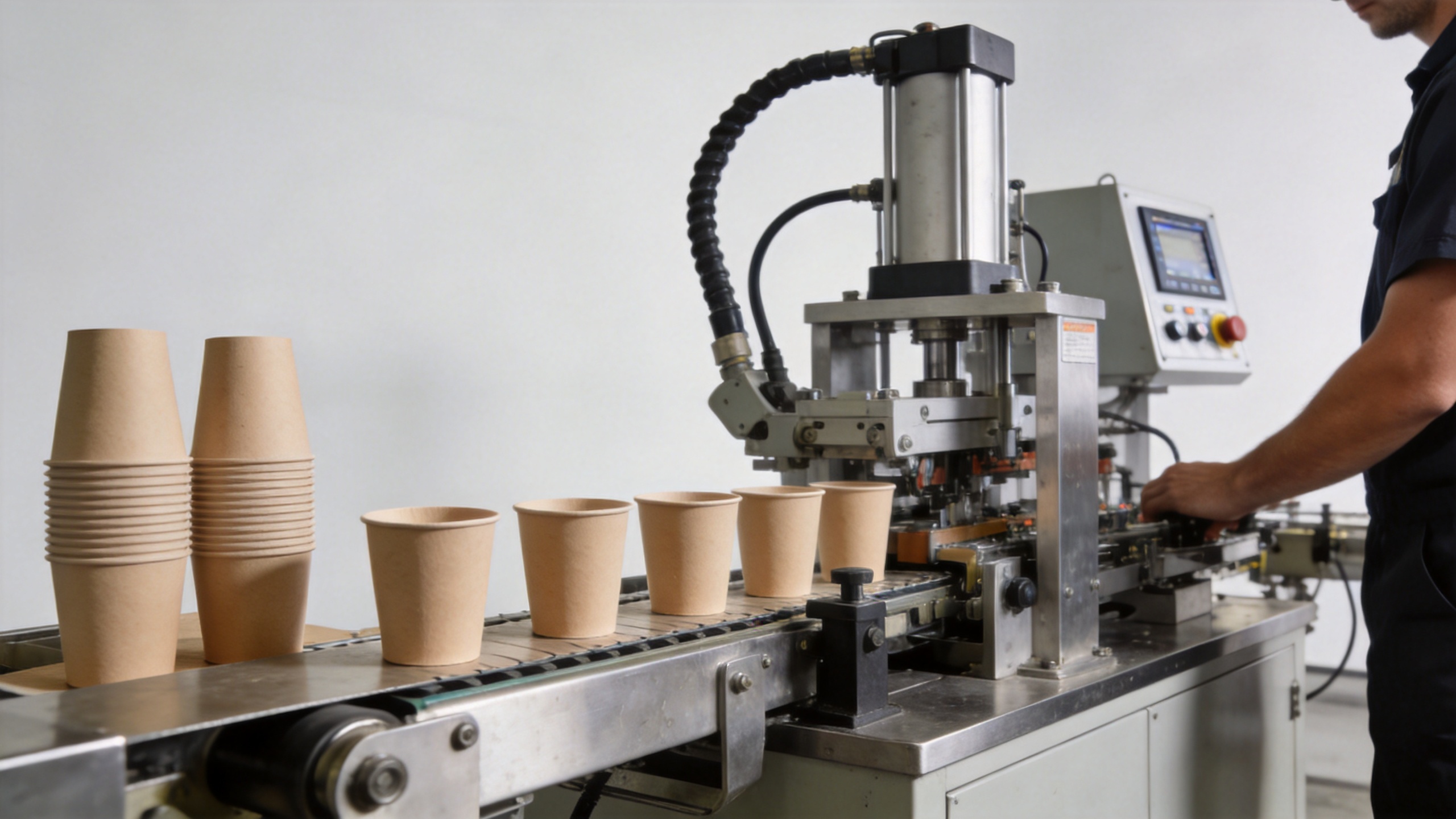
What buyers should evaluate before choosing a paper glass machine
| Decision area | Questions to clarify | Why it matters |
|---|---|---|
| Cup program | Which sizes, shapes, and wall constructions are planned? | Defines tooling and changeover needs for a paper glass machine. |
| Material brief | Which blank, coating, print, and sealing conditions apply? | Reduces uncertainty around forming and finish quality. |
| Demand profile | Is growth coming from one repeat SKU or many smaller orders? | Shows whether flexibility or sustained output deserves priority. |
| Quality plan | How will leaks, rim quality, print alignment, and cup shape be checked? | Turns a paper glass machine purchase into a measurable acceptance process. |
| Lifecycle support | What are the maintenance, spare-part, training, and response expectations? | Helps compare total operating impact beyond initial price. |
The table is deliberately operational. A paper glass machine that appears suitable in a catalog can still be a weak fit if its configuration was not reviewed against the actual cup and material combination. Conversely, a more modest configuration may be appropriate when a business needs repeatable quality and manageable changeovers first.
How a paper glass machine manufacturer can support demand planning
When speaking with a paper glass machine manufacturer, provide a concise technical brief instead of only requesting a price. Include cup drawings or samples, paperboard details, target production mix, utilities, planned inspection points, and the expected ramp-up schedule. This helps a paper glass machine manufacturer discuss configuration boundaries rather than make generic claims.
A productive conversation with a paper glass machine manufacturer should also cover acceptance criteria. For example, buyers can ask which cup types will be tested, what observations will be recorded during a trial, who supplies consumables, and how final settings are documented. These questions do not guarantee a particular outcome; they create a shared method for verifying fit before a project advances.
For growing operations, it is wise to compare the total workflow. A paper glass machine is one part of a line, so the downstream collection and packing process must keep pace. It is also sensible to ask how spare parts, operator training, routine maintenance, and future cup-format changes will be handled. Looking beyond the lowest quotation makes it easier to estimate total ownership impact.
A practical path from market demand to an equipment brief
- Map demand by cup type. Split forecast volumes by size, beverage use, wall construction, and seasonality.
- Set production priorities. Decide whether the main need is sustained volume, more frequent changeovers, or a balance of both.
- Confirm the material range. Supply sample blanks and define the quality checks required for the intended cup program.
- Compare paper glass machine configurations. Review the same production brief with each supplier so assumptions remain visible.
- Define an acceptance plan. Record the cup formats, test conditions, quality observations, and support responsibilities before ordering.
This process keeps market growth from becoming a vague justification for buying equipment. It converts demand into a clear specification for a paper glass machine, while leaving room to validate the details that vary by factory and material.
Conclusion
Growing demand for convenient beverage packaging is giving converters good reason to revisit capacity and flexibility. Still, the right paper glass machine is not selected by speed alone. The strongest choice connects the cup program, paper material, output plan, quality controls, and support expectations. By preparing that information before approaching a paper glass machine manufacturer, buyers can make supplier discussions more precise and build an expansion plan around verifiable operating conditions.
 ONLINE