
 EN
EN

Paper glass machine for beverage paper vessel creation
Choosing a paper glass machine is less about chasing a headline speed and more about building a repeatable route from a printed paperboard blank to a beverage vessel that holds its shape and resists leakage. From a food-packaging application perspective, the useful starting point is the finished drink: its serving volume, temperature, lid style, paper specification, and expected production rhythm. Those details determine whether a particular paper glass machine is a practical fit.
This article breaks the decision into the same sequence used on the shop floor: define the vessel, confirm material behavior, form and seal the body, create the bottom, and verify the finished cup. It also explains where a disposable paper glass machine or an ultrasonic paper glass machine may change the evaluation. The aim is not to promise a universal output figure, but to help a buyer ask better questions before committing to a line.
Start with the beverage vessel, not the machine brochure
A paper glass machine converts a die-cut, often printed, paperboard blank into a formed cup or paper glass. Before comparing equipment, make a simple vessel brief. Include rim diameter, bottom diameter, finished height, nominal fill volume, paperboard grade and coating, artwork orientation, and whether the cup is intended for cold drinks, hot drinks, or a controlled range of both. Add the expected lid interface and any downstream packing requirement.
That brief matters because cups that look similar may behave differently during forming. A tall narrow vessel needs different handling attention than a short wide one. Heavier stock can alter feeding and curling behavior; a coating or barrier choice can alter how the side seam responds to heat or ultrasonic energy. In other words, capacity alone does not define the right paper glass machine. Material, geometry, and process validation belong in the same conversation.
For food-contact applications, documentation should be matched to the destination market and actual use conditions. A machine supplier can explain its forming process, but the buyer should separately verify the paperboard, inks, coatings, and other food-contact materials with the relevant material suppliers and regulatory advisers. Treat compliance as a documented supply-chain check, not a label inferred from equipment type.
Follow the forming process step by step
Although configurations differ, a typical paper glass machine follows a recognizable process path. Understanding each station helps you turn a quotation into an acceptance plan.
- Blank feeding and orientation. Pre-cut paper blanks are separated and presented consistently. Inspect feeding stability with the actual stock, especially when printed surfaces, curl, humidity, or paperboard stiffness vary by batch.
- Side-wall wrapping and seam formation. The blank is wrapped around a forming mandrel and its side seam is joined. In a conventional arrangement, controlled heating activates the compatible seam area. With an ultrasonic paper glass machine, vibration energy is used at the seam under defined pressure and timing. Neither approach should be selected by slogan alone; run trials with the proposed paper and examine seam appearance, pull strength where applicable, and leak-test results.
- Bottom insertion. A circular bottom is fed into the formed side wall. Its timing must stay synchronized with the body-forming cycle to avoid skewed bottoms, incomplete seating, or intermittent stoppages.
- Bottom heating, knurling, and sealing. The lower joint is formed and mechanically finished to create the seal. Check the consistency of the knurled area around the circumference rather than accepting a single visual sample.
- Rim curling and discharge. The upper rim is curled for handling and lid compatibility, then the finished vessel is collected. A clean curl is only useful when it remains consistent across normal running conditions and the intended lid fit.
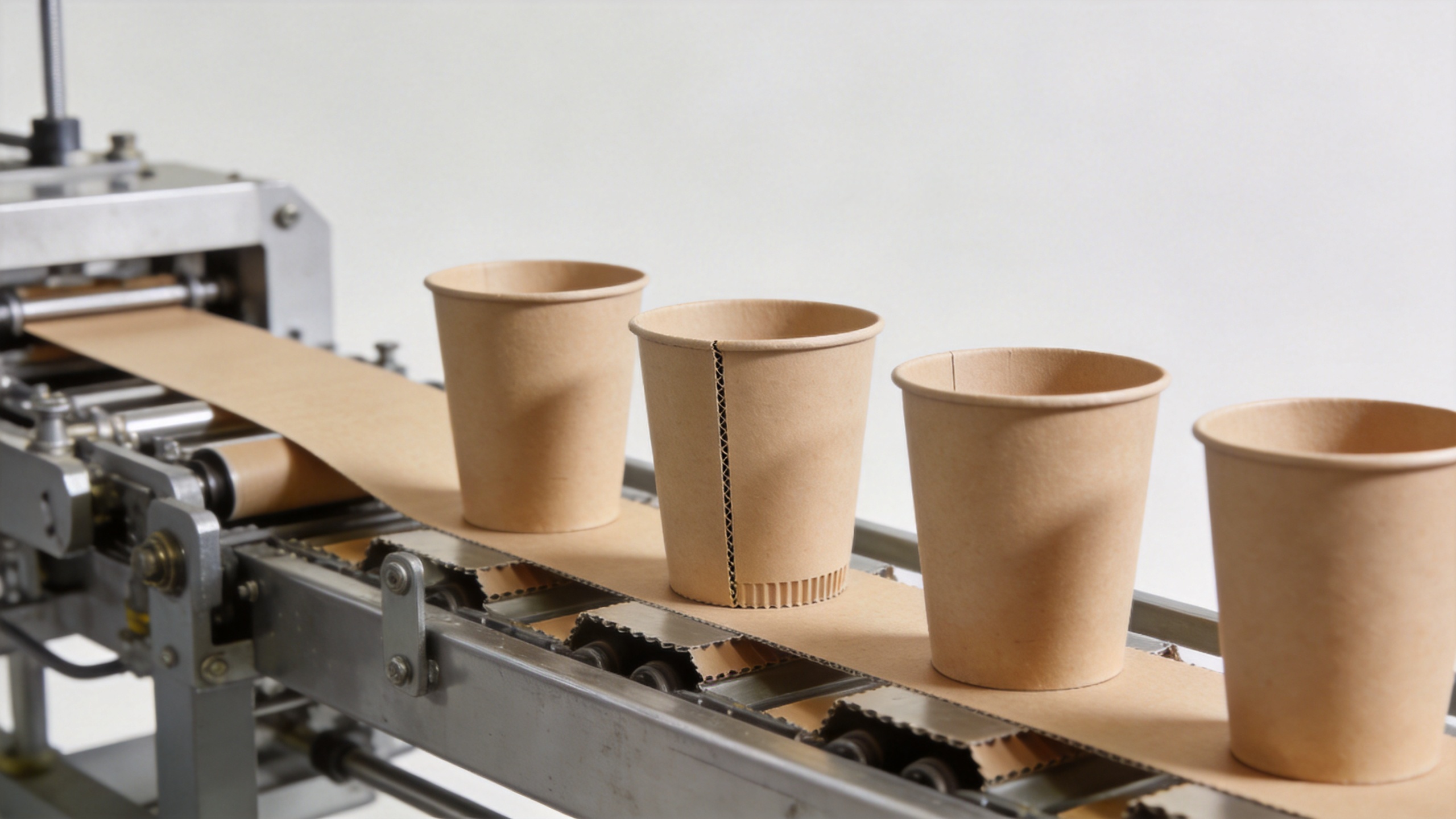
This sequence shows why a paper glass machine should be evaluated as a system. A fault visible at discharge may originate in stock feeding, mandrel wrapping, seam energy, bottom timing, or a change in the material lot.
How to assess disposable and ultrasonic options
The phrase disposable paper glass machine generally points to equipment used for single-use beverage vessels, but it does not by itself define material compatibility, cup dimensions, automation level, or quality controls. Ask the supplier to map the proposed configuration to your actual blank and vessel drawing. Also clarify which tooling is included, what changes when sizes change, and which checks are expected before a new specification is released.
An ultrasonic paper glass machine may be worth evaluating when the planned materials and seam design are suitable for ultrasonic joining. Published comparative work on paper-cup manufacturing has reported stronger sealing consistency for ultrasonic joining than hot-air sealing under its tested conditions. That finding is useful as a trial hypothesis, not as a blanket guarantee. Test the specific coated or barrier paperboard, print coverage, blank tolerance, and operating window that your project will use.
A practical comparison asks four questions: Does the seam method suit the material? Can operators see and diagnose a poor seam quickly? What consumables or maintenance actions are required? And can the line repeat acceptable results after stops, changeovers, and routine cleaning? A suitable paper glass machine should answer those questions with evidence from your own samples.
Build quality checks into commissioning
Do not wait for production complaints to define quality. Put measurable checks into the commissioning plan for the paper glass machine. At minimum, agree on a representative sample size, inspection timing, water or other relevant leak-test method, dimensional checks, rim condition, side-seam appearance, bottom-seal condition, and lid-fit method where lids are in scope. Record the paper specification and machine settings used for each trial so that results can be interpreted later.
Also separate a demonstrated cycle speed from a sustainable production result. A paper glass machine can look fast during a brief empty or simplified run while still needing tuning with real printed blanks and normal rejects. Ask for acceptance conditions that state the cup specification, material, observation period, permitted defect categories, changeover assumptions, utilities, and operator responsibilities. This shifts the discussion from a promise of maximum speed to verifiable operating conditions.
Plan for changeovers, maintenance, and training
Many beverage projects add sizes or seasonal designs after the first launch. If that is likely, ask early how the paper glass machine handles tooling changes and what needs to be adjusted at each station. Confirm the time, tools, training, and trial material that a changeover requires. Faster changeover is useful only when the team can repeat it without creating seam or curl variation.
Maintenance deserves the same attention. Identify wear parts, recommended inspection points, access for cleaning, alarms that require operator action, and the remote-support boundary. A disposable paper glass machine is not maintenance-free simply because it is automated. Operators should know how to record an issue precisely: which station was involved, what the defect looked like, which material lot was running, and what changed before the issue appeared.
A buyer-ready checklist for a paper glass machine
- Provide drawings and samples for every initial beverage vessel.
- State the paperboard, coating or barrier, print condition, and food-contact documentation route.
- Confirm the seam method and run material-specific trials.
- Define the leak, appearance, dimension, and lid-fit acceptance checks.
- List included tooling, size-change tasks, recommended spares, utilities, and training scope.
- Document the conditions used to verify the proposed paper glass machine configuration.
A well-specified paper glass machine project begins with the beverage vessel and ends with a repeatable acceptance record. When paper, cup geometry, seam method, and operator workflow are considered together, buyers can evaluate a standard forming line, a disposable paper glass machine, or an ultrasonic paper glass machine on evidence rather than generic claims.
 ONLINE