
 EN
EN

Exploring Paper Converting Machine Capabilities
A paper converting machine turns a parent roll or sheet into a format that a downstream process can use. That sounds simple, but the capability question is broader than cutting paper. A useful evaluation starts with the material, required output, production rhythm, and quality checks that matter after converting. From a packaging-equipment selection perspective, it is safer to confirm those conditions first and compare features second.
A paper converting machine may support slitting, rewinding, sheeting, printing, coating, laminating, die cutting, folding, or a combination of these operations. The right mix depends on whether the final product is a narrower roll, an accurately cut sheet, a printed web, or a formed packaging component. Capability is therefore not a generic label; it is the fit between a machine’s process path and a defined job.
Start with the output, not the feature list
When teams explore a paper converting machine, they often begin by comparing advertised speed or automation. A more reliable starting point is the output specification. Define the incoming material format, finished width or cut length, roll diameter or core requirement, winding direction, surface condition, and tolerance. If the product moves into another machine, include that machine’s feeding requirements as well.
This approach separates three commonly confused operations:
- Slitting divides a wider web into narrower widths.
- Rewinding transfers material to a new roll format and can control such details as core, diameter, length, and winding arrangement.
- Sheeting converts a continuous web into individual sheets for a downstream print, pack, or assembly process.
Many lines combine slitting and rewinding, while other applications require sheeting or additional converting stages. Asking for “a converter” without the output definition can hide important design decisions. In practical discussions, a paper converting machine should be assessed against the complete material path rather than against one isolated operation.
Core capabilities across the converting flow
Unwinding and web control
Every roll-fed paper converting machine depends on controlled unwinding. The unwind must release material at a stable enough tension for the process that follows. As the parent roll changes diameter, braking or drive control may need to respond. Web guides, sensors, and control logic can help keep the material aligned, but the appropriate system depends on paper grade, coating, working width, roll condition, and line speed.
This is why material compatibility belongs in the first conversation. A machine that handles one paper construction acceptably may need different settings, tooling, or tension strategy for another. More accurately, not every defect originates in the equipment; material variation, storage conditions, and operating practices may also need review.
Cutting, trimming, and format control
Cutting capability is central to most paper converting machine applications. A slitting configuration must accommodate the desired slit pattern, trim handling, and finished-roll tolerances. A sheeting configuration must coordinate cut length with web transport and stack handling. Where shaped blanks are required, die cutting may be part of the process. Instead of treating “precision” as a standalone promise, ask which dimensions are critical and how they will be checked during acceptance.
Rewinding and finished-roll build
Paper rewinders are important whenever the job requires a different roll diameter, length, core, winding direction, or roll hardness. Rewinding can be paired with slitting, but it solves a different problem: it creates a usable finished roll. For coated, printed, or treated paper, the orientation of the material and any limits on splices should be clear before configuration is finalized.
During an evaluation, observe the handoff between unwind, process section, and rewind. Is the web path accessible for threading? Are tension and alignment controls understandable to the operator? Is there a sensible method for handling tails, defects, and roll changes? Those questions reveal operating capability more clearly than a long feature list.
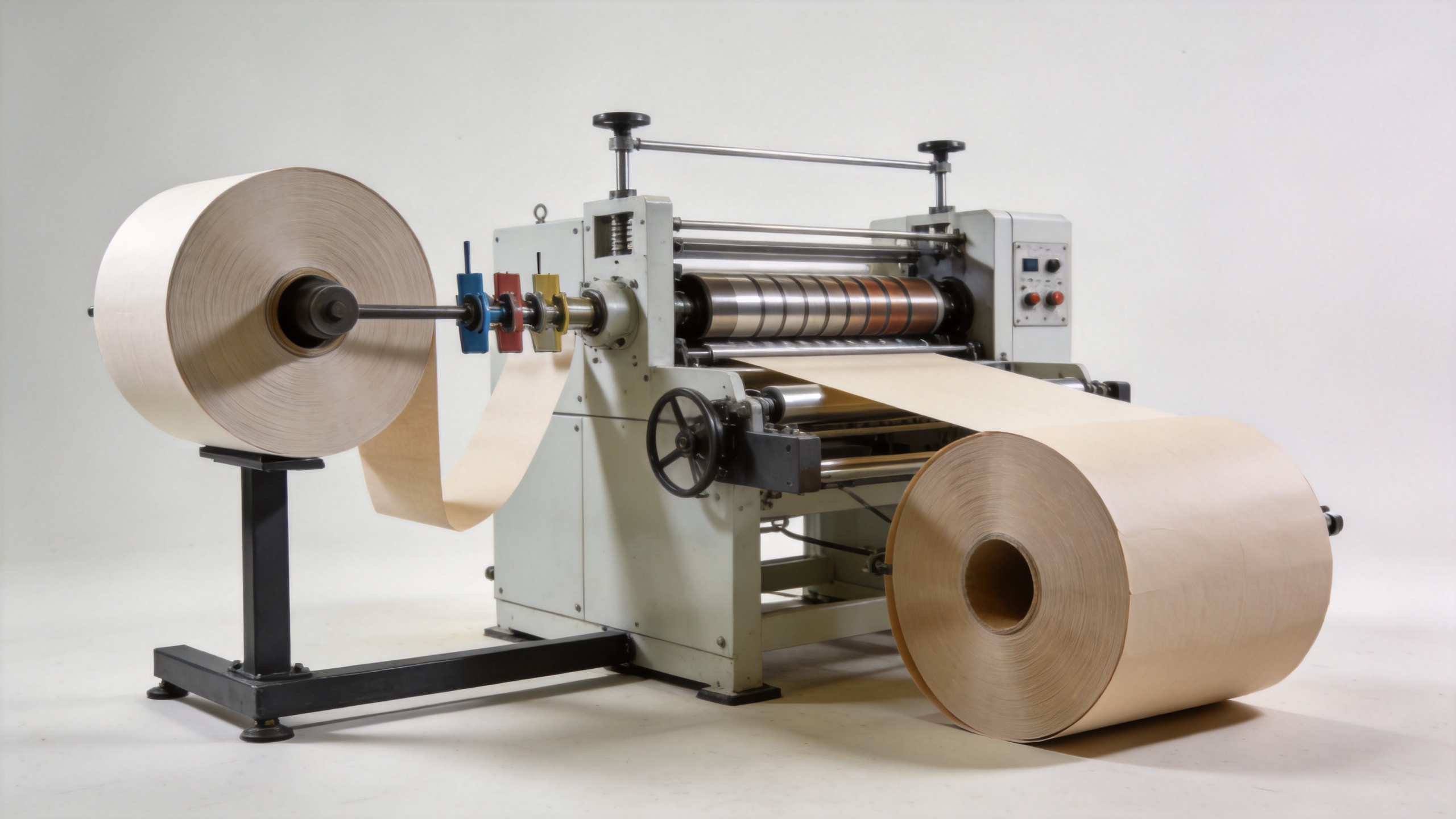
What an automatic paper converting machine can add
An automatic paper converting machine can reduce repeated manual actions in selected parts of the workflow. Depending on configuration, automation may cover roll handling, web guiding, knife positioning, length control, fault indication, data capture, or downstream packing integration. It may also improve repeatability where the product, material, and operating procedure are stable.
However, automation does not mean maintenance-free production. Sensors, drives, control settings, blades, and material handling components still need planned checks. The better question is whether the automation level matches the site’s maintenance capability and the frequency of product changes. A highly automated paper converting machine can be useful for recurring runs; a flexible setup may matter more when jobs change frequently.
Capability checks before choosing a configuration
Use a structured list before requesting a proposal for a paper converting machine:
- Material: state grade, basis weight, coating or treatment, incoming width, parent-roll diameter, core, and known variability.
- Finished product: list roll or sheet dimensions, tolerances, winding direction, splice limits, stack or packing requirements, and appearance criteria.
- Process: identify whether the job needs slitting, rewinding, sheeting, printing, coating, lamination, or forming—and in what sequence.
- Production rhythm: describe expected run length, changeover frequency, target output, and the upstream/downstream equipment that sets the actual line pace.
- Verification: agree how material feeding, cut quality, roll build, waste handling, and safe operation will be reviewed during a test or acceptance discussion.
This checklist also makes trade-offs visible. Faster operation and frequent changeovers can both be priorities, but the balance depends on the job. Likewise, a lower initial configuration cost may create more manual setup work later. A paper converting machine should be selected on the conditions it can verify, not on a universal claim of being universally suitable.
Turning capabilities into a practical decision
The most useful way to explore a paper converting machine is to map each capability to a specific production need. If the goal is narrow finished rolls, evaluate slit pattern, trim, winding, and roll specifications together. If the goal is cut sheets, focus on sheet dimensions, registration, stack handling, and the next operation. If printing or coating is involved, confirm where it belongs in the sequence and what inspection is needed.
For an automatic paper converting machine, also document who will operate it, who will maintain it, and which settings must be repeated from job to job. For paper rewinders, record the incoming and outgoing roll details rather than specifying width alone. These small clarifications help suppliers and production teams discuss configuration on a shared basis.
In short, the capability of a paper converting machine comes from a coordinated process: stable web handling, appropriate cutting or forming, controlled finishing, and clear verification criteria. Gather the material and output details first, then use them to compare configurations with fewer assumptions and a more workable path to acceptance.
 ONLINE