
 EN
EN

Exploring Paper Cup Forming Machine Technology
A paper cup forming machine turns pre-cut, printed cup stock and bottom blanks into finished cups through a sequence of timed mechanical, thermal, and control operations. The finished cup may look simple, but its side seam, base seal, rim, and final shape depend on materials and machine settings working together. For buyers and production teams, the useful question is not merely how fast a machine can cycle. It is whether the forming sequence is suitable for the intended cup size, paper structure, coating, and quality checks.
From a packaging-equipment selection perspective, it helps to confirm the cup application, paper specification, and required production rhythm before comparing configurations. That approach prevents a common mistake: treating a nominal machine speed as proof that a line will form a particular cup reliably.
What Happens Inside a Paper Cup Forming Machine?
Although layouts differ, a typical paper cup forming machine coordinates several stages. Sidewall blanks are fed and wrapped into a cylindrical sleeve. The side seam is sealed using a method appropriate to the stock and coating. A bottom blank is then introduced, joined to the sleeve, and mechanically worked into a leak-resistant joint. Knurling or other bottom-finishing actions help lock that joint in place. The upper edge is curled to create a comfortable, stronger rim before the cup is discharged for inspection or downstream packing.
This sequence explains why forming quality should be evaluated as a system. If sleeve alignment drifts, the bottom station may have less tolerance. If heating or sealing conditions are unsuitable for the material, a visually acceptable cup can still perform poorly in a leak or handling test. A general process overview commonly includes preparation, forming, bottom sealing and curling, rim curling, and edge finishing; the exact station arrangement should be confirmed against the machine design under review.
Sidewall Forming: Building a Consistent Cup Body
At the start of the process, magazines, feeders, and transfer mechanisms separate the cup-body blanks and deliver them to the forming area. The blank must arrive in the right orientation so the printed surface, overlap, and seam position remain controlled. The forming mandrel or mold then supports the cylindrical shape while the seam is closed.
The seam method depends on the substrate and production objective. Hot-air systems are widely associated with heat-sealable coated papers, while ultrasonic sealing can be considered for some material and process combinations. A comparative evaluation of hot-air and ultrasonic methods found a sealing-consistency advantage for ultrasonic sealing under its test conditions. That is a useful prompt for trials, not a universal conclusion: paper grade, coating, cup geometry, and operating setup still need validation.
The Paper Cup Bottom Forming Device: Why It Matters
The paper cup bottom forming device is one of the most important areas to examine because it creates the joint that must hold liquid. After a bottom disc enters the cup body, the device positions it against the sidewall and applies the heat, pressure, and mechanical finishing required by the chosen process. The bottom edge is typically folded, pressed, and knurled so the sleeve and base form a secure interlock.
Instead of assuming that a single setting works across all orders, define the inputs for the paper cup bottom forming device: bottom diameter, paper thickness, coating type, cup height, beverage temperature, and acceptance test. If a project involves a new paper supplier or a different coating, the bottom-forming trial should be part of the qualification plan. This is especially important when production teams are trying to distinguish a material-related issue from an adjustment or maintenance issue.
- Check that the bottom blank and sidewall dimensions match the tooling range.
- Confirm how heat, pressure, and knurling are adjusted and monitored.
- Agree on practical acceptance checks, such as visual seam inspection and appropriate leak testing.
- Ask how changeovers and cleaning affect repeatability before committing to a production schedule.
Rim Curling, Ejection, and Quality Control
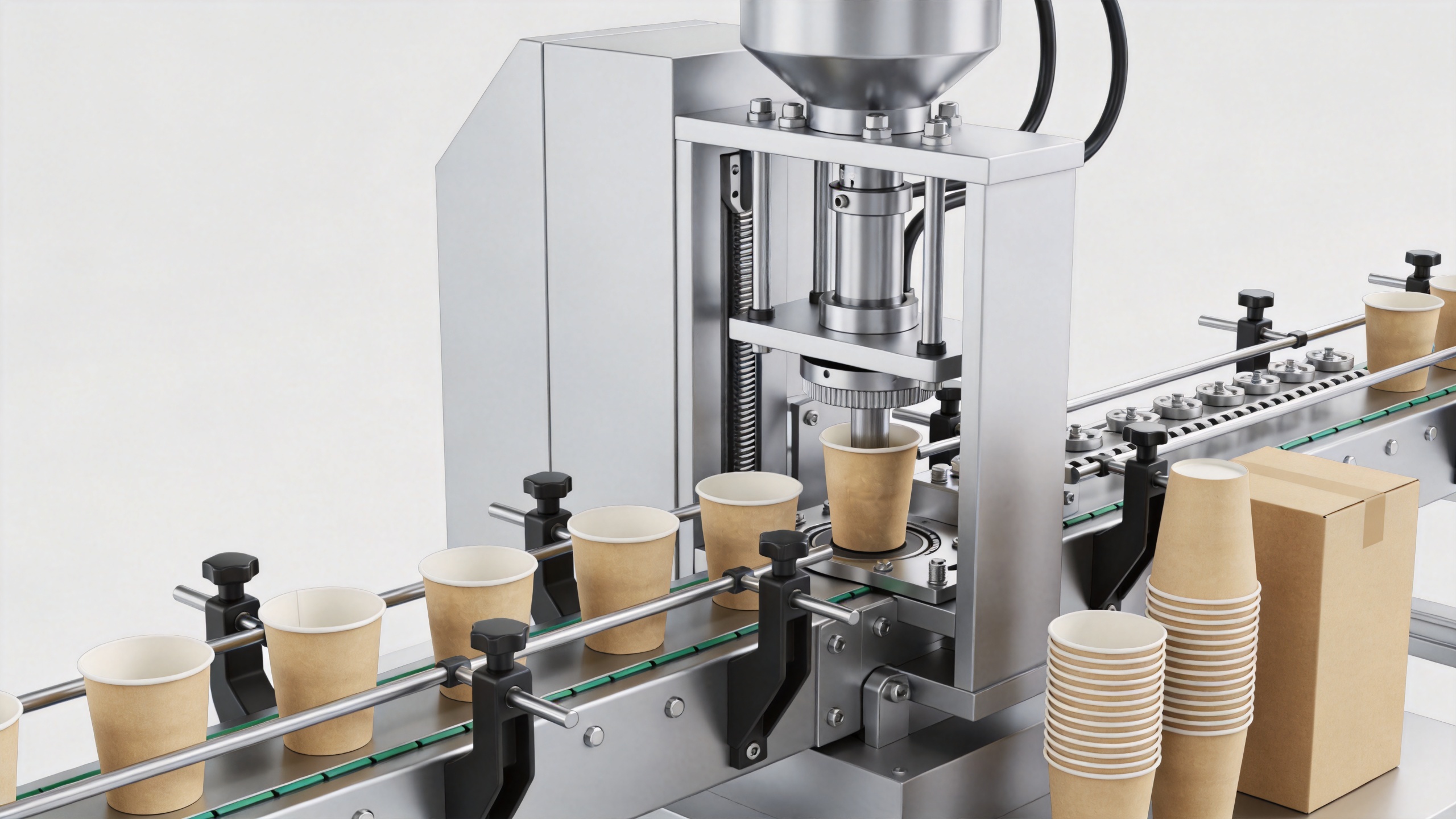
After the base is formed, the rim station curls the top edge. A consistent curl improves handling and helps the cup retain its intended shape. The ejection and collection section should also be assessed as part of the overall workflow. Poor transfer after a good forming operation can introduce dents, contamination risk, or counting problems downstream.
For this reason, a paper cup forming machine should be assessed with an end-to-end observation during sampling. Watch the blank feed, sleeve seam, base insertion, knurling, rim curl, discharge, and rejected-piece handling. Looking at only finished cups on a table can conceal which station creates variation.
How a Double Wall Paper Cup Forming Machine Changes the Workflow
A double wall paper cup forming machine addresses a different construction from a single-wall cup. The inner cup is formed first, then an outer wrap or sleeve is applied to create an insulating air space or double-layer structure. This adds material handling, alignment, and bonding considerations beyond the main cup-forming sequence.
When evaluating a double wall paper cup forming machine, clarify whether the outer wrap is supplied as a separate blank, how the artwork alignment is managed, and what cup sizes can be handled without extensive tooling changes. It is also worth confirming whether the intended outer material behaves consistently during wrapping. A double-wall design may improve user comfort for hot drinks, but it also requires the inner cup, sleeve dimensions, and adhesive or bonding method to work together.
Material and Compliance Questions Belong in the Technology Review
Machine technology does not, by itself, determine food-contact suitability. Cup stock, coatings, inks, adhesives, and the intended market must be assessed as a package. For U.S. applications, 21 CFR 176.170 is a relevant regulatory reference for components of paper and paperboard intended for contact with aqueous and fatty foods. It is not a machine certification, and it does not replace material documentation or market-specific compliance review.
Before production approval, document the paper and coating specification, the intended food or beverage use, relevant temperature conditions, and the verification records expected by the buyer. This keeps the technology discussion grounded in traceable requirements rather than broad claims.
A Practical Evaluation Checklist
- Define cup diameter, height, volume, paper grade, coating, and intended application.
- Map each forming stage to the required quality outcome, especially the side seam and bottom seal.
- Review the paper cup bottom forming device with the actual bottom blank and target test method.
- For insulated cups, review the extra handling and registration needs of a double wall paper cup forming machine.
- Plan a sample run that includes startup, stable operation, changeover, and inspection criteria.
- Keep material and compliance documentation separate from unverified equipment claims.
Conclusion
Exploring paper cup forming machine technology is most useful when the discussion follows the cup through every critical stage: sleeve creation, seam sealing, bottom formation, knurling, rim curling, and discharge. A well-matched system starts with the application and material, then verifies configuration choices through realistic sampling. By treating the forming machine, paper stock, tooling, and quality checks as connected decisions, teams can make a more reliable comparison before moving into production.
 ONLINE