
 EN
EN

How Mills Operate Paper Making Machine Efficiently?
A paper making machine runs efficiently when the mill treats it as one connected process rather than a row of isolated sections. Stock consistency affects the wet end; wet-end stability affects pressing; press dryness changes the dryer load; and dryer stability influences sheet quality, breaks, and finishing. From an operator’s viewpoint, the useful question is not simply “How fast can the machine run?” It is whether pulp preparation, forming, dewatering, drying, and reel handling remain stable at the chosen production rate.
This distinction also prevents confusion between a mill-scale paper making machine and a paper wala machine used for downstream paper-product conversion. The operating principles below concern continuous paper production in a mill. If a facility is evaluating a plastic paper making machine or a converting line, its material, heating, forming, and quality checks need a separate process review.
Start With a Shared Definition of Efficiency
For a mill, efficiency is a balanced outcome: usable tonnes of saleable paper produced with controlled fiber, water, steam, electricity, and labor inputs. A high machine speed is not automatically efficient if it causes frequent breaks, off-spec rolls, excess trim, or unstable moisture. Before changing settings, the production, maintenance, and quality teams should agree on a small set of shift-level indicators: production rate, broke rate, basis-weight variation, moisture variation, press dryness, dryer steam demand, and unplanned downtime.
Those indicators should be read together. For example, a higher speed that raises breaks may reduce net output. Likewise, a lower steam reading is not a win if final moisture or curl moves outside the customer specification. A sound operating target is the highest stable rate that meets the grade requirements and can be repeated safely across shifts.
Keep Stock Preparation and the Wet End Stable
Efficient operation begins before the headbox. Fiber furnish, refining, additives, dilution water, and screening must be controlled closely enough that the sheet-forming section receives predictable stock. When furnish changes unexpectedly, operators often compensate downstream with more aggressive adjustments. That can create a chain reaction: poor formation, unstable drainage, variable press loading, and dryer adjustments that do not solve the original problem.
A practical routine is to verify planned furnish and additive changes at the start of each grade run, then trend consistency, headbox conditions, basis weight, and formation together. Small, documented changes are usually easier to evaluate than several simultaneous adjustments. If a quality signal moves after a change, return first to the last confirmed stable condition and investigate the process section most likely to have caused it.
Use the Press Section to Reduce Dryer Burden
The press section is one of the most important efficiency levers on a paper making machine because mechanically removing water generally requires less energy than evaporating it later. A pulp-and-paper operating guide notes that each percentage-point improvement in press-sheet dryness can reduce drying requirements by roughly three to five percentage points. That relationship is directional rather than universal: grade, felt condition, press configuration, and dryer operation all matter.
Operators should therefore watch press dryness, nip loading, felt cleanliness, felt conditioning, vacuum behavior, and sheet transfer stability as a group. A dirty or poorly conditioned felt can reduce dewatering and push the dryer section to compensate. More aggressive press settings are not automatically better either; excessive loading can damage sheet properties or create runnability issues. The efficient path is to establish a stable dryness target for each grade and investigate deviations before adding dryer steam.
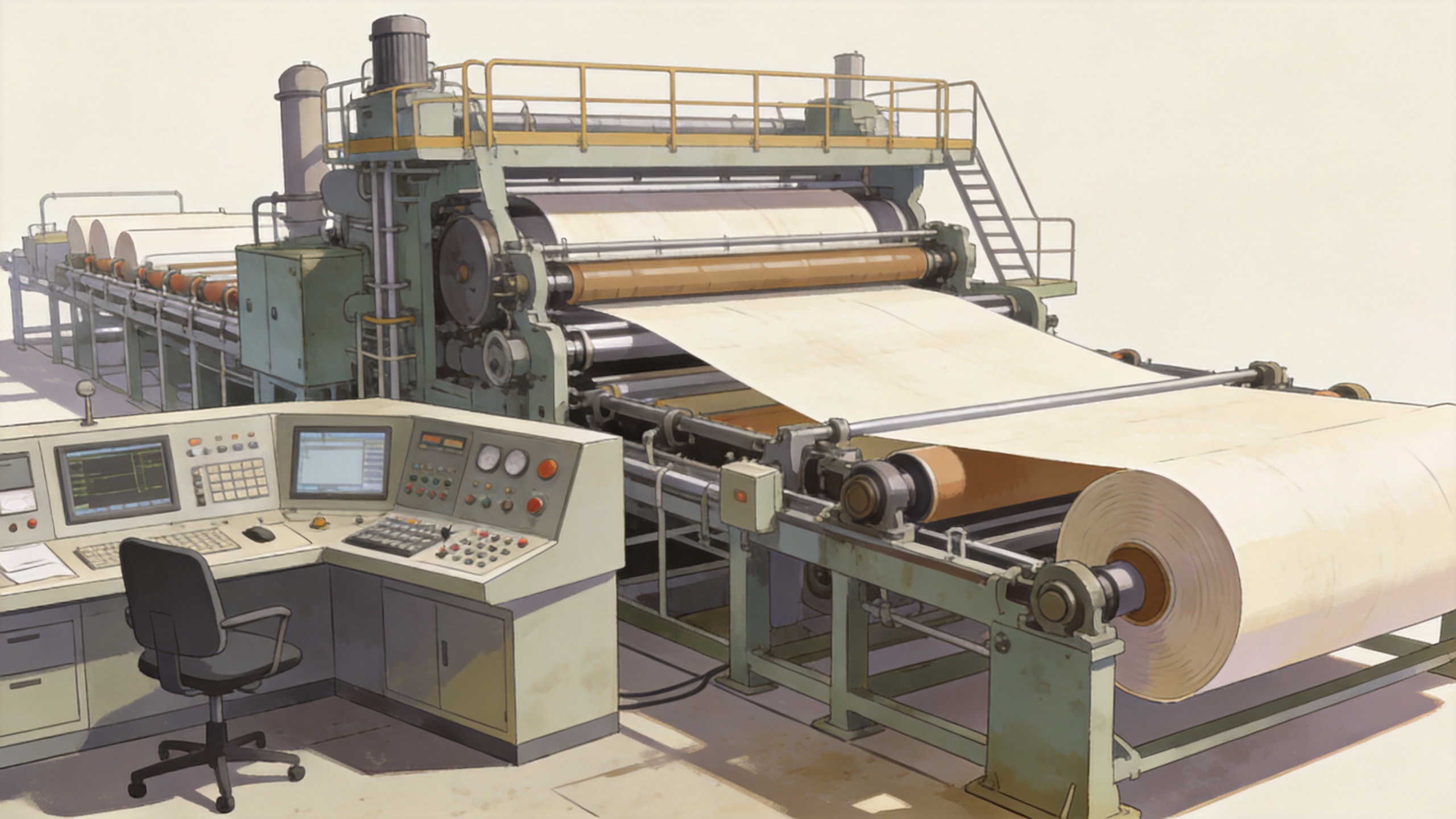
Operate the Dryer Section With Measurement, Not Guesswork
The dryer section commonly represents a major thermal-energy demand, so it deserves disciplined control. Start with the moisture profile and steam/condensate behavior rather than increasing temperature or pressure broadly. A poorly balanced moisture profile may point to uneven sheet formation, press performance, air-flow conditions, or condensate removal—not only to insufficient heat.
For each grade, maintain a documented operating window for steam pressure, hood conditions, ventilation, moisture targets, and reel moisture. Check condensate handling and heat recovery as part of the routine, because recovered heat and stable condensate flow support the wider energy system. When a dryer change is proposed, compare before-and-after values for moisture, steam use, speed, breaks, and quality. That turns an adjustment into a learnable operating standard instead of a one-shift reaction.
Protect Efficiency Through Condition-Based Maintenance
Many losses appear first as minor operating symptoms: higher vacuum demand, a drifting moisture profile, recurring edge breaks, vibration, deposits, or slower grade changes. Recording those symptoms by section gives maintenance teams better evidence than a general report that the machine “ran poorly.” Daily inspections should cover showers, fabrics, rolls, seals, lubrication points, sensors, doctor blades, and critical drives according to the mill’s approved safety and maintenance procedures.
Prioritize work that removes repeat losses. For instance, if a recurring break is linked to a transfer area, document the grade, speed, moisture, felt age, and settings at the time of the event. A simple event record makes it possible to distinguish an isolated upset from a predictable pattern. Spare-parts readiness and clear handover notes also matter, especially where a small component failure can stop a long continuous process.
Manage Grade Changes as an Efficiency Process
Grade changes can consume time, fiber, and energy if the sequence is unclear. Mills improve results by using a controlled checklist: confirm the next grade specification, prepare furnish and additives, verify clothing and settings, define the allowable transition window, and assign who approves the first acceptable roll. The goal is not to eliminate every adjustment; it is to make adjustment deliberate and traceable.
This is where a paper wala machine comparison can be misleading. A downstream converter may focus on forming tools and finished-item dimensions, while a paper making machine must hold a continuous web stable through multiple linked sections. For either type of equipment, the right checklist depends on the material and final product, not on a generic speed claim.
Give Operators a Clear Escalation Path
Efficient mills reduce response time by defining what operators can adjust, what requires engineering review, and what requires a safe stop. Use alarm limits and operating limits that reflect the approved process window. When a trend crosses a limit, capture the time, grade, upstream changes, and visible symptom before several settings are changed. This helps the next shift understand the event and prevents a temporary correction from becoming an undocumented permanent setting.
Short shift reviews can turn this information into practical improvement: identify the largest loss, select one controllable cause, test one safe action, and verify the result against the agreed indicators. If the evidence is incomplete, label the action as a trial rather than presenting it as a proven solution.
A Practical Operating Checklist
- Confirm the day’s grade, furnish, quality limits, and target stable rate before startup.
- Trend wet-end stability, press dryness, dryer moisture, and breaks together—not as separate dashboards.
- Investigate a process change at its likely source before compensating downstream.
- Use condition observations and event records to plan maintenance around repeat losses.
- Evaluate energy actions against finished-paper quality and net production, not steam or speed alone.
- Review every significant grade change and update the approved operating window when evidence supports it.
Conclusion
Mills operate a paper making machine efficiently by making stability visible across the entire process. Consistent stock preparation, controlled forming, effective pressing, measured drying, disciplined maintenance, and clear shift handovers all reinforce one another. The most durable gains come from a repeatable operating window backed by plant data. For a new grade, a paper wala machine application, or a plastic paper making machine concept, begin with the specific material and product requirements, then validate the appropriate process with qualified engineering and site safety procedures.
 ONLINE