
 EN
EN

Introduction to Paper Machinery Systems
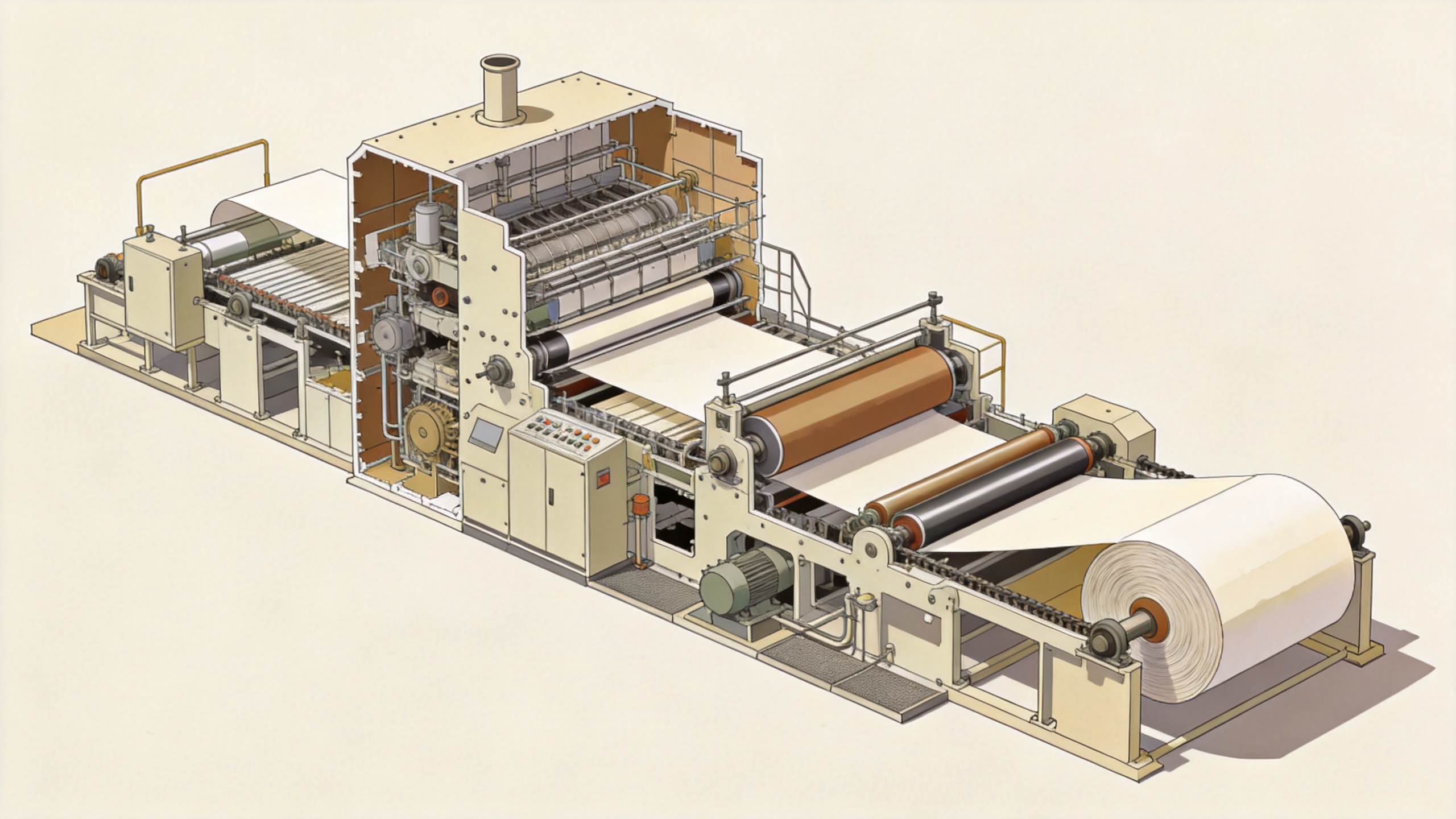
Paper machinery is usefully understood as a connected production system rather than one large machine. From stock preparation to winding, each section changes the fiber web, removes water, or prepares the finished material for converting. For a packaging-equipment buyer or a plant team, this systems view makes it easier to ask the right technical questions before comparing a machine paper roll, an upgrade, or a related converting line.
In technical selection conversations, the useful starting point is not simply speed. It is the relationship between the planned paper grade, the fiber furnish, the required output, and the operating conditions. A paper extruder machine may be part of a downstream coating or laminating application, but it is not a substitute for the wet-end and dry-end functions of a conventional paper machine. Keeping those roles separate helps prevent a costly mismatch.
What Does a Paper Machinery System Do?
A paper machinery system turns a prepared fiber suspension into a continuous sheet with specified strength, moisture, surface, and roll characteristics. The exact arrangement varies with the grade being made, yet the process normally follows a clear sequence: prepare the stock, form a wet web, mechanically remove water, dry the sheet, finish the surface, and wind the product.
This sequence matters because each stage establishes the conditions for the next one. Fiber preparation influences formation and bonding. Formation influences drainage and sheet uniformity. Pressing and drying influence bulk, strength, and moisture. Finishing and winding influence whether the material can run reliably in printing, coating, cutting, or packaging conversion.
The Main Sections of Paper Machinery
1. Stock preparation
Before the paper machine itself, pulp and recycled fiber are prepared into a controlled slurry. Typical work can include pulping, cleaning, screening, blending, refining, and the addition of materials needed for the target grade. Refining is especially important because it changes the fiber condition and affects how fibers bond in the finished sheet.
At this stage, consistency and cleanliness are practical concerns. A stable furnish supports more predictable operation downstream, while contaminants or poorly controlled fiber treatment can create defects that become harder to correct later.
2. Approach flow and forming
The approach-flow system delivers stock evenly to the headbox, which distributes it onto a moving forming fabric. Water drains through the fabric while the fibers begin to form a continuous web. In a modern paper machinery line, drainage can combine gravity, vacuum, fabric design, and careful control of stock delivery.
The forming section deserves attention because it establishes the sheet’s basic uniformity. When the goal is a consistent machine paper roll, teams typically look at formation quality, edge stability, and how the chosen furnish behaves at the planned production conditions rather than treating the wire section as an isolated component.
3. Press section
The wet web then enters the press section, where felts and rolls remove additional water mechanically. Mechanical dewatering is valuable because it reduces the load placed on later thermal drying. Press design, felt condition, nip loading, and web handling must work together; a change made to improve water removal can also influence density, surface, or runnability.
For this reason, a line review should connect press-section targets with the grade specification and the dryer capacity. It is more reliable to verify those relationships during engineering than to assume a familiar press layout will fit every product.
4. Dryer section
After pressing, the sheet still contains substantial moisture and must pass through a controlled drying process. Dryer sections commonly use steam-heated cylinders, fabrics, ventilation, and tension control to bring the web toward its required moisture level. Published technical references describe finished moisture as grade-dependent; the key operational point is to define the target together with the downstream process.
Drying is not only about removing water. Uneven drying, poor tension control, or unstable heat transfer can affect curl, dimensional behavior, and the way a roll performs in later printing or conversion. This is why paper machinery projects should review energy, condensate, air systems, and web handling as connected choices.
5. Finishing, calendering, and winding
Depending on the paper grade, the dry sheet may be sized, coated, calendered, slit, or rewound. Calendering uses controlled pressure and roll surfaces to alter smoothness and caliper. The winder then creates the large parent roll that may be shipped or sent to downstream converting.
A machine paper roll is therefore the result of many earlier decisions, not simply the output of the winder. Roll hardness, profile, edge condition, moisture, and splice requirements can all matter to a customer who will print, laminate, or cut the material later.
Where Does a Paper Extruder Machine Fit?
The phrase paper extruder machine can describe equipment used around polymer extrusion, coating, or laminating workflows. In packaging applications, an extrusion process may apply a polymer layer or create a material layer that supports a specific barrier or sealing requirement. Its role should be evaluated as part of the wider converting route.
That distinction is useful for project planning. A paper machinery system produces and conditions a paper web; a paper extruder machine may add a layer or support a subsequent conversion step. If a project includes both, the handoff requirements—roll width, tension, moisture, surface condition, and winding quality—should be specified early.
How to Evaluate a Paper Machinery Project
- Define the end use first. Clarify whether the material is intended for printing, wrapping, food packaging, tissue, board, or another application.
- Document the furnish and grade requirements. Fiber source, recycled-content expectations, basis weight, caliper, and surface needs shape the process choices.
- Review the entire water-removal path. Forming, pressing, and drying should be assessed as one chain, not as unrelated equipment purchases.
- Specify roll requirements. Identify the width, diameter, core, winding quality, and downstream converting conditions expected for each machine paper roll.
- Confirm downstream interfaces. If coating, laminating, or a paper extruder machine is involved, align speed, tension, and material-handling requirements before finalizing the layout.
- Plan verification points. Agree on what will be checked during design review, commissioning, and acceptance, including grade-specific trials where appropriate.
A Practical Systems Perspective
For an introductory review, the most useful way to approach paper machinery is to follow the web from prepared fiber to finished roll. That perspective keeps the discussion grounded: stock preparation affects formation, formation affects dewatering, dewatering affects drying, and drying affects finishing and winding. It also makes clear why a component choice should be checked against the whole production route.
Whether the next step is a new line, a rebuild, or a downstream conversion project, begin with the product requirements and then map the process conditions needed to meet them. With that sequence in place, paper machinery decisions become easier to compare, and the roles of the paper machine, the machine paper roll, and any paper extruder machine are much clearer.
 ONLINE