
 EN
EN

How Buyers Choose Paper Machine Suppliers?
Choosing among paper machine suppliers is rarely a matter of comparing the first three quotations. A machine can look similar on a specification sheet while its practical fit, acceptance conditions, spare-parts plan, and support scope differ sharply. For a buyer sourcing paper cup or food-packaging equipment, the safer sequence is to define the operating need first, then test each supplier’s evidence against that need.
From a B2B procurement perspective, the useful question is not “Which supplier is appropriate for this project?” It is “Which supplier can show a credible match for our material, output target, changeover pattern, and service requirements?” That framing gives a buying team a repeatable way to compare paper machine suppliers without treating price as the whole decision.
Start With the Production Requirement, Not the Supplier List
Before contacting paper machine suppliers, turn the project into a one-page requirement brief. State the end product, raw-material characteristics, target output, shift pattern, planned cup or packaging formats, utilities, and any changeover expectations. If your line will run a stable product mix, the priorities can differ from a project that changes sizes or materials frequently.
This step keeps supplier conversations comparable. More accurately, it also prevents a general machine description from being mistaken for proof that it suits your process. Ask every supplier to identify which assumptions they are using when discussing speed, tooling, heating, forming, control, collection, or downstream handling.
- What materials and finished formats will the machine process?
- What output target is needed under the buyer’s actual operating conditions?
- How often will formats, dies, or material batches change?
- Which utilities, floor layout, operators, and downstream equipment are already available?
Check Technical Fit With Questions That Require Evidence
Strong paper machine suppliers should be able to discuss the process in terms of conditions, not only a feature list. Request a written scope that separates what is included, what is optional, what is supplied by the buyer, and what still requires technical confirmation. That is especially useful when comparing an established supplier with ODM paper machine suppliers, where the buyer may also be defining customized tooling, workflow, controls, or handoff points.
Useful evidence requests include a process-flow explanation, a layout drawing, a list of major purchased components where appropriate, a utility schedule, and the proposed commissioning boundary. If material behavior is important, ask how the supplier will validate it rather than accepting an unqualified claim. One common purchasing mistake is to compare a promised output number without writing down the material, format, operating mode, and acceptance method behind it.
Compare Quotations as a Lifecycle Package
A low initial price is meaningful only after the scope is normalized. When buyers compare paper machine suppliers, they should map each quotation against the same checklist: equipment scope, tooling, installation support, operator training, recommended spares, warranty wording, documentation, packing, delivery terms, and post-startup response. This is where the total cost of ownership becomes more useful than a simple purchase-price ranking.
Paper processing machinery sellers may describe similar equipment in different ways. Build a comparison table and mark every item as included, optional, excluded, or to be confirmed. Then note the operational consequence of each difference. For example, an excluded spare-parts package does not automatically make one offer poor; it means the buyer should decide whether the project has another reliable route to obtain and hold those parts.
| Comparison area | What to verify | Why it matters |
|---|---|---|
| Process scope | Included stations, tooling, controls, and handoff points | Prevents gaps between quoted equipment and the intended workflow |
| Changeover | Required parts, labor steps, and confirmation method | Shows whether the machine fits the planned product mix |
| Service package | Training, remote support, response path, and spare-parts list | Clarifies what support exists after shipment |
| Commercial terms | Payment, delivery, packing, and acceptance milestones | Makes offers comparable beyond the headline price |
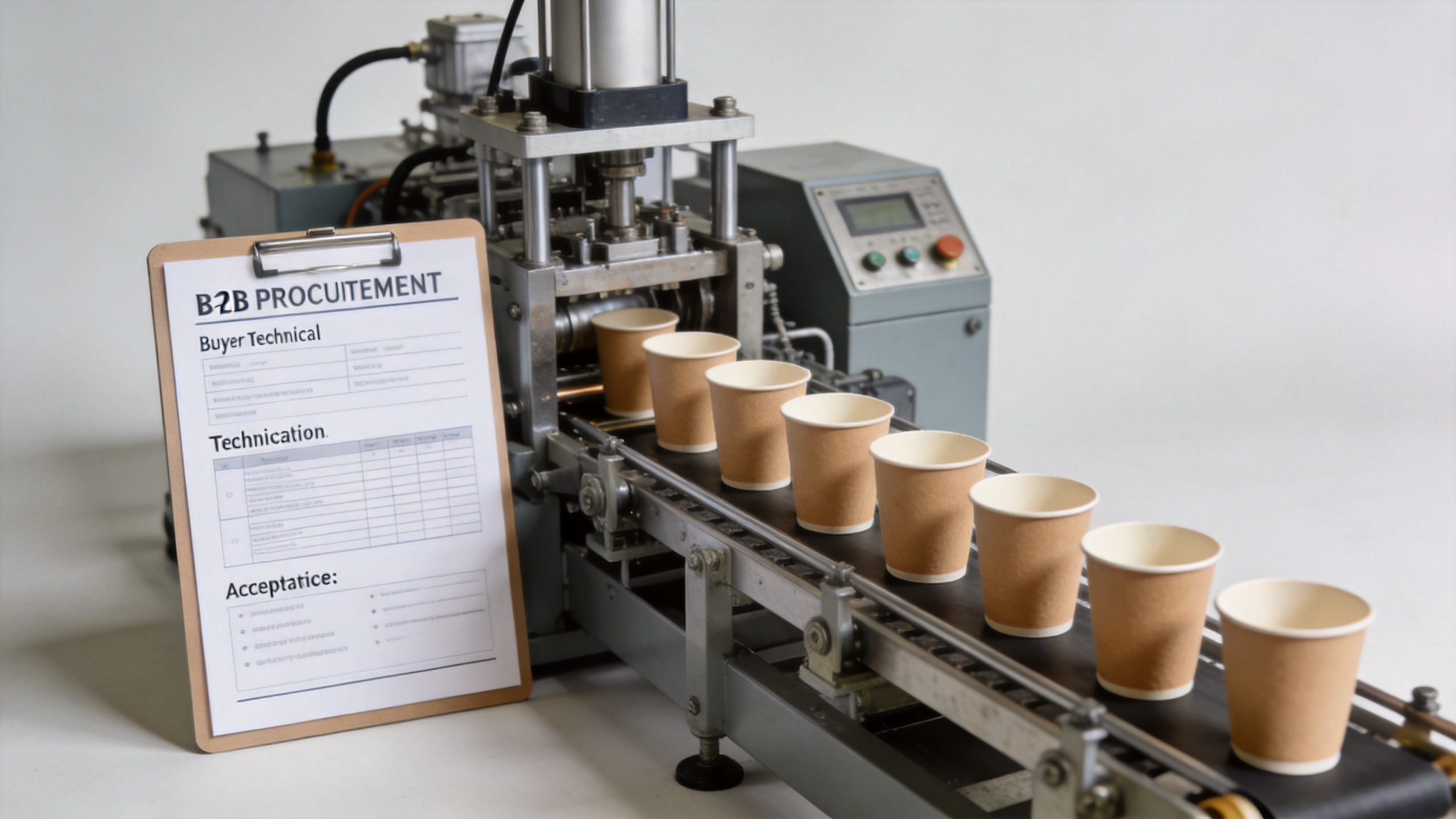
Make Acceptance Criteria Part of the Purchase Decision
Do not leave acceptance until the machine is ready to ship. A factory acceptance test is commonly used to verify industrial equipment before delivery, but the procedure should be agreed for the specific project. Define the material to be used, the product format, the test duration, the observations to record, allowed adjustments, and the documents or videos required if the buyer cannot attend.
This point deserves care: ISO 9001 is a quality-management framework, not a substitute for a project-specific acceptance protocol. If a supplier presents certification information, treat it as one part of due diligence and still request the actual test plan, records, and responsibility boundaries. Buyers can ask paper machine suppliers to connect the acceptance test directly to the requirement brief prepared at the start.
Evaluate Communication and Service Before Ordering
Technical capability is essential, yet communication quality often determines how well a cross-border project moves from specification to installation. Assess whether the supplier answers questions directly, records open points, distinguishes confirmed information from assumptions, and provides a clear escalation contact. For overseas projects, confirm document language, installation support range, remote troubleshooting arrangements, and the practical route for obtaining consumables or spares.
Ask yourself: does the supplier make it easy to see what is known, what is optional, and what needs validation? A well-organized answer is not a performance guarantee, but it is useful evidence of project discipline. The same standard applies to ODM paper machine suppliers; customization should produce clearer validation points, not a less-defined scope.
Use a Weighted Decision Sheet
After the technical and commercial reviews, score each candidate against the requirements that matter most to your project. Buyers can weight technical fit, acceptance clarity, lifecycle cost, service readiness, delivery coordination, and communication quality. The weights should reflect the operation rather than a generic ranking. A plant with frequent format changes may give more weight to changeover validation, while a stable high-volume program may focus more heavily on process consistency and support planning.
- Eliminate offers that do not meet non-negotiable process or compliance requirements.
- Compare remaining scopes item by item, including exclusions and assumptions.
- Review the proposed acceptance plan before approving the order.
- Confirm service, spare-parts, and escalation responsibilities in writing.
- Record why the selected supplier is the most suitable match for this project—not simply the lowest quote.
Final Takeaway
A sound choice among paper machine suppliers is usually the supplier whose proposal can be verified against your real production conditions and whose scope remains clear after the quotation is signed. Begin with a precise requirement brief, require evidence for technical claims, normalize total scope and lifecycle considerations, and agree acceptance and support responsibilities early. That approach gives the buyer a sounder basis for selecting paper processing machinery sellers and for managing the project after delivery.
 ONLINE