
 EN
EN

Key Functional Highlights of Modern Paper Cup Machine
A modern paper cup machine is more than a device that turns a printed blank into a cup. It is a coordinated forming system in which feeding, side-seam sealing, bottom insertion, knurling, curling, inspection, and discharge must work in sequence. From a packaging-equipment technical selection perspective, the useful question is not simply “how fast is the machine?” It is whether its functions fit the cup format, paper structure, output rhythm, and verification routine you need.
That distinction matters when production includes several diameters, coated stocks, or demanding leak-resistance expectations. Before comparing speeds, define the cup size, blank condition, bottom-paper compatibility, and changeover pattern. A well-matched paper cup machine supports a stable process; a poorly matched one can turn a small alignment issue into repeated waste or downstream interruption.
1. Blank feeding and forming control start the process
The first functional group handles the fan-shaped cup blank. Feeding must separate and present blanks consistently so that the forming station receives each piece in the intended orientation. Modern designs may combine mechanical timing, sensors, and controlled transfer to reduce missed feeds or double feeds, but the right approach depends on the paper fan, coating, and production conditions.
This is where a paper cup fan printing machine belongs in the wider workflow. It prepares or prints the fan material upstream; it is not a substitute for the forming system. Keeping printing/die-cutting responsibilities separate from cup forming makes it easier to diagnose whether a defect begins with artwork and blank geometry or with handling inside the paper cup machine.
2. Side-seam sealing is a functional quality gate
After the blank is wrapped into a cup body, the side seam must be positioned and sealed under conditions suitable for the chosen material. The machine function is not merely to apply heat or pressure. It must repeat the seam location consistently enough that the next stations can work on a stable cup body.
This is a useful example of why isolated parameter comparisons can mislead. Research-oriented process discussions note that an outer portion of a separated side seam can interfere with knurling and contribute to an insufficient bottom seal. In practical terms, seam position, material response, and bottom-forming setup should be reviewed together. A paper cup machine should therefore make the seam process observable and adjustable within the operating procedure, rather than treating it as an invisible intermediate step.
3. Bottom feeding, insertion, and knurling protect cup integrity
Bottom-paper handling is another core functional area. The machine introduces a bottom disc, aligns it with the formed sidewall, and uses the bottom-forming sequence to create the joint. Industry process descriptions commonly place bottom knurling among the key stages because it helps secure the connection between the bottom disc and cup body.
For buyers, the relevant question is not whether a brochure uses the word “knurling,” but what must be confirmed for the target cup: bottom-paper dimensions, coating behavior, cup diameter, and acceptance checks. If those inputs change, the paper cup machine may need setup adjustments or dedicated tooling. A sensible evaluation asks how the operator verifies bottom formation, how adjustments are documented, and what condition should trigger a stop-and-check response.
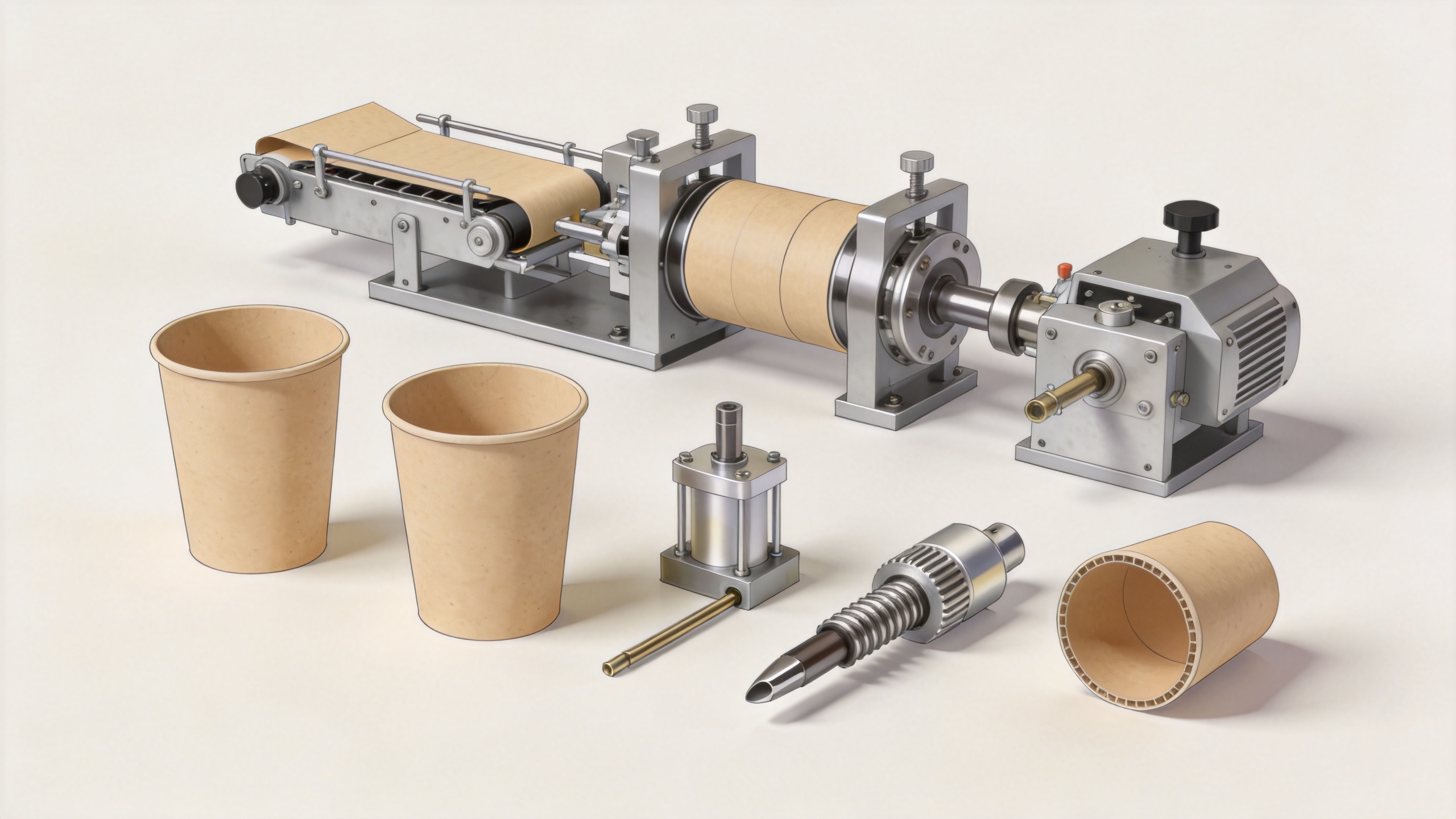
4. Rim curling turns a formed body into a usable cup
Rim curling gives the cup its finished drinking edge and contributes to consistent handling in later packing steps. The function has to work with the cup body that arrives from the previous stations. If the body is distorted, the seam is misaligned, or material behavior has changed, a curl that appears acceptable at a glance may still deserve a closer review.
For this reason, evaluate a paper cup machine as a linked forming line. The most productive discussion starts with the end-use requirement and then traces backward: rim finish, sidewall geometry, bottom joint, seam position, fan condition, and feeding. That approach is more reliable than selecting a configuration from a headline speed alone.
5. Automation helps only when it improves the right checkpoint
Modern systems often use sensors, interlocks, controlled drives, or automatic lubrication features. These can reduce manual intervention, but their value depends on the production task. In a stable, long-run format, automation may support repeatability. In a frequent-changeover environment, the more important capability may be clear setup access and a disciplined recipe or change-parts process.
For example, a chai paper cup machine discussion should begin with the actual serving format, paper and coating requirements, production schedule, and local operating conditions. “Chai” describes an application context, not a universal machine specification. A suitable configuration is one that can be technically confirmed for that cup design rather than assumed from the beverage name.
6. Inspection and discharge complete the functional picture
A paper cup machine needs a controlled way to transfer formed cups to collection, packing, or downstream inspection. Good operational planning defines which defects are checked, when samples are taken, and how rejected cups are separated or recorded. These details help the team connect a quality finding with its likely process stage instead of repeatedly adjusting unrelated settings.
It is also helpful to distinguish a machine feature from a production-system result. A sensor can provide a signal; it does not by itself guarantee a finished cup will meet every requirement. Acceptance criteria, material trials, operator training, and maintenance routines remain part of the result.
A practical functional review checklist
- Confirm the target cup diameter, height, blank layout, paper grade, and coating before discussing configuration.
- Map fan preparation from the paper cup fan printing machine or supplier to the feeding method used by the forming equipment.
- Review side-seam alignment and bottom-forming verification as one process conversation.
- Ask which adjustments are needed for each planned size or material change.
- Define sample checks for seams, bottoms, rim quality, appearance, and packing transfer.
- For a chai paper cup machine application, confirm the cup specification and use conditions rather than relying on the application label alone.
- Document maintenance, spare-part, and operator-support expectations before finalizing a purchase.
Conclusion: choose functions around the cup, not the headline
The key functions of a modern paper cup machine are valuable because they create a repeatable chain from blank handling to finished-cup discharge. Feeding, seam sealing, bottom formation, knurling, curling, and inspection each influence the next stage. A practical selection process turns those functions into questions about your own cup format, materials, workflow, and verification standards.
When those conditions are clear, technical discussions become more productive: the supplier can evaluate fit, the buyer can compare configurations on relevant criteria, and the operating team has a better basis for trials and acceptance. That is the functional advantage worth pursuing—not a generic promise, but a paper cup machine matched to the process you need to run.
 ONLINE