
 EN

Exploring Paper Cup Machine Innovations for Plants
A modern paper cup machine is no longer judged only by its headline speed. Plant teams increasingly ask whether the equipment helps them keep material moving, make changeovers easier to understand, and identify a forming issue before it becomes a larger production interruption. That is a useful shift: a valuable innovation is often the one that makes a process more visible and repeatable under the conditions a plant actually runs.
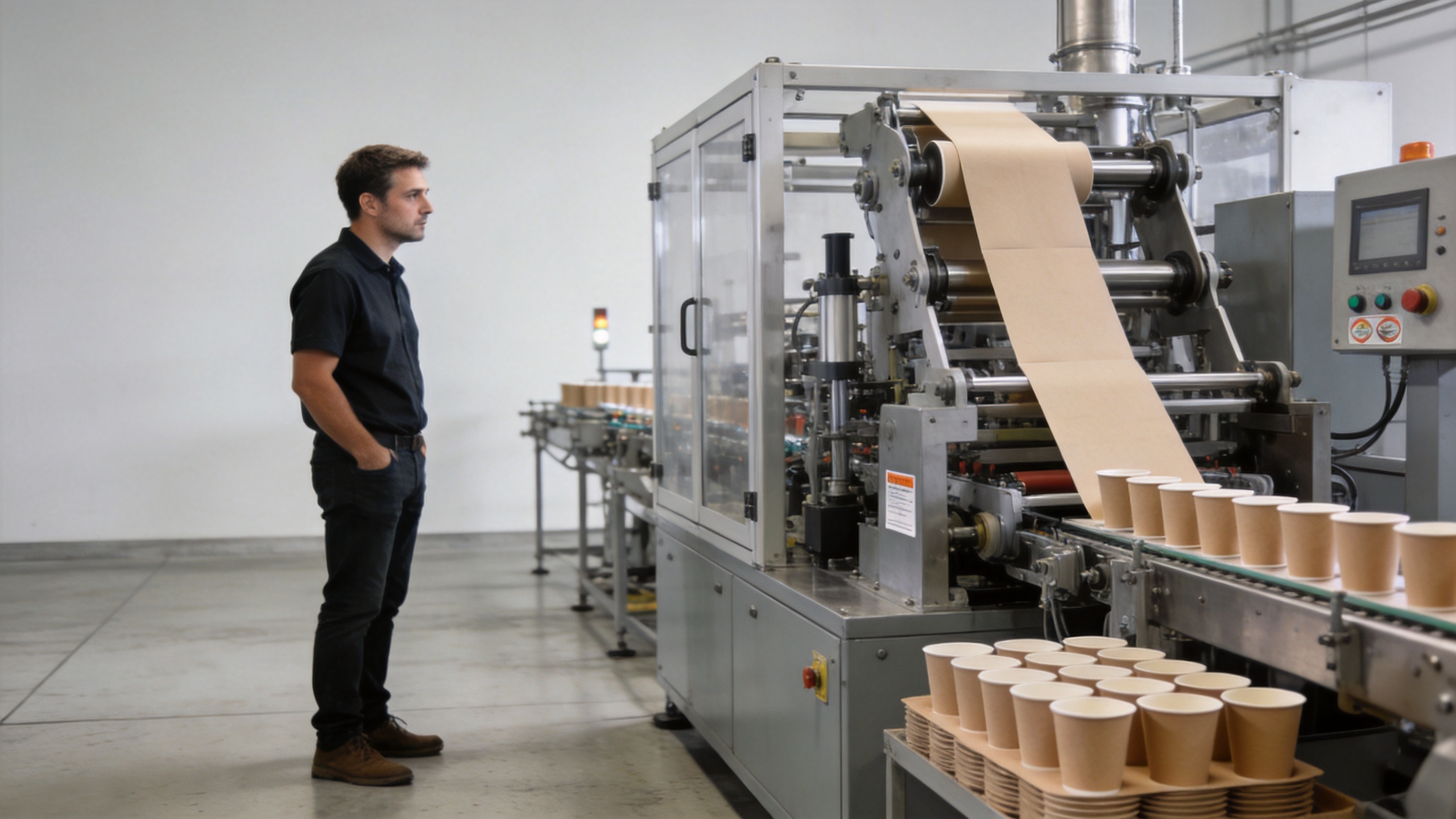
From an operator’s viewpoint, a paper cup machine should be considered across the full forming path: paper feed, blank positioning, side-seam heating, bottom insertion, knurling, rim curling, inspection, and collection. Each station matters because the finished cup reflects the interaction among paperboard, coating, tooling, settings, and operator practice—not just one component.
Where innovation is changing paper cup production
Servo-driven motion and more coordinated controls are important directions for a paper cup machine. Rather than treating every station as an isolated mechanical action, a plant can use synchronized control to make timing relationships easier to set and observe. The practical benefit is not an automatic promise of output; it is a clearer basis for validating how feeding, forming, and collection behave together with a chosen cup specification.
Human-machine interfaces are also evolving. A well-organized interface can help operators see alarms, recipe settings, and operating states without translating vague messages into trial-and-error adjustments. When comparing a paper cup machine, ask to see how the interface distinguishes a material-feed interruption from a forming-station issue, and how it records the conditions around an alarm.
Another useful innovation is condition-oriented monitoring. Counters, trend displays, and structured fault records can support a discussion about recurring stops, although they do not replace routine inspection. The value is greatest when the plant agrees on what it will check after an alert: the paper path, blank dimensions, heating condition, forming tooling, or collection handoff.
Start with the production workflow, not a feature list
A feature list can make any paper cup machine look advanced. Plant suitability is clearer when the selection begins with the workflow. Map the cup sizes, paper grades, coating types, print registration requirements, planned shift pattern, and expected frequency of specification changes. If a plant runs one stable cup format, its priorities may differ from a plant that needs frequent changeovers for several beverage programs.
For example, a ripple wall paper cup machine may introduce an added handling and alignment question because the outer-wall process must fit the plant’s intended cup design and assembly sequence. The right discussion is not whether a feature sounds sophisticated, but whether the machine’s sequence, tooling, and operator instructions align with the actual ripple-wall workflow. A sample run using the intended materials can make that conversation more concrete.
Material compatibility deserves equal attention. Paperboard thickness, coating behavior, blank cutting quality, and storage conditions can influence how a paper cup machine performs in daily use. More precisely, not every cup defect originates in the equipment. A disciplined plant checks material and process conditions before assuming that a control adjustment is the answer.
Four plant checkpoints for evaluating automation
1. Feeding and blank control
Observe whether blank separation and delivery remain understandable to operators when paper conditions vary. A paper cup machine with better sensing may assist diagnosis, but the team should still define which checks happen first and who is responsible for them.
2. Forming and sealing consistency
Side seams, bottom seams, knurling, and curling are connected process nodes. During a demonstration, ask how the paper cup machine supports setting verification after a cup-size or material change. Inspect representative cups and record the setup conditions rather than relying on a single visual impression.
3. Changeover discipline
Faster changeover can be valuable, yet speed and flexibility are a trade-off. A paper cup machine may simplify some adjustments while still requiring careful confirmation of tooling, guides, and recipes. The more useful question is: which actions are standardized, and which still depend on trained judgment?
4. Collection, cleaning, and maintenance access
Collection stability and access to cleaning points affect the working rhythm around a paper cup machine. Look for a maintenance plan that identifies inspection intervals, wear-part discussions, and a clear route for documenting unusual conditions. Automation does not mean maintenance-free operation.
What global plants can learn from a connected approach
A global paper cup machine project often adds coordination requirements beyond the equipment itself. Buyers may need to align cup samples, destination expectations, operator training, installation support, spare-parts planning, and documentation. These details should be confirmed with the supplier rather than inferred from a generic brochure.
For cross-border production planning, the strongest innovation may be a shared verification routine. Before shipment or commissioning, list the intended cup types, material samples, acceptance observations, available utilities, and support boundaries. This turns a global paper cup machine conversation into a practical project checklist and avoids treating a quoted configuration as a complete operating plan.
ZheJiang RUIDA Machinery presents automatic paper cup machines, servo paper cup formers, and flexographic printing presses for food-packaging applications. Its published company profile also states CE-certified and ISO9001-compliant packaging machinery and more than 24 years of expertise. For any specific project, buyers should confirm the applicable machine configuration, documentation, and acceptance conditions directly with the supplier.
A practical next step for plant teams
When exploring a paper cup machine, prepare a short requirement sheet before comparing configurations. Include cup dimensions, material details, planned format changes, target workflow, operator experience, maintenance expectations, and the observations that will define an acceptable sample run. Then use that sheet during technical discussions.
The most durable innovations in a paper cup machine are the ones a plant can verify and sustain: coordinated motion that matches the process, information that helps operators act, and procedures that keep material and tooling conditions visible. Start with the application, test the workflow, and make the acceptance criteria clear before making a production decision.
 ONLINE