
 EN

Exploring Paper Cup Making Machinery Frameworks
Choosing cup-making equipment is less about finding the largest headline speed and more about matching a production framework to the cups, board, coating, labor plan, and quality controls you actually need. For a converter or beverage-packaging start-up, the useful question is not “Which machine fits the production plan?” but “Which sequence of forming, sealing, inspection, and packing will stay stable as orders change?” This article maps that decision in practical terms.
Start with the job your paper cup making machinery must perform
Paper cup making machinery turns die-cut cup blanks into formed containers through a repeatable chain of operations. The typical chain feeds blanks, forms the side wall, seals the side seam, curls or forms the bottom, knurls the base, rolls the rim, ejects the cup, and passes it to inspection or packing. A useful framework names the critical interfaces rather than treating the line as one black box.
Before comparing paper cup making machinery, define the product family: hot-drink cups, cold-drink cups, sampling cups, soup containers, or other paper-based food-service formats. Record the diameter range, height range, board grade, coating type, print orientation, and required changeover frequency. These details determine whether a nominally similar machine will run comfortably or demand frequent tuning.
A four-layer framework for paper cup making machinery
1. Material preparation and feeding
The first layer of paper cup making machinery is material handling. Blanks must arrive consistently, separate cleanly, and enter the forming section in the correct orientation. Teams should assess blank quality, stack condition, static control, and operator access before blaming downstream stations for irregular cups. A stable feed gives every later station a fair chance to perform.
2. Forming and side-seam control
The forming layer shapes the blank around a mandrel and closes the side seam. Here, this is where the board, coating, seam method, and tooling geometry meet. Ask suppliers to demonstrate the exact or a closely comparable substrate; a clean demonstration on one stock does not automatically predict results on every paperboard and coating combination.
An ultrasonic paper cup making machinery configuration uses controlled high-frequency vibration at the sealing interface. That makes seam technology a process choice, not merely a feature on a specification sheet. Comparative work on paper-cup manufacture has reported more consistent sealing from ultrasonic methods than hot-air sealing in its test conditions. Treat that as a reason to test your own materials, not as a universal output promise.
3. Bottom forming, knurling, and rim finishing
The bottom and rim stations define much of the cup’s handling feel and leak resistance. Good cup-forming equipment aligns the bottom disc, forms the joint evenly, and produces a rim compatible with the intended lid or drinking experience. Inspect samples for uneven knurls, visible fiber damage, rim variation, and leaks after a realistic dwell period. These checks are more informative than looking only at a short no-load cycle.
4. Ejection, inspection, and packing
The final layer of the line should not become an afterthought. A fast forming section can lose its advantage if cups jam during discharge or arrive at packing inconsistently. Decide whether the line needs counting, visual inspection, leak sampling, sleeve packing, or a connection to downstream handling. A sound framework balances the slowest dependable station, not the fastest individual station.
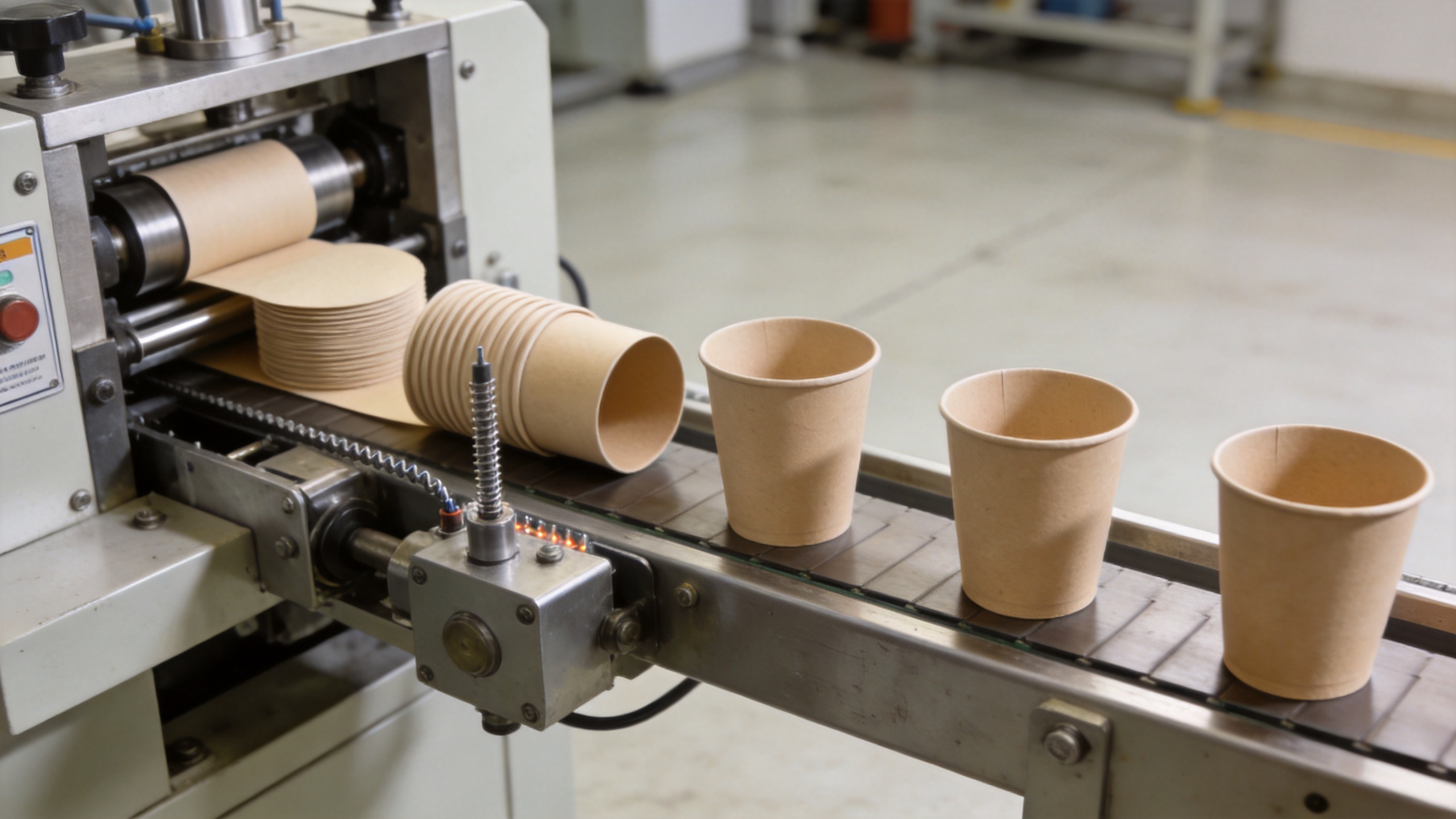
Where ultrasonic paper cup making machinery fits
Ultrasonic paper cup making machinery deserves evaluation when seam repeatability, energy concentrated at the seal zone, or material trials are central to the project. Ultrasonic packaging references describe the method as directing energy at the sealing area and as applicable to paper-based packaging with thermoplastic coatings. In a cup line, the practical questions are tooling condition, material response, setup discipline, maintenance capability, and the validation plan for finished cups.
Do not select ultrasonic paper cup making machinery simply because it sounds more advanced. Compare trial cups across the intended sizes, track seam appearance and leak-test results, and ask how changeovers affect the settings. A documented start-up procedure, accessible service points, and clear spare-parts planning may matter more to daily consistency than an isolated technology label.
Dedicated cup systems versus a paper glass and plate making machine
A paper glass and plate making machine may be relevant when an operation plans to serve multiple disposable tableware formats rather than concentrate on cups. The attraction is flexibility: a broader platform can support a wider packaging portfolio. The trade-off is that tooling, process knowledge, changeovers, and quality routines can become more varied.
Compare a paper glass and plate making machine with dedicated cup-forming equipment through the mix of orders you expect. A focused cup program often benefits from a line optimized around recurring cup dimensions and predictable materials. A mixed-format program may value format capability, provided the team can manage the additional tooling and validation work. Neither route is automatically superior; the right answer follows the operating plan.
Use a selection scorecard before committing
- Product fit: Can the paper cup making machinery make the target sizes, shapes, and board/coating combinations?
- Process proof: Has the supplier shown sample cups and test results relevant to your material?
- Changeover reality: How many parts, adjustments, and verification checks are required between runs?
- Quality controls: Where will seam, bottom, rim, and appearance defects be detected and recorded?
- Support plan: Are training, documentation, wear parts, and remote or local service clearly defined?
- Line balance: Can downstream counting and packing keep pace with dependable forming output?
When reviewing a cup-forming line, ask for the scorecard to be completed with evidence from an application trial rather than sales assumptions. Note material details, tooling used, settings ranges, sample quantities, observed defects, and the corrective action taken. This creates a common language for procurement, production, and quality teams.
Build the framework around repeatable output
The most resilient cup-production framework connects product requirements to each production stage: controlled feeding, repeatable seam formation, stable bottom and rim finishing, and dependable handling after ejection. It also makes room for trial evidence, preventive maintenance, and operator feedback. Whether you choose a dedicated system, an ultrasonic paper cup making machinery approach, or a wider paper glass and plate making machine platform, measure success by repeatable conforming cups—not by a single advertised speed.
For manufacturers building a new line, this approach turns a broad equipment search into a manageable engineering decision. It clarifies what must be tested, what should be documented, and where a production line needs support before the first commercial order arrives.
 ONLINE