
 EN

How an Enterprise Integrated Paper Cup Making Machinery?
Integrating paper cup making machinery is not simply a matter of installing a former and starting production. For an enterprise project, the machine sits between printed cup blanks, material handling, utilities, operators, quality checks, packing, and the customer’s intended cup range. An export-project coordinator should therefore treat paper cup making machinery as one controlled workflow. The useful question is not only “What speed is listed?” but “What must arrive at each handoffs for the line to run and be accepted?”
A practical workflow begins with the target cup, the paperboard or coated material structure, and the required production rhythm. If these inputs are still changing, a capacity discussion alone has limited value. The same principle applies to a double wall paper cup making machinery project: the outer-wall process, blank handling, and assembly checks need to be defined alongside the cup-forming route.
1. Start with a line map, not a machine list
Paper-cup production is commonly organized around blank preparation, forming, side and bottom sealing, rim curling, inspection, and packing. Map those stages before selecting paper cup making machinery. Mark where material enters, who owns each handoff, where rejected cups go, and where finished cups are counted or packed. This turns a supplier conversation into a production-engineering conversation.
For each stage, record three things: the input specification, the operating handoff, and the output check. For example, the forming section needs blanks that match the agreed profile and material structure; the output needs a cup that can move to inspection without damage or mix-up. A paper cup blank printing machine should also be considered as part of the upstream system when printed blanks are produced in-house. Print registration, cutting accuracy, storage condition, and blank identification can all affect the handoff to paper cup making machinery.
2. Freeze the cup and blank specification first
Before an enterprise orders paper cup making machinery, create one shared specification sheet. Include cup dimensions, wall construction, intended contents, blank layout, paperboard or coating description, artwork version, and acceptable appearance criteria. It is helpful to list expected changeovers too: a project built for one stable cup format has different needs from a line that changes sizes or designs often.
Material behavior should be validated with the actual target blanks whenever possible. Paperboard, barrier layers, moisture condition, and blank geometry can influence forming behavior. Rather than assuming that a listed configuration fits every substrate, use samples and a trial plan to confirm the setup. This is especially important when a paper cup blank printing machine feeds several blank versions to the same forming area.
3. Match equipment handoffs to the production rhythm
Next, examine how paper cup making machinery connects to upstream supply and downstream handling. Ask how blanks are presented, how operators replenish materials, how cups are collected, and how changeovers are sequenced. A high nominal output does not by itself describe line performance if replenishment, inspection, or packing repeatedly interrupts the flow.
Utilities deserve the same early review. Confirm the available electrical supply, compressed-air arrangements where applicable, floor space, access routes, safety boundaries, and waste collection plan against the supplier’s confirmed requirements. Document the responsibility for each connection. This reduces late clarification during installation and makes commissioning less dependent on informal assumptions.
4. Build quality checks into the integration plan
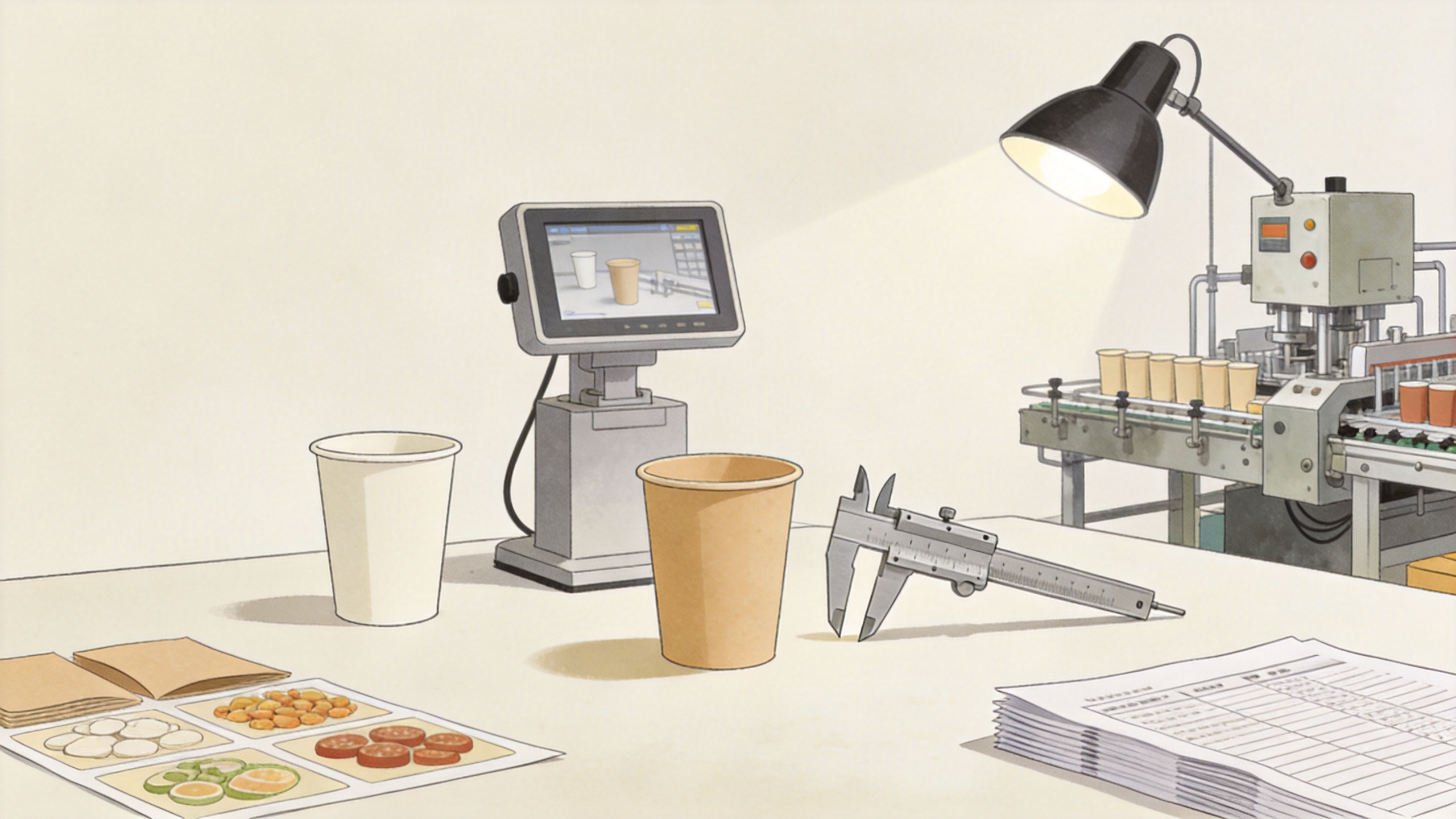
Quality control is more reliable when it follows the product through the line. For paper cup making machinery, the team can agree checkpoints for incoming blanks, forming appearance, side and bottom seam condition, rim consistency, cup dimensions, and packing identification. If lids or downstream filling are relevant, fit checks should be included in the acceptance discussion. These are verification topics, not a substitute for destination-market compliance review.
Assign an owner and a record for every checkpoint. Operators need a clear method for isolating a questionable batch; quality staff need sample, lot, and observation records; maintenance staff need the symptom rather than only a final complaint. This approach helps distinguish a material issue from a setup or machine issue. With paper cup making machinery, recording when a defect appears and what changed just before it appeared is often more useful than trying to diagnose from a single rejected cup.
5. Plan double-wall and printed-blank workflows separately
A double wall paper cup making machinery workflow adds handoffs that should not be hidden inside a general quotation. Clarify how inner and outer components are supplied, how orientation is checked, what visual standard applies to the assembled cup, and which changeover tasks are required. Review the packing method as well, because scuffing or deformation after forming can affect the delivered appearance.
For printed work, establish version control between artwork approval, a paper cup blank printing machine, blank storage, and line release. A simple rule helps: no blank moves to production until its version, condition, and intended cup format are recognizable to the team. This supports traceability without adding unsupported claims about a particular control system.
6. Use a staged acceptance plan
Enterprise integration benefits from acceptance in stages. First review documentation and layout assumptions. Then run trials with representative materials. After that, observe the agreed operating sequence, quality checks, changeover actions, and packing handoff. The final acceptance record for paper cup making machinery should state the tested cup types, material conditions, agreed observations, open items, and ownership of next actions.
Do not treat training as a closing ceremony. Operators, quality personnel, and maintenance staff should know their normal checks, escalation route, cleaning access, spare-part discussion points, and records before the project is handed over. RUIDA Machinery’s paper-cup and food-packaging equipment focus can support a structured technical conversation, but the final configuration should be confirmed against the buyer’s actual blanks, cup formats, utilities, and acceptance criteria.
Enterprise integration checklist
- Define cup formats, material structure, and blank versions before final configuration.
- Map every handoff from printing or blank supply to forming, inspection, packing, and dispatch.
- Confirm utilities, layout, operator access, and material flow against the agreed equipment requirements.
- Test representative blanks and document seam, rim, dimensions, appearance, and packing observations.
- Assign ownership for quality records, maintenance observations, changeovers, training, and open actions.
- Use the same acceptance checklist across the supplier, production, quality, and project teams.
Conclusion
When enterprises integrate paper cup making machinery as a connected workflow, they can make earlier decisions about blanks, utilities, quality ownership, and acceptance. That creates a clearer basis for evaluating equipment fit than a machine list alone. Bring the cup specification, sample blanks, layout constraints, and target operating process to the technical discussion; then use the agreed checks to shape a line that suits the actual project.
 ONLINE