
 EN

What Capabilities Define Paper Cup Making Machinery?
Paper cup making machinery is often compared by rated output alone. That is a useful starting point, but it does not explain whether a machine can form the required cup consistently with the chosen paperboard, barrier layer, cup geometry, and operating routine. From a packaging-equipment selection perspective, capability is better understood as a connected production path: feeding blanks, forming the body, sealing the side seam and bottom, shaping the rim, moving finished cups, and making deviations visible to operators.
For buyers planning a new line or a replacement, the practical question is not simply “How fast is it?” It is “Which conditions can this paper cup making machinery manage reliably, and what must be verified before purchase?” That distinction is particularly important when considering an open cam paper cup making machinery configuration or a line intended for double-wall products.
Start with the cup and material, not the machine label
A forming machine works within a defined set of inputs. Before comparing configurations, document the cup diameter, height, volume, wall construction, paperboard weight, coating or barrier type, printing arrangement, and planned changeover frequency. A machine that suits one narrow cup range may need different tooling, heating settings, or handling arrangements for another format.
This is why a capability review should begin with samples and a production brief. The brief gives the supplier and production team a common reference for blank dimensions, seam overlap, bottom profile, and rim requirements. It also makes it easier to separate a machine limitation from a material or converting issue. Paper-cup process references commonly map the work through body forming, side-seam sealing, bottom feeding and sealing, then rim curling; each stage depends on the preceding stage being stable.
Core forming and sealing capabilities
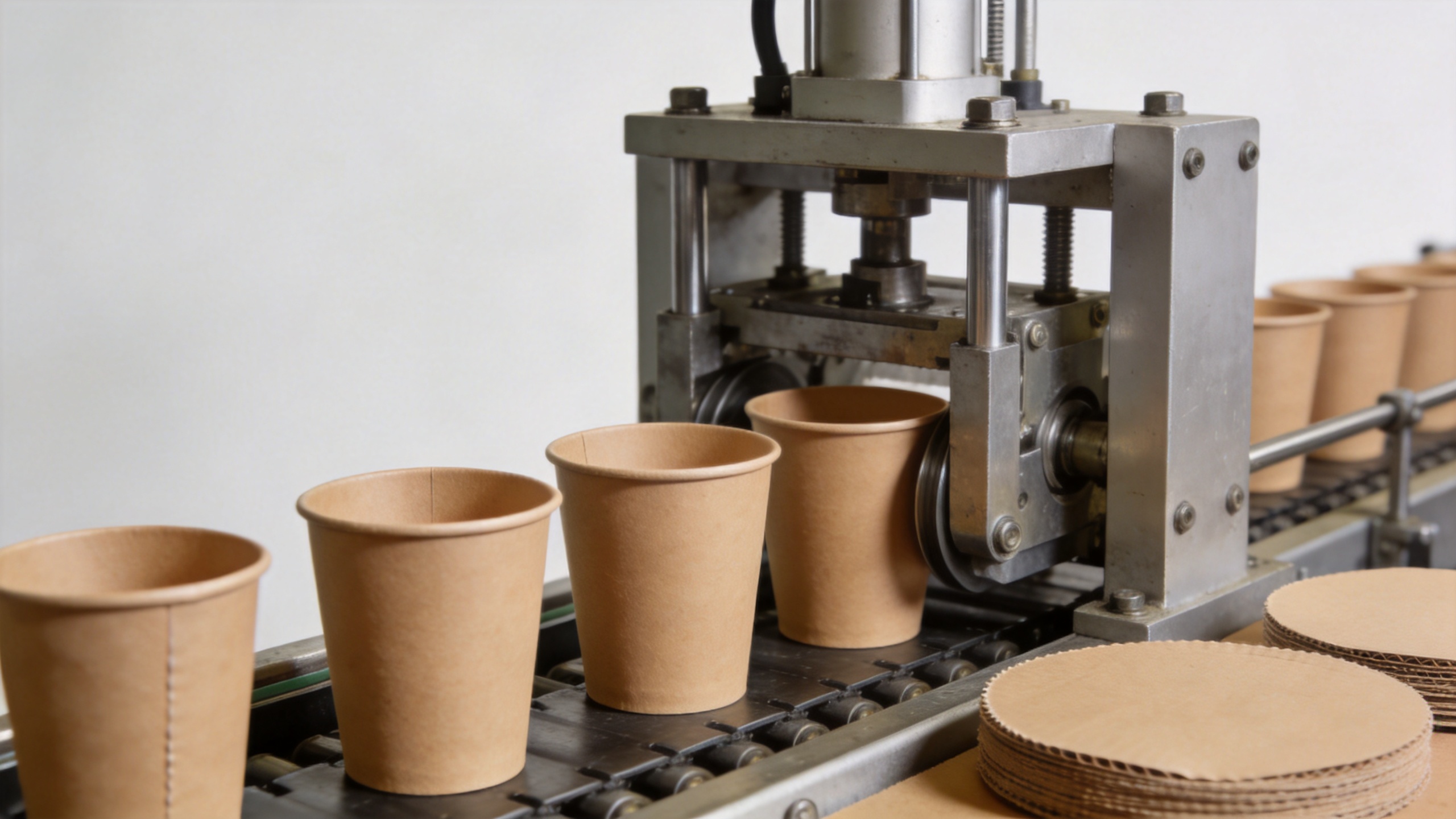
The central capability of paper cup making machinery is controlled conversion of a flat blank and a bottom disc into a usable cup body. The body-forming station must present and wrap the blank consistently. The side-seam station then applies the specified joining method, while the bottom section inserts, heats or bonds, and knurls the base according to the material and process setup. Finally, rim shaping gives the cup its finished drinking edge and helps define the final form.
Rather than treating these stations as a checklist of features, evaluate how they work together. Ask where adjustments are made, whether settings are repeatable after a changeover, and what the operator can observe when a seam or bottom joint drifts. A capability claim becomes meaningful only when it is connected to a defined cup sample, material, tooling set, and acceptance condition.
What an open-cam arrangement can change
An open cam paper cup making machinery design refers to the mechanism used to coordinate motions in the forming cycle. The label alone does not establish output, quality, or maintenance results. Its relevance is operational: buyers can ask how the mechanism is accessed for routine inspection, how timing is adjusted, what lubrication or wear checks are specified, and how the arrangement fits their maintenance practice.
Open access can make a visual inspection path easier to discuss, but it does not replace a maintenance plan. During an evaluation, observe the feed-to-forming handoff, the consistency of cup transfer, and whether operators can understand abnormal-condition signals. Review the recommended wear parts, service intervals, and the support documents available with the equipment. Automation does not mean that planned inspection and adjustment are unnecessary.
Double-wall capability is an assembly question
Double wall paper cup making machinery addresses a different production requirement: adding an outer sleeve or second wall around a formed inner cup. This is not merely a higher-output version of a single-wall machine. It adds an alignment and bonding task, and the result depends on how the inner cup, sleeve material, adhesive or joining process, and transfer timing interact.
For a double-wall application, ask which cup sizes and sleeve designs have been validated with the proposed tooling; whether the sleeve position can be checked during operation; how different paperboard thicknesses influence feeding; and how changeovers are documented. If insulation, print registration, or a particular tactile finish matters, include those criteria in the sample review. The useful capability is repeatable sleeve placement under the actual material conditions, not a broad statement that a machine “handles double walls.”
Controls, sensing, and operator usability
Modern paper cup making machinery may incorporate controls for timing, temperature, motion coordination, alarms, and production counts. The value of these controls depends on what they help the team do. Useful questions include: Can a trained operator find the setting connected to a defect? Is a change documented by cup format? Do alarms identify a station or simply stop the line? Can production and rejection information be reviewed without turning a routine adjustment into a specialist task?
Consider automation and maintenance ability together. A more automated arrangement may fit a stable, higher-volume program, while a plant with frequent changes may value accessible adjustments and clear setup records. Neither choice is universal; the operating team, available technical support, and expected product mix determine the sensible balance.
Quality capability requires an acceptance plan
Machine capability is incomplete without a way to judge the finished cup. Build an acceptance plan around the features that matter to the intended use: seam appearance, bottom integrity, rim shape, cup geometry, print orientation where relevant, and stackability or packing behavior. Review samples after normal startup as well as after a planned format change, because repeatability is often more informative than a single demonstration run.
Food-contact requirements also need a separate verification path. A machine does not automatically make a finished cup compliant for every market. Buyers should confirm the intended paperboard, coating, inks, adhesives, and relevant destination-market rules with responsible material and regulatory parties. For example, U.S. food-contact requirements address the authorized use of food-contact substances; that regulatory review is distinct from the mechanical capability of the forming equipment.
A practical capability checklist
- Product scope: Confirm cup dimensions, wall construction, paperboard, barrier layer, and expected output mix.
- Forming path: Review blank feeding, body forming, side seam, bottom insertion, bonding, knurling, and rim finishing against samples.
- Format flexibility: Identify tooling changes, setup records, and time or training needed for each changeover.
- Double-wall process: If relevant, verify sleeve feeding, alignment, attachment, and inspection for the actual materials.
- Maintenance access: For an open-cam configuration, request a clear point-by-point inspection and parts plan.
- Controls and response: Define what operators can see, adjust, record, and escalate during a shift.
- Acceptance conditions: Agree on sample, defect, run-condition, and documentation criteria before finalizing the order.
Choose capabilities that match the production reality
The strongest paper cup making machinery specification is not the longest feature list. It is a documented match between cup design, material behavior, forming sequence, operator workflow, and validation criteria. Begin with the intended cup, then verify the stations that create and inspect it. This approach helps a buyer assess an open cam paper cup making machinery option or double wall paper cup making machinery application on practical evidence rather than labels alone.
Before moving forward, prepare a concise package of cup drawings, material samples, output expectations, changeover needs, maintenance resources, and acceptance tests. That gives every party a clearer basis for determining whether the proposed equipment fits the production task.
 ONLINE