
 EN

How Cup Manufacturing Machine Works Safely?
A cup manufacturing machine turns prepared cup blanks into finished paper cups through timed feeding, forming, bottom sealing, curling, and discharge. It can look like one continuous motion, but safe output depends on treating each station as a separate operating zone. This guide explains how a cup manufacturing machine works, what an operator should check, and when work must stop for trained service personnel.
For a production supervisor, the useful question is not simply whether the cup manufacturing machine is running. It is whether material, guards, temperature, timing, rejects, and cleaning controls remain stable throughout the shift. The machine manual, local rules, and site risk assessment set the operating limits for the installed equipment.
What happens inside a cup manufacturing machine?
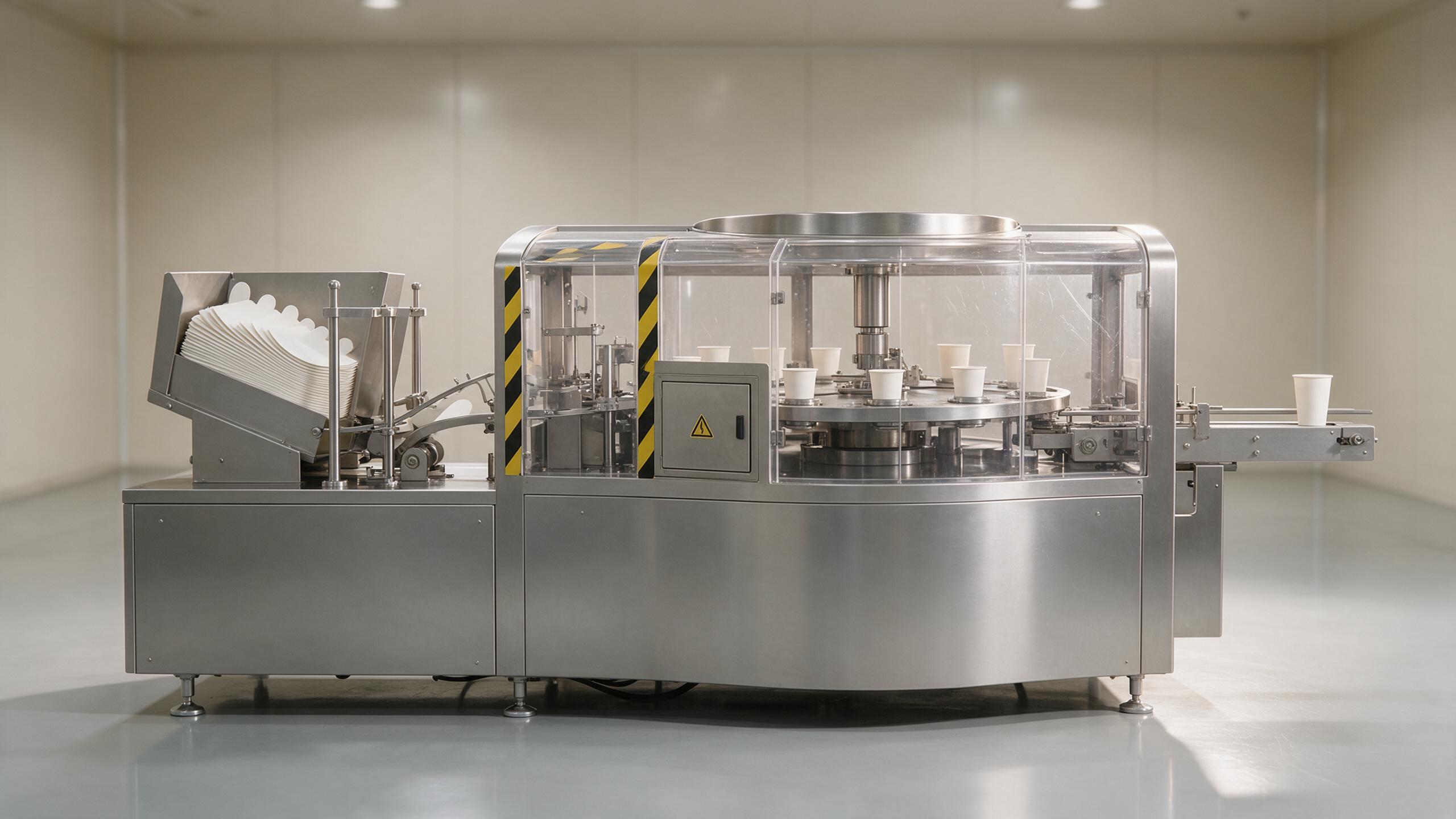
A typical cup manufacturing machine receives pre-cut, printed, or blank paper fan pieces and bottom discs. A feeder separates each piece, the forming section wraps it around a mold, and the side seam is joined according to the material and machine design. The bottom disc is positioned and sealed; the upper edge is curled to create a usable rim. A discharge section transfers accepted cups for packing or later inspection.
That sequence has moving molds, rotating parts, heated sealing areas, drives, sensors, and pneumatic or electrical components. The exact layout differs by model. A single wall cup manufacturing machine may use a dedicated mold set for a familiar cup range, while an ice cream cup making machine may require careful checks for the selected cup geometry, paper stock, and finish. Do not assume a setup from one line applies unchanged to another; verify the approved setup for the installed equipment.
Start with a safe pre-start inspection
Before starting a cup manufacturing machine, assign an authorized operator and use the site’s documented pre-start checklist. Confirm that the work area is clean, dry, adequately lit, and free of loose tools or packaging. Check that fixed guards, access doors, interlocks, emergency stops, and warning labels are present and visibly intact. A guard that is open, damaged, bypassed, or difficult to close is a reason to pause and escalate.
Next, verify the approved paper blanks and bottom discs. Mixed stock, warped blanks, or incorrect dimensions can cause poor feeding, jams, seam defects, or excess rejects. Check that material is loaded according to the machine manual, that guides are aligned, and that no one is reaching through a guard to “help” the feed. On a cup manufacturing machine, a minor feed issue can move quickly into a pinch-point exposure if the line is running.
- Confirm the mold and tooling match the scheduled cup size.
- Check that scrap collection and discharge paths are clear.
- Review the current recipe, speed setting, and approved inspection criteria.
- Make sure operators know who is responsible for normal running and who is authorized for service work.
Run the process in stages, not by guesswork
Start the cup manufacturing machine at the approved low-speed or trial condition when the manual and site procedure call for it. Watch the first cups through feeding, body forming, bottom placement, sealing, rim curling, and discharge. Rather than chasing maximum output, verify that cups are properly formed and that no unusual sound, vibration, smell, alarm, or reject pattern appears.
During normal operation, operators should observe the process from outside the guarded area. The practical checks are simple: are fan pieces feeding one at a time, are bottom discs centered, are cups leaving without sticking, and are reject levels changing? Record abnormalities with the time, station, material batch, and visible symptom. “Bad cups” is not enough information for the next person to diagnose a cup manufacturing machine safely.
For a single wall cup manufacturing machine, routine inspections should also confirm that the intended wall format and rim profile are being maintained. For an ice cream cup making machine, confirm the approved cup specification before a changeover; a visually similar cup can still have a different blank profile or bottom requirement.
Respond safely to a jam, defect, or alarm
Do not reach into a running cup manufacturing machine to remove a jam, straighten a blank, or inspect a mold. Stop the machine using the normal procedure, communicate the condition, and follow the manufacturer’s instructions. If clearing the condition requires entering a guarded area, opening a protective device, working near hot sealing components, or servicing moving parts, use the site’s energy-control procedure and involve authorized personnel.
Hazardous-energy controls are particularly important during maintenance, mold changes, and troubleshooting. OSHA guidance for lockout/tagout describes isolating the energy source and rendering equipment inoperative before servicing or maintenance; local legal requirements may differ. A restart should occur only after the responsible person has completed the documented return-to-service checks. This is not a shortcut step on a cup manufacturing machine; it protects people working around stored or live energy.
Manage changeovers and cleaning with equal care
Changeovers are a common point of risk because people need to work closer to molds, guides, and sensors. Plan the change before stopping the cup manufacturing machine: identify the tooling, material, settings, tools, and inspection sample required. Follow the approved isolation method before access, keep removed parts organized, and use the documented setup verification before production resumes.
Cleaning is also part of process control for food-packaging work. Remove paper dust and process debris using methods approved for the site and equipment. Avoid introducing cleaning chemicals or loose materials into production areas. Food-packaging sanitation expectations require cleaning practices that protect equipment and packaging materials from contamination, so the cleaning schedule should specify areas, methods, responsible people, and release checks.
Use a shift checklist to sustain safe operation
A reliable cup manufacturing machine routine combines equipment checks with communication. At shift handover, record output, rejects, alarms, material batch, cleaning status, unresolved defects, and any guard or interlock concerns. This turns the next operator’s first inspection into a focused review rather than a fresh guess.
| Checkpoint | What to confirm | When to escalate |
|---|---|---|
| Guards and interlocks | Closed, intact, and operating as designed | Any damage, bypass, or uncertain response |
| Material feed | Correct blanks and bottoms; stable alignment | Repeated misfeeds or unexplained jams |
| Forming and sealing | Samples meet the approved visual criteria | New seam, bottom, or rim defects |
| Access for service | Normal operation is separated from maintenance work | Any need to enter a guarded or hot area |
Key takeaway
A cup manufacturing machine works safely when the operating team respects the process sequence, checks protective devices before running, observes from outside guarded zones, and stops for authorized service whenever access or troubleshooting crosses the normal operating boundary. Whether you operate a single wall cup manufacturing machine or an ice cream cup making machine, build your procedure around the installed machine manual, verified material setup, documented changeovers, and clear escalation rules.
 ONLINE