
 EN

How Factories Adopt Paper Cup Glass Making Machine?
Adopting a paper cup glass making machine is not simply a purchase decision. For a paper cup factory, it is a controlled change to materials, people, quality checks, maintenance routines, and production planning. A machine that appears suitable in a quotation can still require further confirmation once the intended cup format, paperboard, coating, shift pattern, and changeover frequency are defined.
From a packaging-equipment selection perspective, the most useful starting point is to match the paper cup glass making machine to the cup, material, and production rhythm before comparing configurations. This article offers a practical adoption framework. It does not replace a supplier’s technical review, local safety obligations, or a factory acceptance discussion.
Start with the production job, not the speed claim
Factories often ask first about pieces per minute. Output matters, but it is only one part of the adoption decision. A paper cup glass making machine must form the specific product mix a factory plans to sell. That includes cup capacity, top and bottom dimensions, paperboard grade, coating type, print requirements, and whether the factory will run one format for long periods or change formats often.
A useful first worksheet separates confirmed information from open questions:
- Confirmed: target cup sizes, expected production schedule, available floor space, power supply, and main paper materials.
- To verify: mold scope, compatible material range, operator tasks, changeover sequence, spare-parts list, and acceptance criteria.
- To decide: whether the factory values a stable single-format rhythm or needs more frequent size changes.
This change in thinking is important: a higher stated speed is not automatically a better fit. A paper cup glass making machine should be evaluated against stable production under the factory’s own operating conditions, rather than a generic maximum figure.
Map the full forming workflow before equipment selection
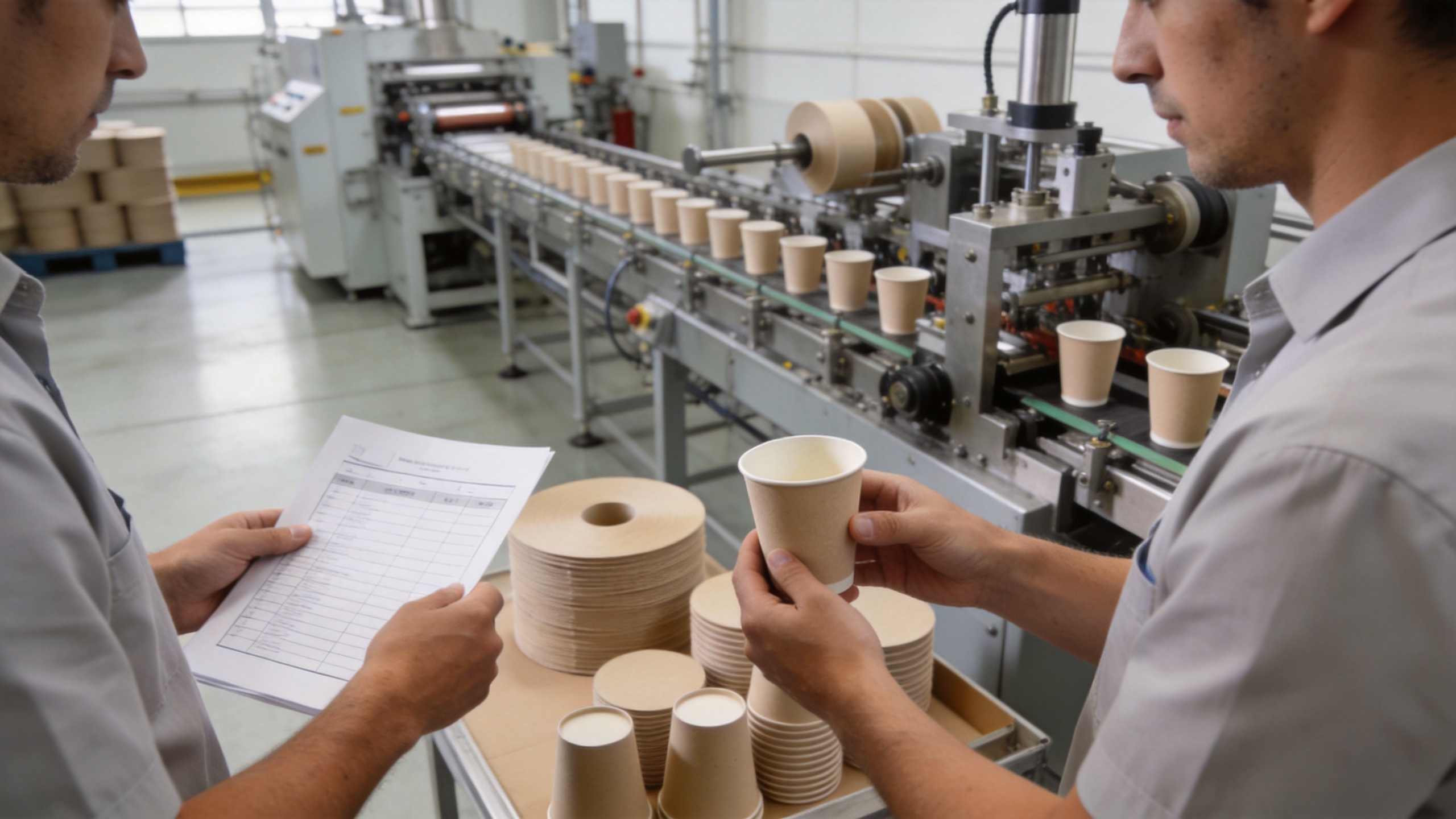
Before a commercial paper cup glass making machine is approved, map how paper moves from the prepared blank to the finished cup. The exact sequence depends on the model and cup design, but factories should clarify feeding, side-seam formation, bottom insertion, heating or sealing, knurling, curling, discharge, inspection, and packing handoff. The goal is not to demand a predefined machine layout; it is to identify where the proposed workflow meets the factory’s process.
This mapping also helps distinguish a material issue from an equipment issue. For example, if a seam or rim result changes, the review should consider paperboard variation, coating behavior, tooling condition, settings, and operator procedure before treating the machine as the only cause. That is especially relevant when a paper cup factory runs more than one supplier’s material or adjusts product formats.
Verify material and food-contact requirements early
Material confirmation should run in parallel with equipment discussions. The paper, coating, ink system, and intended end use all influence the questions a paper cup glass making machine project must answer. For U.S.-bound applications involving aqueous or fatty foods, 21 CFR §176.170 is one example of a food-contact paper and paperboard rule that procurement teams may need to review. It is not proof that any specific paper stock, cup, or machine is compliant; destination-market requirements and the final material system still need separate verification.
Ask for material samples early and document the sample identity. During trials, record the paper specification, cup format, operating settings, observed forming result, and any adjustments made. This creates a useful baseline for later troubleshooting and prevents informal sample results from being mistaken for a blanket production guarantee.
Build safety and installation checks into the project plan
Safe adoption begins before delivery. ISO 12100:2010 describes a general methodology for machinery risk assessment and risk reduction. A factory can use that mindset to organize its own review of intended use, reasonably foreseeable misuse, access around moving parts, cleaning, changeover, fault recovery, maintenance, training, and emergency procedures. The applicable legal requirements depend on the installation location and should be confirmed with qualified local parties.
For a paper cup glass making machine, practical installation questions include:
- Can the line be accessed safely for paper loading, cleaning, adjustment, and collection?
- Where will operators stand during normal running, changeover, jams, and restart?
- What utilities, guarding, notices, and lockout procedures need to be ready before commissioning?
- Who is authorized to adjust tooling, record deviations, and release the first production batch?
These questions are not paperwork after the fact. They shape layout, responsibilities, and the time needed for a commercial paper cup glass making machine to reach a controlled operating routine.
Use a trial plan that measures stable production
Commissioning should turn assumptions into recorded evidence. Agree with the supplier on a trial plan before the test begins. Define the cup sample, material lot, target appearance, inspection points, acceptable defects, operating period, and records to retain. Rather than asking whether the machine “runs,” ask whether the proposed process can produce an agreed result repeatedly under documented conditions.
Review the result across several dimensions:
- Forming quality: seam, bottom, rim, shape, and visible consistency against the agreed sample criteria.
- Process stability: whether normal adjustments, stops, and restarts can be understood and controlled.
- Changeover: the tasks, tools, time, verification steps, and training needed for the planned format changes.
- Line coordination: whether blank supply, collection, packing, and downstream staffing keep pace with the forming process.
As a reference point only, supplier pages may quote different output ranges and mold-change capabilities, so a paper cup factory should not treat a public specification as its own acceptance result. The relevant question is what the selected paper cup glass making machine demonstrates with the actual proposed format and material.
Prepare people, maintenance, and documentation for ramp-up
The first weeks after installation often reveal whether the adoption plan is complete. Train operators on normal running, cleaning, basic inspection, and escalation. Train maintenance personnel on the approved inspection routine, wear-item identification, lubrication or service points where applicable, and how to record a symptom before changing several variables at once.
For a paper cup factory, a simple daily record can be more valuable than an undocumented adjustment: date, cup format, material batch, shift, observed issue, action taken, and outcome. Over time, this helps the team see whether a recurring issue follows material, tooling, settings, changeover, or handling conditions. It also gives suppliers a clearer basis for technical support.
Adopt with an acceptance checklist, then improve in stages
A commercial paper cup glass making machine project is strongest when acceptance is written before final handover. Include the verified cup format, trial material, agreed inspection points, operating demonstration, training scope, supplied documents, spare-parts discussion, and open actions. If a condition has not been verified, mark it as pending rather than assuming it is covered.
RUIDA Machinery can support a requirement-confirmation conversation for automatic paper cup machine projects. For the next discussion, prepare your cup drawings or samples, paperboard details, target output rhythm, format-change expectations, plant layout information, and destination-market requirements. That gives every party a clearer starting point for deciding whether a paper cup glass making machine fits the planned production job.
 ONLINE