
 EN

How Mills Scale Up Using Paper Production Machine?
Scaling a mill is rarely a matter of buying the fastest available unit. A paper production machine sits inside a connected flow of stock preparation, sheet formation, water removal, drying, winding, and finishing. If one area cannot receive, process, inspect, or move material at the required pace, a higher nameplate speed simply moves the constraint. The practical goal is to increase stable saleable output while protecting grade quality, operating safety, and maintenance access.
From a process-engineering perspective, the first question is not “How fast can the machine run?” It is “Which part of the production system limits good output today?” This distinction matters whether a mill is adding a full paper line, expanding a converting cell, or assessing adjacent equipment such as a wet tissue machine or a fully automatic paper plate making machine.
Start with the production flow, not an isolated machine
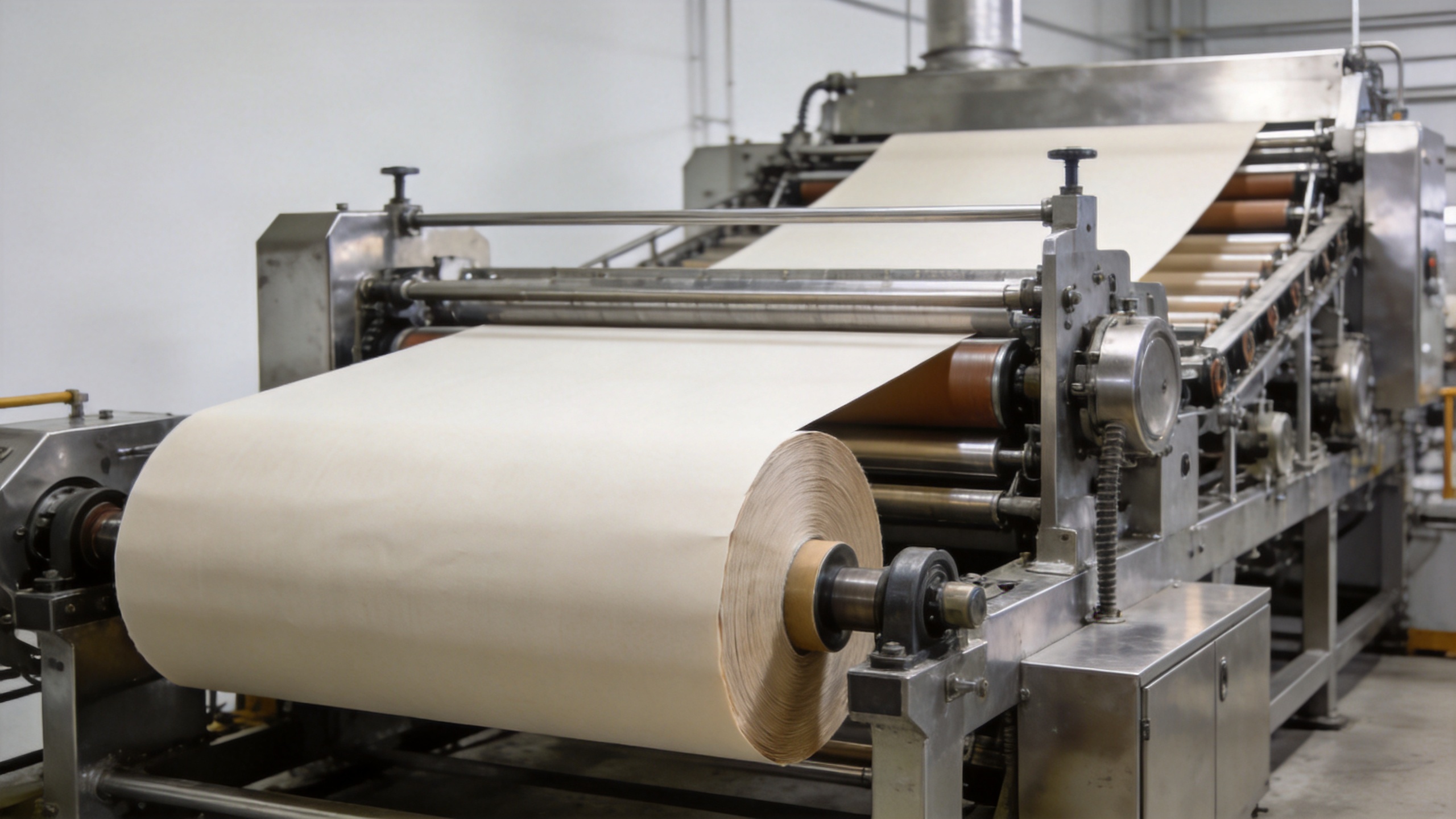
A typical paper line moves from pulp or prepared fibre through stock preparation, forming, pressing, drying, finishing, and winding or conversion. The wet end creates a continuous web; the press section removes water mechanically; the dry end removes the remaining moisture and prepares the sheet for its required finish. Each grade has its own operating window, so a paper production machine should be evaluated as part of that whole flow rather than as a standalone speed figure.
This is especially important during expansion. More capacity at the headbox can overload drainage and pressing. Faster drying can expose weak reel handling or slitting capacity. More finished rolls can reveal gaps in quality release, warehousing, or dispatch. In other words, throughput is governed by the slowest dependable stage, not the most impressive catalog specification.
Find the real constraint before you scale
Begin with a short, repeatable production review across representative grades and shifts. Compare planned output with saleable output, then separate time losses into availability, speed, and quality losses. The review does not need a complicated dashboard to be useful; it needs consistent definitions and timestamps.
- Availability: Record planned stops, unplanned stops, grade changes, breaks, cleaning, and waiting time.
- Rate: Compare stable running speed with the target speed for each grade rather than relying on a single peak-speed observation.
- Quality: Track rejects, off-spec moisture, basis-weight variation, defects, and rework by process stage.
- Flow: Note where pulp, parent reels, or finished stock accumulate. Queues often point to the real constraint.
When the same stage repeatedly causes waiting upstream or idle time downstream, that stage is the first candidate for improvement. Sometimes the answer is a component upgrade. Sometimes it is a better changeover sequence, preventive maintenance task, operator instruction, or material-handling adjustment. Treating every loss as a reason to replace the entire paper production machine can create unnecessary capital cost.
Match capacity across the wet end and dry end
Water removal is a useful example of why balanced engineering matters. Forming, pressing, and drying work as a system: if press performance changes, the energy and capacity requirement of drying changes too. Mechanical dewatering generally removes water more efficiently than evaporating it later, but the practical benefit depends on the grade, felt condition, steam system, controls, and the limits of the existing line.
Before approving a speed increase, confirm that stock preparation can deliver consistent furnish, the forming section can maintain the required profile, the press section can manage drainage, and the dryer section has enough thermal and condensate-handling capability. Then review calendering, reel capacity, and downstream conversion. A paper production machine expansion is sound only when these handoffs are checked together.
Choose a staged scale-up path
For many mills, a staged plan reduces risk better than one large change. The right sequence depends on the measured constraint, but the following framework keeps the decision tied to evidence.
- Stabilize current operation. Restore basic condition through cleaning, lubrication, alignment checks, wear-part review, and clear operating limits. Verify that instrumentation is trusted before using it to justify investment.
- Remove the dominant bottleneck. Improve the stage that demonstrably limits saleable output. Define the acceptance measure before the project begins, such as sustained rate, reduced break frequency, or improved first-pass quality.
- Add buffer and material-flow discipline. Confirm that pulpers, chests, conveyors, reels, packaging, and storage can absorb normal variation without starving or blocking the line.
- Standardize the new operating window. Update grade recipes, changeover work, inspection points, maintenance routines, and operator training after each capacity change.
- Re-measure before the next investment. The constraint may move after an upgrade; repeat the same loss review instead of assuming the next section is the answer.
This staged method also helps decision-makers compare alternatives on total operating impact. A lower initial quote is not automatically the better option if it adds difficult maintenance, longer changeovers, higher utility demand, or a new downstream constraint.
Plan the supporting systems around the paper production machine
Capacity projects often succeed or fail at the interfaces. Build a readiness checklist that covers utilities, controls, people, quality, and logistics:
- Confirm electrical capacity, steam, water, compressed air, vacuum, drainage, and effluent handling against the proposed operating condition.
- Check control-system integration, alarm philosophy, spare-parts availability, and safe access for inspection and maintenance.
- Define sampling frequency and release criteria so a higher rate does not create more off-spec inventory.
- Review reel transfer, slitting, packaging, and warehouse flow before increasing parent-roll output.
- Set commissioning gates: dry run, low-rate run, grade trials, quality verification, and sustained production acceptance.
The same principle applies when a mill expands into adjacent converting formats. A wet tissue machine may require different hygiene, liquid-handling, packaging, and quality controls than a conventional dry-paper workflow. A fully automatic paper plate making machine is a converting application with its own material, forming, inspection, and packing requirements. These are not interchangeable substitutes for an integrated paper production machine; they should be assessed against the intended product flow and commercial plan.
Use data to protect quality while output rises
More tonnes or more pieces are useful only if customers can use them. Select a small set of measures that connect line behavior to saleable output: stable speed, break frequency, moisture consistency, basis-weight variation, defect rate, changeover duration, and approved yield. Review them by grade and by shift. If output rises while reject or rework rises faster, the project has not created the capacity it appears to create.
Keep the measurement practical. A disciplined log of why the line stopped, what changed, and how quickly normal conditions returned can be more actionable than a long report with no ownership. For each recurring event, name the responsible review point and the next verification date.
Build the investment case around a verified operating need
Before committing to equipment, document the target product mix, annual volume, operating hours, furnish or material conditions, width and grade requirements, quality limits, utilities, available floor space, and downstream plan. Ask suppliers to explain assumptions and interfaces, not only maximum speed. Where a claim depends on site conditions, mark it for verification during trials or technical review.
A well-scoped paper production machine project therefore has a clear sequence: measure the current constraint, stabilize the line, balance adjacent sections, validate supporting systems, and prove quality at the new operating condition. That approach makes scale-up more controlled and gives the mill a better basis for deciding whether to optimize, upgrade, or add a new production asset.
 ONLINE