
 EN

Paper Production Machine Advantages
A paper production machine is more usefully evaluated as a connected process, not as a single piece of equipment with an impressive nameplate. For a mill or converting business, the practical advantages come from how stock preparation, sheet formation, water removal, drying, finishing, and material handling work together. That perspective is especially useful when a project must balance output goals with grade consistency, maintenance access, and the ability to add downstream products later.
From a B2B procurement viewpoint, the first question is not simply “How fast is the paper production machine?” It is “Which part of the workflow is limiting dependable output today?” A well-matched line can make operating decisions clearer, reduce handoffs between stages, and give teams a more repeatable basis for quality checks. The exact advantage still depends on fibre source, target paper grade, available utilities, operator capability, and the level of automation chosen.
Why a paper production machine creates value as a system
In continuous papermaking, fibre slurry is distributed to form a web, then the web passes through pressing and drying before finishing. A paper production machine brings those linked stages into a controlled sequence. Instead of treating each stage as an isolated task, the line makes it easier to align material flow, web handling, and inspection points around the same production objective.
That system view has several practical benefits:
- More consistent workflow: A paper production machine can establish a defined route from prepared stock to finished rolls or sheets, making responsibilities easier to assign.
- Better process visibility: Teams can identify whether an issue begins in stock preparation, formation, pressing, drying, or finishing rather than changing settings everywhere at once.
- Clearer capacity planning: The line can be assessed by its slowest or most sensitive section, not only by a headline speed figure.
- Stronger quality discipline: Operators have natural points to check web condition, moisture-related behavior, surface requirements, and reel or sheet handling.
These benefits are not automatic. A paper production machine still needs compatible upstream material, realistic maintenance routines, and an acceptance plan that defines the grade and operating conditions being evaluated.
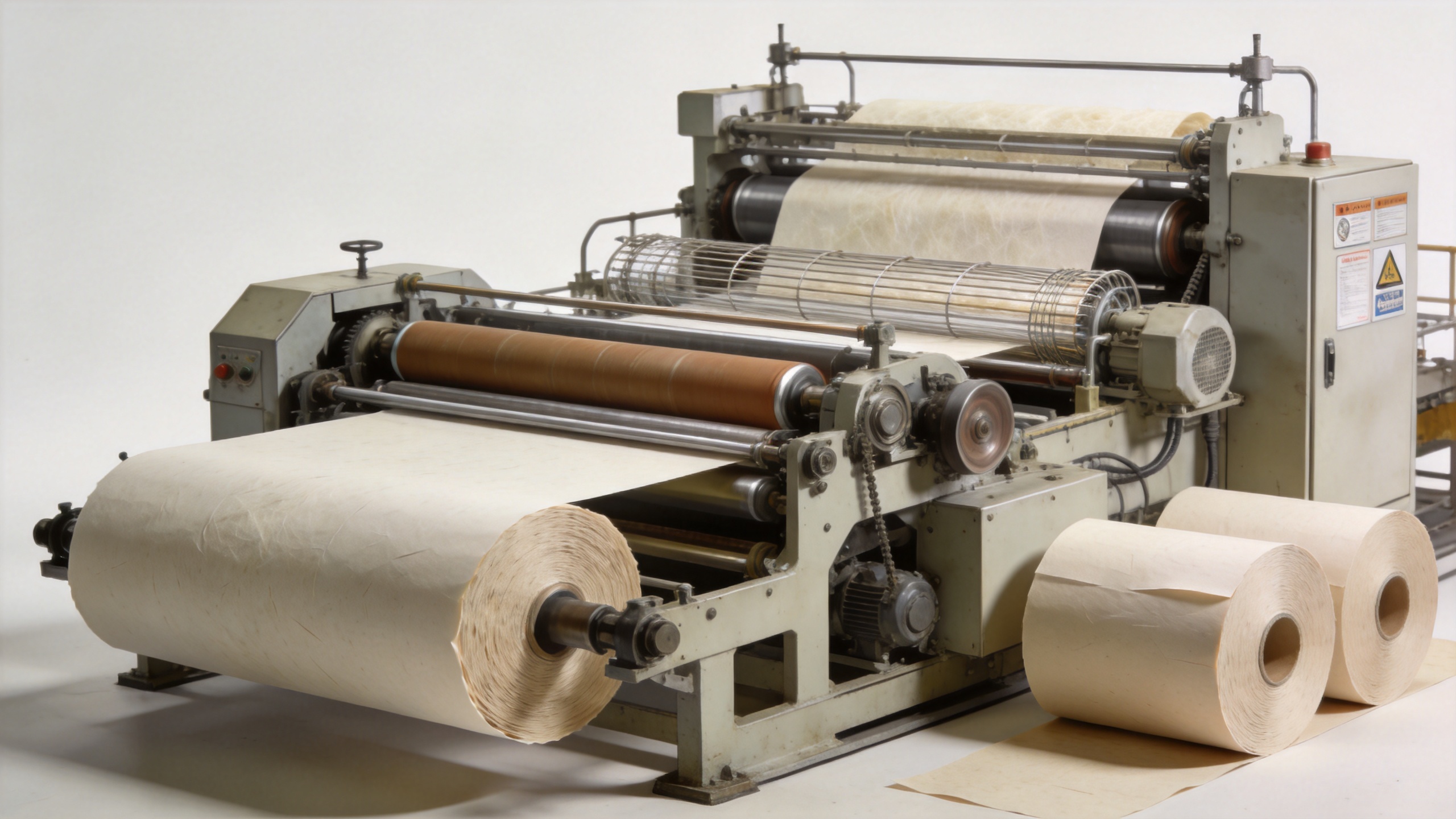
Advantage 1: coordinated water removal and sheet control
One core advantage of a paper production machine is that it organizes water removal in stages. Formation establishes the web, pressing removes a substantial share of water mechanically, and drying handles the remaining moisture with thermal energy. Coordinating these stages matters because a weak handoff can affect web stability, surface condition, or the load placed on the next section.
For buyers, this means a paper production machine should be reviewed around transitions as well as individual components. Ask how the web is supported from forming to press, how drainage is observed, and how operators recognize a change that could carry into drying. This avoids the common mistake of comparing only a single component while ignoring whether the full paper production machine has a balanced operating path.
Advantage 2: a more structured route to repeatable output
Repeatability is often a more useful goal than a broad claim about maximum output. A paper production machine gives a production team defined process stages and repeatable operating checkpoints. When the team records material conditions, key settings, observed web behavior, and finished-product criteria, it can compare runs more meaningfully over time.
The purchasing discussion becomes clearer when the buyer defines the grade, basis-weight range, finish expectation, shift pattern, and inspection method instead of looking for a one-size-fits-all paper production machine. The supplier discussion becomes more concrete, while unresolved variables remain visible instead of being hidden behind a general productivity promise.
Advantage 3: better use of upstream preparation choices
A paper production machine does not begin at the forming section. Fibre preparation and feed consistency strongly influence what happens later. In operations that process recovered material, a heavy duty industrial shredder may be part of the broader preparation strategy, but it is not a substitute for pulping, cleaning, screening, or grade-specific stock control. Its role should be defined by the actual feedstock and the next processing stage.
The advantage of linking preparation decisions to the paper production machine is clearer material planning. Teams can separate material-size reduction from fibre development, decide where contaminants must be managed, and avoid assuming that one upstream machine resolves every quality risk. Before selecting equipment, document the input material, expected contamination level, target product, and responsibility for inspection.
Advantage 4: flexibility for finishing and converting plans
Not every business sells only parent rolls or sheets. A paper production machine can sit within a larger plan that includes slitting, printing, packaging, or formed paper products. This is where production planning needs careful boundaries: downstream converting equipment may add commercial flexibility, but it does not change the process requirements of the papermaking line itself.
For example, a hand press paper plate machine may suit a small-batch or manually operated forming application after suitable paperboard has been produced or sourced. It should be evaluated as a downstream application choice, not presented as part of the continuous sheet-forming process. Keeping that distinction clear helps a buyer map the paper production machine to the correct revenue path and avoids combining unrelated capacity assumptions.
Advantage 5: a stronger basis for lifecycle decisions
The price of a paper production machine is only one part of the decision. A realistic comparison also considers installation planning, utility requirements, consumables, wear components, access for cleaning, training needs, and the time needed to diagnose an abnormal run. Automation can reduce routine manual interventions, but automation does not mean that maintenance disappears.
It helps to follow an operator’s path through the line. Can key areas be inspected safely? Are cleaning points accessible? Is there a documented response for a web break or an unexpected quality change? If speed and maintenance simplicity pull in different directions, make that trade-off explicit. A suitable paper production machine is the one whose operating demands match the organization’s actual support capability.
A practical evaluation checklist
Before committing to a paper production machine, prepare a short comparison sheet for each option:
- Define the fibre source, target grade, finished format, and product-quality priorities.
- Map the required stages from material preparation through finishing and identify what is inside or outside the supplied scope.
- Confirm the expected handoffs between forming, pressing, drying, and finishing rather than comparing isolated specifications.
- List utilities, installation conditions, routine inspection points, operator training, and maintenance responsibilities.
- Agree on acceptance criteria that describe conditions and observations, not just a single output figure.
There is no need to force a paper production machine into every product plan. Where the business mainly converts purchased paperboard, a converting-focused layout may be more appropriate. Where the objective is integrated paper production, however, a well-scoped paper production machine can create a disciplined foundation for consistent process control and future product choices.
Conclusion
The most valuable advantages of a paper production machine are coordination, visibility, repeatability, and a clearer link between process decisions and commercial plans. Evaluate the line as a whole, keep upstream preparation and downstream conversion roles distinct, and turn operating expectations into a written checklist. That approach gives buyers a more reliable way to select a paper production machine for the conditions they actually need to manage.
 ONLINE