
 EN

How to Choose Paper Cup Glass Making Machine?
Choosing a paper cup glass making machine is easier when you treat it as a production-fit decision rather than a catalog comparison. A machine that looks suitable on a quotation can still create avoidable adjustment work if the cup design, paperboard, coating, shift plan, and acceptance criteria were not defined first. This guide gives procurement teams a practical way to compare a paper cup glass making machine before they commit to a configuration.
Start with the cup, not the machine
Before requesting a proposal for a paper cup glass making machine, assemble a short requirements brief for every priority cup. Include a drawing or physical sample, top and bottom dimensions, height, intended beverage or food use, printing condition, and the planned monthly volume. If several sizes will run on one line, state which size drives most of the volume and how often changeovers are expected.
Paper and coating deserve equal attention. Paper weight, stiffness, coating type, coating side, fan geometry, edge quality, and storage condition can influence feeding and sealing behavior. That does not mean one material automatically rules out a paper cup glass making machine; it means the supplier needs representative inputs before its proposal can be meaningfully evaluated. Send the planned cupstock specification early and ask which details must be confirmed before the trial.
Match output expectations to the whole operating plan
A nameplate rate is only one part of an equipment-selection decision. First, convert demand into usable cups per shift, then account for planned stops, material replenishment, inspection, changeovers, and normal adjustment time. A line selected solely around a peak rate may be less suitable than one that fits the actual operating rhythm.
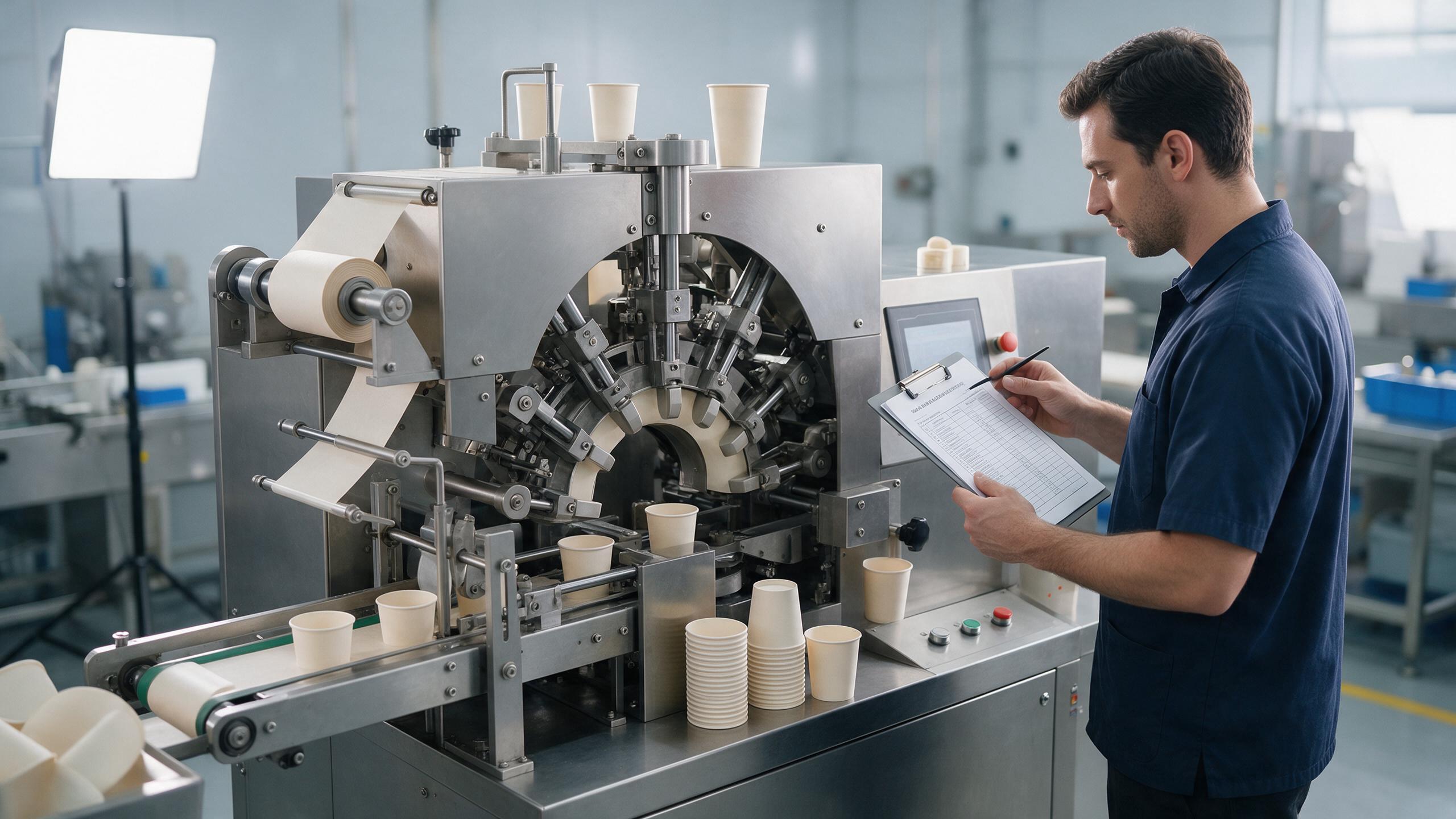
Ask the supplier to describe the assumptions behind any output discussion: cup size, paper construction, operating speed, staffing, and test duration. During a live evaluation, observe the feed path, forming consistency, rim shape, bottom finish, discharge, and the way operators respond to a minor interruption. These observations are prompts for further questions, not proof that the proposed line will perform identically in every factory.
Decide what “fully automatic” needs to cover
The phrase fully automatic paper cup glass making machine can mean different things in different proposals. Clarify which tasks are included in the stated scope: feeding, forming, heating or sealing steps, collection, fault indication, and any downstream handling. Also clarify what remains manual, such as material loading, quality checks, cleaning, format change, and routine adjustment.
More automation can help a proposed line fit a stable, repeatable program, but it does not remove the need for maintenance planning or trained operators. Compare the control panel, alarm explanation, access to routine service points, and the supplier’s suggested inspection schedule. If your team changes formats frequently, show the changeover sequence and identify which parts, tools, and settings must be managed.
Compare mold strategy and product range
For a single, long-running format, a focused configuration may be sensible. For a portfolio that includes cups, paper glasses, or related food-service formats, the comparison should cover tool availability, storage, setup work, and verification after a change. A paper plate and paper cup making machine may broaden a product plan, but it should be judged against the actual formats and workflow you intend to run, not only against a broad product label.
Ask each supplier to separate what is standard, optional, and subject to technical review. Request a written list of mold-related items, the information needed to review a new cup design, and the expected support process if a sample requires adjustment. This makes it easier to compare proposed equipment on scope rather than on headline language.
Build a representative trial and acceptance plan
A demonstration has more value when it resembles planned production. For the trial of the proposed equipment, provide representative paper, coatings, cup blanks, and bottom stock where practical. Agree before the trial on the cup specification, test duration, operating conditions, inspection method, and the observations that will be recorded.
Your acceptance checklist can include continuous running behavior, material feeding, reject reasons, side-seam and bottom appearance, rim shape, cleanliness, leak checks appropriate to the intended application, and operator tasks. Define what will be checked, how it will be measured, and who signs off. If food-contact packaging requirements apply in the destination market, include cleanability, access for routine cleaning, and the relevant documentation in the discussion; local requirements should be verified with the appropriate compliance resource.
Look beyond the purchase price
The lowest initial figure does not show the full operating commitment for the proposed machine. Compare the quotation scope, tooling, installation boundaries, operator training, remote support, critical spares, maintenance intervals, and response process for technical questions. A simple comparison table can make omissions visible before the purchase order is issued.
| Comparison area | Questions to document |
|---|---|
| Production fit | Which cup sizes, materials, and operating conditions were used for the proposal? |
| Automation scope | Which tasks are automated, and which still require operator work? |
| Tooling and changeovers | What molds, parts, settings, and checks are needed for each format? |
| Acceptance | What material, duration, quality observations, and sign-off method will be used? |
| Support | What training, spare-parts information, documentation, and communication path are included? |
A practical request-for-quotation checklist
- Priority cup drawings or samples, including every size planned for the first production phase
- Paperboard and coating details, plus representative material for the proposed trial
- Expected shifts, usable output target, planned changeover frequency, and staffing model
- The required scope for a fully automatic paper cup glass making machine, with manual tasks noted separately
- Acceptance criteria, quality checks, training needs, spare-parts expectations, and destination-market documentation questions
Make the final choice on verified fit
When evaluating a paper cup glass making machine, keep the decision anchored to your cup, material, workflow, and acceptance conditions. The right comparison is not “which option has the longest feature list?” but “which proposed setup has been clearly matched to our intended production and support plan?” RUIDA focuses on paper cup and food-packaging equipment discussions; a useful next step is to share your cup specification and trial priorities so the technical conversation can begin with the right questions.
 ONLINE