
 EN

Paper Cup Glass Making Machine Applications
A paper cup glass making machine is selected less by its label than by the cup program it must support. A converter may serve cafés, quick-service counters, beverage distributors, or contract-packaging customers, yet each program creates a different mix of sizes, board grades, print requirements, sealing checks, and changeover pressure. For an operations manager, the useful starting point is the finished cup and the working day around it—not a headline speed.
This article takes a production-planning view of a paper cup glass making machine. It shows where the equipment fits, what changes from one application to another, and what a buyer can verify before approving a configuration. The same approach helps a new line launch and gives an established plant a clearer basis for adding formats.
What the machine does in a cup-converting workflow
In broad terms, a paper cup glass making machine turns prepared paper blanks and bottom pieces into formed drinking containers. A practical workflow can include sidewall forming, bottom insertion and folding, bottom sealing or knurling, rim curling, inspection points, and discharge. The sequence and tooling depend on the cup design, the paper structure, and the supplier’s configuration, so buyers should confirm the actual process in a sample run.
The word “glass” in this market usually describes a paper drinking vessel rather than a glass container. That matters when defining the brief for a paper cup glass making machine: specify the capacity, top and bottom diameters, overall height, sidewall print direction, and whether the application needs a single-wall, double-wall, ripple-wall, or another construction. Those details affect tooling and handling more than a generic product category does.
Applications that shape the machine brief
Coffee, tea, and other hot-drink programs
Hot beverages place emphasis on comfortable handling, rim quality, leak resistance, and repeatable cup geometry. A café supplier may need several common volumes, while a private-label roaster may also need artwork changes and short seasonal runs. In this setting, the paper cup glass making machine should be reviewed alongside the paper stock, coating or barrier specification, sleeve strategy, lid fit, and planned changeovers.
The auxiliary term paper hot glass maker is sometimes used in purchase inquiries for this application. Treat it as a starting description, then translate it into a technical request: What liquid temperature range is expected? Is the cup sold with a lid? Which sizes share tooling components? A supplier can respond more precisely when those questions are answered before the paper cup glass making machine is configured.
Cold beverages, sampling, and event service
Cold-drink and sampling programs often create a wider mix of graphics and cup sizes. Moisture exposure, stacking, transport, and service speed can be more important than insulation. For this work, the equipment should be evaluated for stable feeding of the selected blanks, the repeatability of bottom and rim formation, and the ease of clearing a jam or restarting after a material change.
Event and promotional work can also make flexibility valuable. Rather than assume that one set of tooling serves every design, list the formats expected in the next 12 to 24 months. That list helps the buyer ask whether the proposed line requires dedicated molds, what adjustments accompany each change, and what trial samples should be approved.
Quick-service food and takeaway counters
Quick-service outlets may use drink cups alongside soup, snack, or portion-serving formats. The application is not just “high volume”; it is a balance between a predictable daily mix and the downtime required when the mix changes. The line can support this environment when the operating team has a documented setup routine, adequate blank staging space, and clear quality checks at startup and after adjustments.
For these customers, cup appearance and stacking behavior can be as consequential as the forming cycle. Ask for samples to be nested, packed, transported, and used with the intended lid or dispenser. That end-to-end check gives a more useful acceptance standard than a theoretical output number alone.
Contract conversion and paper coffee cup manufacturers
Paper coffee cup manufacturers that produce for several brands often need traceable settings, orderly work instructions, and a controlled way to manage artwork or format changes. Their equipment decision should connect the commercial forecast to operating reality: run length by SKU, expected shift pattern, labor allocation, inspection method, scrap recording, and spare-part planning.
Contract work also benefits from a disciplined sample-approval process. Before the line is accepted, define the cup dimensions, visual criteria, leak-test method, stack quality, print registration tolerance where relevant, and pack-out expectations. These items keep the discussion tied to the customer’s actual cup program instead of vague claims about capability.
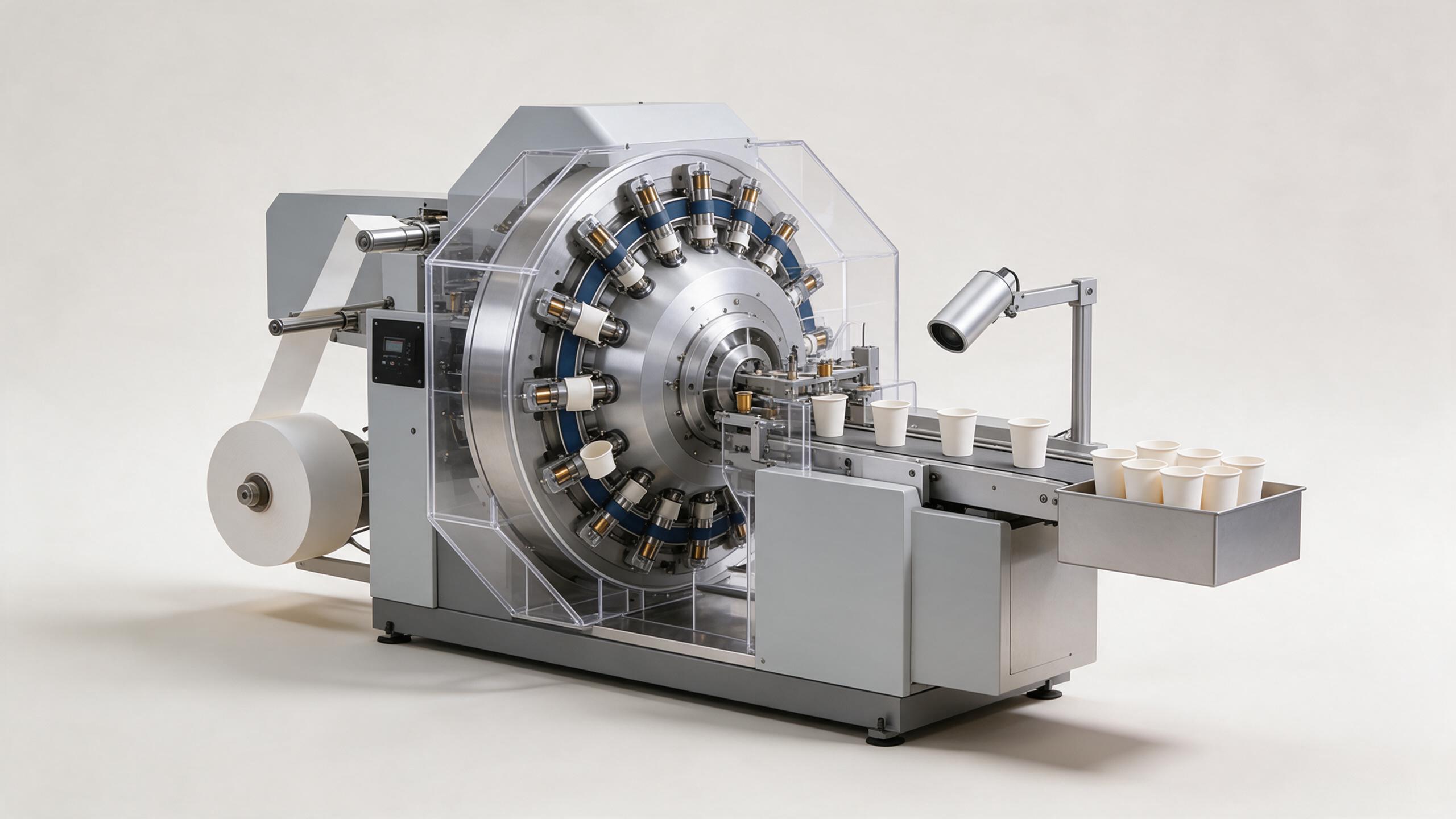
Match the application to four configuration questions
A sound evaluation of a paper cup glass making machine begins with four linked questions:
- What will the cup hold? Hot drinks, cold drinks, food portions, and promotional samples can require different paper, barrier, rim, or shape decisions.
- Which dimensions must be held consistently? Record capacity, diameters, height, blank layout, and compatibility with lids or dispensers.
- How variable is the production mix? A stable, long-run program and a frequent-changeover program need different tooling and setup priorities.
- How will the line be checked? Agree on in-process checks for seams, bottoms, rims, visual finish, nesting, and pack-out.
These questions create a usable specification for a paper cup glass making machine. They also make supplier comparisons fairer because every quotation is responding to the same cup drawings, material notes, and validation plan.
Plan capacity without relying on one headline number
When assessing a paper cup glass making machine, separate rated output from usable output in your own schedule. Usable output is affected by the approved format, material behavior, operator handoffs, tooling condition, inspection stops, changeovers, and the time needed to remove finished cups. A production plan should therefore model the expected mix rather than divide an annual forecast by a catalog speed.
Start with the demand by SKU and convert it into planned runs. Then identify the longest runs, the shortest runs, and the formats that trigger adjustments. During a trial, observe the paper cup glass making machine through startup, stable production, a normal stop, and a format or material transition when possible. Record the conditions of the trial so the result can be interpreted later.
Build an acceptance checklist around the finished cup
A supplier demonstration is most useful when the buyer supplies a written checklist. For a paper cup glass making machine, include:
- Approved blank and bottom material details, including the intended food-contact compliance documentation route for the destination market.
- Representative cup drawings and the formats planned for the first production period.
- Observed checks for side seams, bottom formation, rim curl, cup shape, nesting, and visible surface condition.
- A documented startup, cleaning, adjustment, and operator-safety routine for the proposed line layout.
- A spare-parts, tooling, service, and training discussion matched to the plant’s maintenance capability.
Food-contact requirements are market- and material-specific. The machine builder, paper supplier, converter, and importer should align responsibilities rather than assume that a paper cup glass making machine alone establishes compliance for every cup and destination.
Turn the application brief into a practical purchase decision
The right paper cup glass making machine is the one that fits the cups you will actually make, the materials you have approved, and the operating rhythm your team can sustain. Begin with application and format data, then verify the forming sequence, trial criteria, changeover plan, and support scope. This approach gives buyers a clearer conversation with equipment suppliers and gives production teams a more manageable launch plan.
For a growing converter, the next step is to assemble a one-page cup matrix before requesting proposals. It should list every cup format, end use, material note, expected run length, and acceptance check. With that matrix in hand, a paper cup glass making machine becomes a defined manufacturing project rather than a generic purchase.
 ONLINE