
 EN

What Is Paper Cup Glass Making Machine??
A paper cup glass making machine is equipment that turns pre-cut, food-contact paper blanks into formed disposable cups, often called paper glasses in many markets. For a buyer, the useful question is not whether a paper cup glass making machine simply “makes cups.” It is whether the forming equipment, tooling, materials, utilities, and downstream handling fit the cup you intend to sell.
The term can be confusing. A paper cup glass making machine does not make glass containers, and it is not automatically a complete printing, packaging, or inspection line. It is usually the forming section of a paper-cup production workflow. In practical procurement conversations, the phrase may refer to automatic cup-forming equipment configured for a particular diameter, height, paper specification, and production plan.
What does a paper cup glass making machine do?
A typical paper cup glass making machine feeds a prepared sidewall blank, forms it into a cylindrical body, joins the side seam, adds the bottom piece, seals and knurls the bottom area, curls the rim, and discharges the finished cup. The exact sequence and mechanism vary by design, so buyers should treat this as a process map rather than a universal specification.
Some suppliers use “paper glass making” for the same production category, especially when the finished item is a small beverage cup. The underlying job is still paper-container forming: the paper cup glass making machine gives a coated paper blank its body, bottom, and drinking rim. Printing may happen before forming, while counting, sleeve application, wrapping, or cartoning may happen after it.
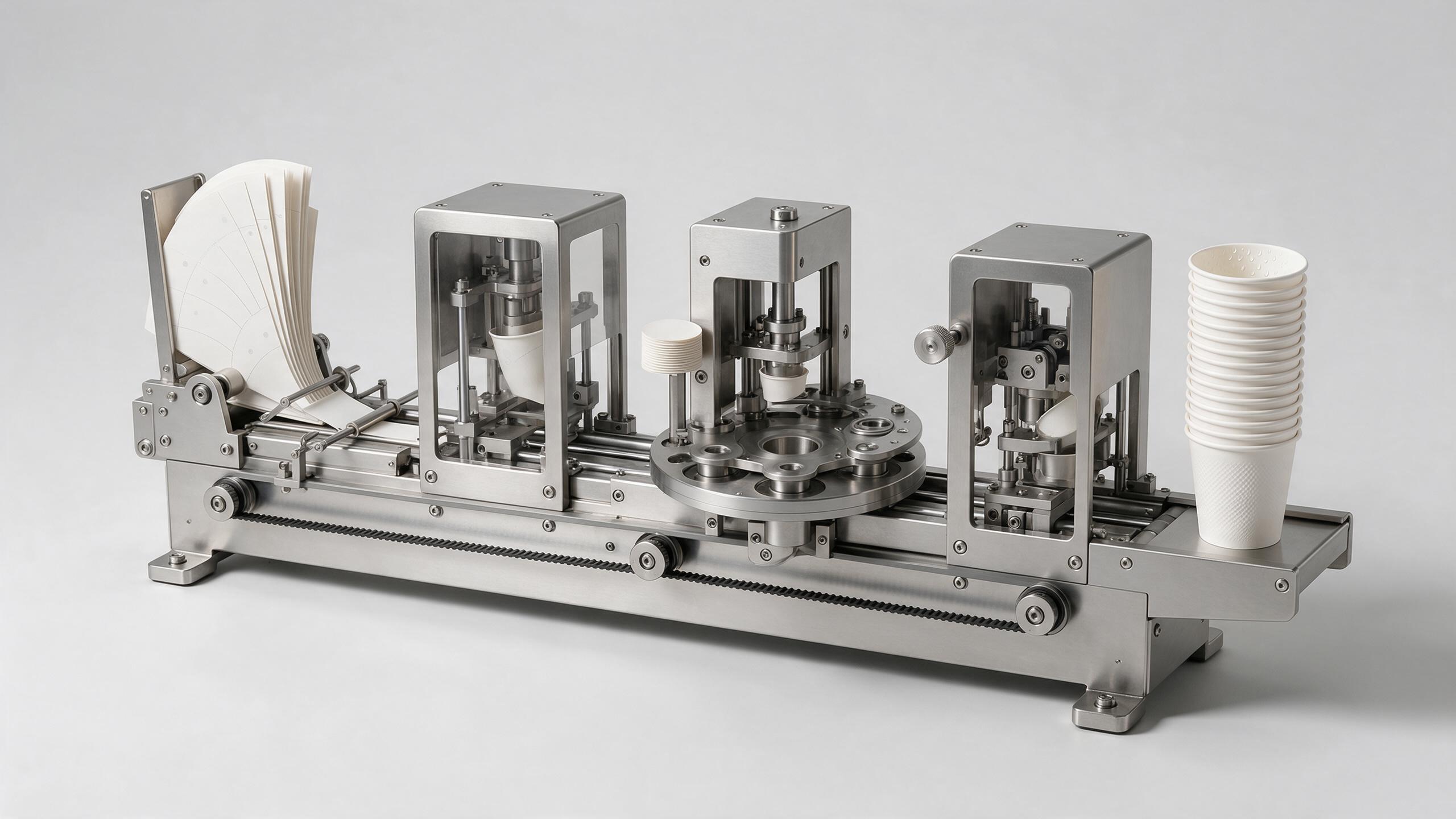
Core stations to understand before comparing machines
When reviewing a proposed unit, ask the supplier to identify the stations included in the quoted configuration. This makes it easier to compare offers that use different terminology.
- Blank feeding: presents sidewall paper blanks to the forming path.
- Body forming and side-seam sealing: creates the cup wall and joins the overlap.
- Bottom feeding and sealing: inserts the bottom blank and bonds it to the wall.
- Bottom knurling: compresses the bottom area to support a secure joint; the required result depends on the paper structure and cup design.
- Rim curling: forms a smoother drinking edge and affects the finished cup profile.
- Discharge and collection: transfers formed cups for inspection, counting, packing, or later automation.
A cup former can include different drive, heating, sensing, and lubrication arrangements around those stages. Rather than treating an open-cam or servo description as a shortcut for suitability, relate it to the cup format, operator skill, maintenance plan, and target output.
Which cups can a paper cup glass making machine produce?
The answer depends mainly on tooling and the material you plan to run. This equipment is often configured around a range of cup sizes, but the usable range is model-specific. Straight-wall beverage cups, hot-drink cups, and selected food-service containers can have different forming needs. A change in diameter, height, bottom geometry, paper weight, or coating can affect the mold set, settings, and validation work.
For that reason, a water paper cup glass making machine inquiry should state the intended application, cup drawing or sample, capacity target, material construction, and whether the cup must hold hot or cold contents. “Water” is an application clue, not enough technical detail to select a machine. The supplier still needs to confirm the rim, seam, bottom, and leakage-test expectations for the planned cup.
Why materials matter as much as the machine
The forming equipment works with a defined paper and coating combination, not with an abstract material called “paper.” Coating type, paper stiffness, print coverage, blank accuracy, and storage conditions can influence feeding and sealing behavior. If the material changes after commissioning, the same machine may need setup adjustments and fresh sample checks.
Before a purchase decision, provide representative blanks or a detailed material specification. Ask how the proposed equipment will be trialed, what samples will be reviewed, and which process settings are expected to be documented. This is more informative than comparing only a headline speed.
How to evaluate a paper cup glass making machine
A useful evaluation starts with production reality. Begin with the cup you will sell, then work backward to the equipment configuration. The following questions help organize an RFQ:
- What cup sizes, drawings, and material structures will be run at launch?
- Which mold sets are included, and what is involved in a future format change?
- Which utilities, floor space, operators, and safety practices does the proposed machine require?
- How will the supplier demonstrate seam and bottom quality using the intended material?
- Which wear parts, service tasks, training items, and documentation are supplied?
- Where does the forming machine connect to printing, inspection, counting, or packing equipment?
These questions also expose the difference between initial purchase price and operating fit. A machine that is technically capable of a cup format may still be a poor match if tooling lead time, operator training, maintenance access, or local power requirements have not been clarified.
Is it a stand-alone machine or part of a line?
Many installations use the cup former as one stage in a wider process. Upstream work can include paper sourcing, cutting, and printing. Downstream work can include inspection, counting, sleeve application, packing, and logistics. The forming machine may be stand-alone for a smaller operation or integrated with handling equipment where volume and labor planning justify it.
In paper glass making projects, define responsibility boundaries early. Confirm who supplies blanks, where samples are approved, who handles cup testing, and which party connects downstream equipment. Clear boundaries reduce the chance that a capable cup-forming machine is delayed by an unplanned equipment connection.
A practical buying conclusion
A paper cup glass making machine is a paper-container forming machine, not a generic answer to every disposable-cup project. Its value comes from matching the forming process to a real cup design, verified material, realistic workflow, and maintainable operating plan. RUIDA Machinery focuses on paper-cup and food-packaging equipment discussions, so buyers can use a structured technical conversation to clarify cup requirements before requesting a configuration.
If you are comparing cup-forming equipment, prepare a cup sample or drawing, material details, target product mix, site utilities, and questions about tooling and support. That information helps turn a broad equipment search into a more useful specification review.
 ONLINE