
 EN

How to Pick Bucket Machine for Large Containers?
When buyers say bucket machine, they may mean very different equipment. For food packaging, the useful meaning is a machine that forms large paper food containers, not excavation or cleaning equipment. That distinction matters because a bucket machine for a tall soup tub, a wide popcorn container, or a family-size takeaway bucket must manage geometry, paper stock, sealing, and discharge together. A sound starting point is not a brochure speed figure; it is a clear description of the container you need to make.
From a packaging-equipment purchasing viewpoint, a large-container bucket machine should be assessed against the finished pack, the production rhythm, and the checks your team can carry out before acceptance. If those inputs are clear, comparing configurations becomes much more useful.
Start with the container, not the machine label
Give each supplier a drawing or a physical sample before asking for a bucket machine proposal. Record the top diameter, bottom diameter, overall height, rim style, fill volume, and any handle, lid, or stackability requirement. A container may look only slightly larger than a paper cup, yet the broader blank, deeper side wall, and larger bottom can change the forming load and the space needed around the tooling.
Ask whether one bucket machine can cover every planned size or whether each format needs dedicated molds and change parts. A wide range can be attractive, but only if changeover steps, storage for tooling, and setup verification fit your production plan. For a short list of large sizes, stable dedicated tooling may be easier to control than a very broad nominal range.
Match paper material and sealing method to the real product
A food bucket machine works with a material system, not with a container shape alone. Specify the paperboard grade, coating or barrier construction, printing condition, blank dimensions, and the food temperature the container will face. Hot, oily, or moist foods can place different demands on the side seam and bottom seal than dry snacks. The supplier needs these details to judge whether the proposed bucket machine, heaters, and forming sequence are appropriate.
Do not assume a published material range proves suitability for your job. Instead, request a trial using your intended stock where practical. Check seam appearance, bottom formation, rim quality, leakage resistance, and whether finished containers retain their shape after cooling. A food bucket machine should be evaluated by the consistency of accepted containers, not only by whether it can run a blank through the station.
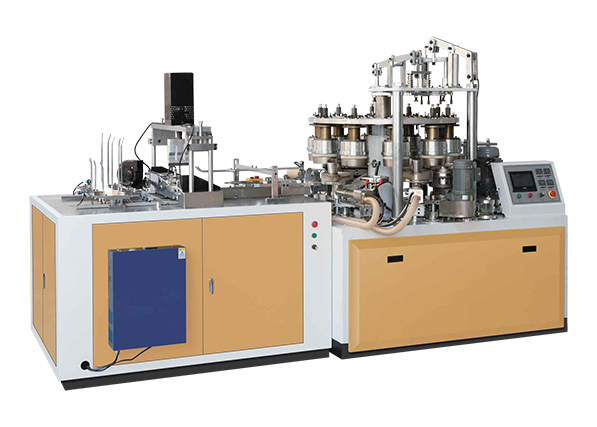 Container dimensions and seal checks should be part of machine selection.
Look beyond headline output
Large containers often take longer to feed, form, seal, curl, and discharge than smaller formats. That is why a quoted output for a high speed bucket machine needs context: which container size, which paper stock, what operator support, and what quality standard were used? Ask for the rated condition and for a realistic target that includes normal checks, replenishment, and changeovers.
A useful comparison is to work backward from demand. Calculate the number of good containers needed per shift, allow for planned stops and startup checks, then ask each supplier how the proposed bucket machine would meet that requirement. This prevents an expensive mismatch in either direction: a machine that cannot keep pace or an oversized line that is hard to justify and maintain.
| What to compare | What to ask about a bucket machine | Why it matters |
|---|---|---|
| Container envelope | Maximum proven top diameter, bottom diameter, and height for your design | Large geometry affects tooling and handling |
| Material trial | Can the machine run the intended paperboard and coating? | Sealing and stiffness depend on the material system |
| Output basis | Which size and conditions support the quoted rate? | Lets you compare a high speed bucket machine fairly |
| Changeover | Which molds, parts, and settings must be changed? | Protects schedule flexibility |
Check the forming stations and handling path
For a large-container bucket machine, inspect the whole path: blank feeding, side-wall forming, bottom insertion and sealing, rim finishing, ejection, and collection. A weak link at any stage can affect the final container. For example, a container may leave a bucket machine looking acceptable but later reveal an inconsistent bottom seal during a controlled filling test.
Ask the supplier to explain how settings are protected and how an operator identifies an abnormal container. Clear access for cleaning, adjustment, and routine inspection is especially valuable on a food bucket machine intended for food-packaging operations. The goal is not to demand every available automation option; it is to make routine control repeatable for the people who will run the line.
Plan for molds, change parts, and downstream equipment
Molds are central to a bucket machine decision. Confirm which format-specific parts are included, what spare wear parts are recommended, and how a later size addition would be handled. Put the proposed configuration into the quotation in plain language so that machine scope, tooling scope, and optional items do not become confused.
Then examine the downstream rhythm. Can the conveyor, counting, packing, and inspection process accept the output from the bucket machine without crushing or mis-stacking the larger containers? For a high speed bucket machine, this question is as important as the forming section. The line only delivers value when containers arrive in usable condition at the next operation.
Use a trial and acceptance plan before committing
A practical purchase decision should end with a written trial plan. Send the sample dimensions and materials, agree on the test format, and define what will be inspected. During a trial of a bucket machine, observe startup, normal running, sample collection, format change, and shutdown. Record the questions that arise instead of relying on a short demonstration.
- Confirm the proposed bucket machine matches the exact container drawing and intended material.
- Inspect side seams, bottoms, rims, shape retention, and stackability on representative samples.
- Clarify the output basis for the selected container rather than comparing an unrelated high speed bucket machine claim.
- List included molds, electrical requirements, operator training, spare parts, and service communication.
- Agree on acceptance samples and the method for resolving quality issues.
Make the final choice with a documented comparison
The right bucket machine for large containers is the one that fits a defined container, material, production target, and validation plan. It may not be the machine with the largest advertised rate. A well-matched food bucket machine gives your team a clearer basis for trials, acceptance, and future format changes.
Before requesting a final quotation, share the finished-container drawing, paper specification, target output, planned formats, and acceptance checklist. That gives a supplier such as ZheJiang RUIDA Machinery a concrete basis for discussing equipment fit without turning general claims into unverified promises.
 ONLINE