
 EN

Why Disposable Paper Cup Making Machine Leads Sales?
A disposable paper cup making machine attracts serious buyer interest because it answers a practical packaging need: producing a familiar food-service format with a repeatable manufacturing process. For a converter, distributor, or entrepreneur evaluating this equipment, the appeal is not simply a high number on a speed display. It is the chance to align cup demand, paper stock, labor planning, and quality checks in one production decision.
From a packaging-equipment selection perspective, a disposable paper cup making machine should first be matched to cup size, paper material, and production rhythm. The sales conversation becomes much more credible when those conditions are clear. That is one reason this equipment category continues to draw inquiries: buyers can connect it directly to takeaway drinks, food-service supply, private-label packaging, and regional distribution needs.
Demand is visible, but the manufacturing case is more specific
Single-use cups are used in many settings, from cafés and offices to events and delivery operations. That broad use creates interest in a disposable paper cup making machine, but interest turns into a purchase only when a buyer can define the required cup formats and route to market. A shop supplying local cafés may value flexible small batches; a packaging converter may prioritize consistent throughput and a stable workflow for several specifications.
This is why a disposable paper cup making machine often leads sales discussions ahead of more general converting equipment. The output is easy to understand, and the process can be mapped to a sellable product. Yet “easy to understand” should not mean “easy to specify.” Cup diameter, height, bottom profile, paper grade, coating, print layout, and packing method all influence the right configuration.
Integrated forming steps make the investment easier to evaluate
A modern disposable paper cup making machine brings several forming stages into a coordinated sequence. Depending on the design, the workflow can include feeding pre-cut blanks, forming the side wall, sealing the side seam, inserting the bottom, heating or sealing, knurling the bottom joint, curling the rim, and collecting finished cups. Buyers respond well to this process view because it shows where a machine supports repeatability rather than merely promising output.
Each stage also explains why material trials matter. If side-seam sealing, bottom bonding, or rim curling is inconsistent, a nominal rate tells only part of the story. The equipment should therefore be assessed with the intended paper and target cup shape whenever possible. In practice, a stable sample under agreed conditions is more useful than an isolated speed claim.
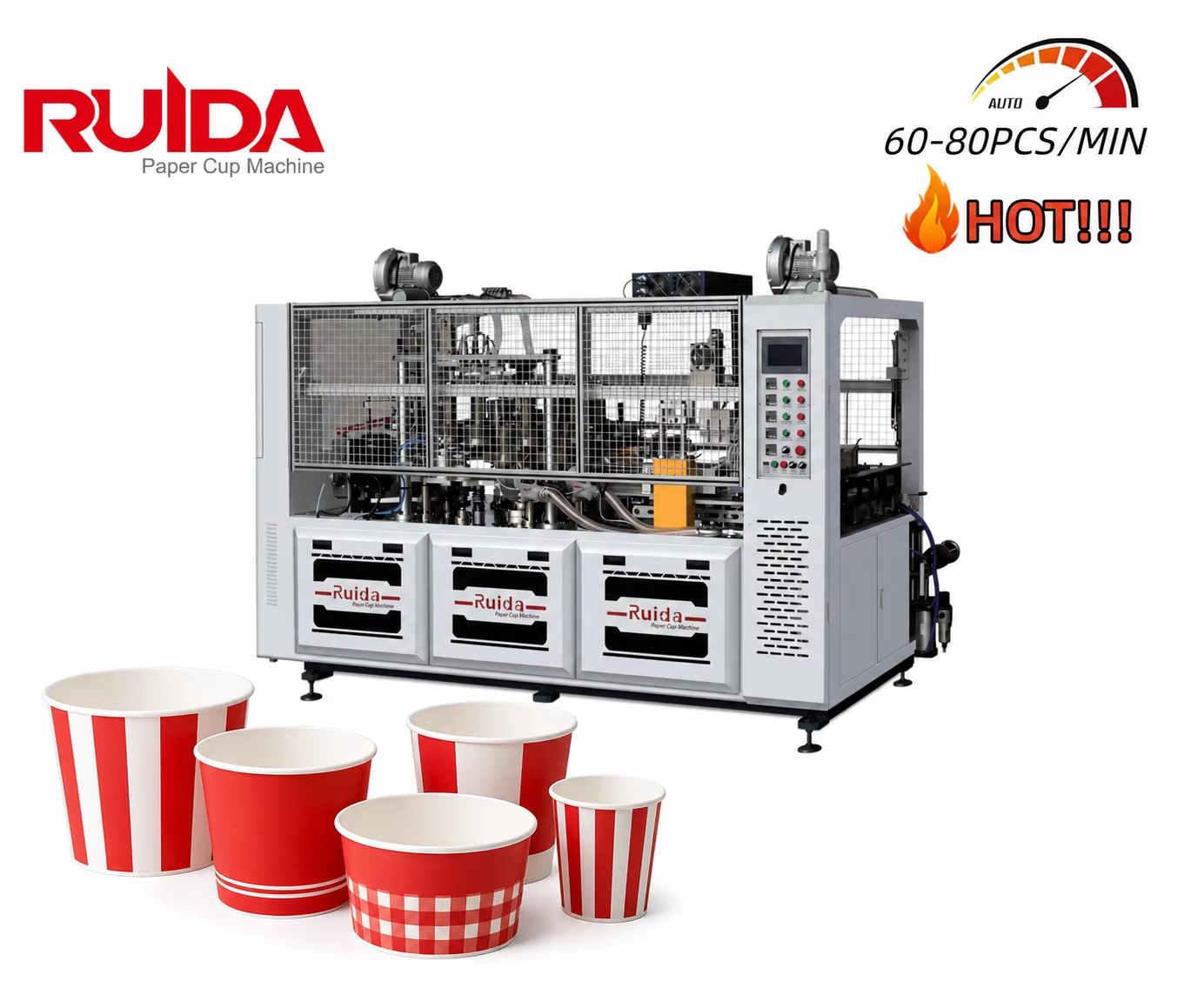 A production-line view helps buyers evaluate the full cup-forming workflow, not speed alone.
What actually makes buyers say yes
Most purchase decisions combine four commercial questions. First, can the equipment make the cup formats that customers will order? Second, can the line keep pace with upstream blank supply and downstream inspection or packing? Third, can operators handle changeovers and routine checks? Finally, can the supplier describe the acceptance conditions clearly?
- Application fit: A disposable paper cup making machine should be reviewed against hot-drink, cold-drink, or other intended uses, along with the relevant cup geometry.
- Material fit: Paperboard, coating or barrier treatment, blank quality, and storage conditions can affect the forming result.
- Operating fit: Changeover tasks, cleaning access, fault indications, and operator training shape the usable capacity of the line.
- Commercial fit: The initial quotation matters, but buyers should also compare tooling, spare parts, service scope, energy use, waste handling, and likely downtime exposure.
That framing avoids a common mistake: treating a disposable paper cup making machine as a stand-alone purchase. It is part of a production system. A line may have a technically attractive rating yet still underperform if blank supply, inspection, packing, or maintenance discipline becomes the bottleneck.
Headline speed is not the same as saleable output
Speed appears prominently in many listings for this equipment, so it naturally drives early inquiries. However, buyers benefit from asking what conditions sit behind the figure. Which cup size was used? Which paper stock? How long was the run? What level of rejects was accepted? How frequently did the operator adjust the process?
A useful evaluation separates rated capacity from stable, saleable output. The right machine is the one that can produce acceptable cups at a predictable rhythm under the buyer’s own material and format conditions. This distinction is especially important when the business plan depends on delivery dates or recurring customer orders.
Compliance questions add urgency to material verification
Food-service packaging is also a documentation question. For example, U.S. rules include requirements for paper and paperboard components intended to contact aqueous and fatty foods, while European food-contact frameworks establish broader material requirements. These references do not certify a particular cup or machine by themselves. Instead, they show why a buyer should verify the applicable market, the chosen material specification, supplier documents, and finished-cup testing responsibilities before finalizing a project.
When a supplier and buyer discuss the project, it is sensible to put those boundaries in writing: who provides paper specifications, which samples will be reviewed, what acceptance criteria apply, and which destination-market documents need confirmation. Clear boundaries reduce surprises after installation.
Why adjacent equipment terms can signal a stronger business plan
Searches for a disposable paper plate making machine or a napkin production machine sometimes appear alongside cup-equipment inquiries. These are not interchangeable machines, and a cup former should not be chosen as though it makes plates or napkins. Still, the overlap can reveal a buyer who is building a broader disposable-tableware portfolio. In that case, the cup-forming line should be evaluated as one product line within a shared sales, warehousing, and sourcing plan.
A broader portfolio may diversify customer conversations, but it also creates more coordination work. Tooling, materials, storage space, packaging, and production scheduling should be scoped product by product. A disposable paper plate making machine and a napkin production machine should be compared on their own process requirements, not used to infer unverified capabilities for cup equipment.
A practical checklist before requesting a quotation
- Define the cup sizes, shapes, wall construction, and expected order mix.
- Provide the intended paperboard and coating details for a disposable paper cup making machine trial or technical review.
- Ask how format changes are handled and what tooling is included or quoted separately.
- Agree on sample quality checks for seams, bottoms, rims, appearance, and packing.
- Document installation, training, spare-parts, remote-support, and acceptance boundaries.
- Compare the total operating plan, not only the purchase price of the machine.
The sales advantage is a clearer path from demand to production
A disposable paper cup making machine leads sales because it connects a visible packaging need with a defined manufacturing route. It can support a focused cup program or a carefully planned disposable-tableware range, provided that the decision is grounded in real materials, formats, workflow, and verification criteria. Rather than asking which model is right in every situation, ask which machine fits the cups you intend to sell and the conditions under which you must make them.
For buyers who need a structured technical discussion, RUIDA Machinery can be contacted with cup drawings, paper details, desired output, and project requirements. Those inputs make a machine recommendation easier to validate before a purchase decision.
Before comparing quotations, use the RUIDA Machinery website to prepare a focused enquiry with the cup drawings, material information, and operating goals that need technical review.
 ONLINE