
 EN

How to Select Paper Cup Making Machinery?
Selecting paper cup making machinery is less about finding the largest advertised output and more about matching a forming process to the cups, materials, staffing, and verification rules in your own project. A sensible purchase starts with the finished cup, then works backward through paper stock, forming stations, controls, utilities, and support. This approach is useful whether you are comparing a first line or replacing equipment that no longer fits your production mix.
For procurement teams, paper cup making machinery should be evaluated as a system. The quoted machine is only one part of the decision: tooling, paper blanks, lining behavior, installation conditions, spare parts, operator training, and acceptance criteria can all affect the usable output. Ask suppliers to respond to the same written brief, so comparison is based on like-for-like assumptions.
Start with the cup specification, not the machine brochure
Before reviewing paper cup making machinery, define what the line must make. List the finished volume range, top and bottom diameters, cup height, rim style, paperboard grade, coating or lining type, print requirement, and end use. Hot-drink cups, cold-drink cups, and specialty containers may impose different material and sealing considerations. If you expect several formats, document which format runs most often and which changeovers are occasional.
A supplier can only assess fit when the input is specific. Send drawings or physical samples where possible, along with blank layout information and the material supplier’s technical data. For food-contact applications, ask your material and compliance teams to identify the rules for the destination market. In the United States, for example, 21 CFR 176.170 addresses paper and paperboard components used in contact with aqueous and fatty foods; that is a material/documentation checkpoint, not a claim that a particular machine is approved for every application.
Translate demand into a realistic output target
When comparing paper cup making machinery, calculate a usable production target rather than selecting from an isolated cups-per-minute figure. Begin with forecast demand by cup size, expected production hours, planned shifts, routine stops, format changes, and a reasonable allowance for start-up and quality checks. The result gives a production window that can be tested during supplier discussions.
Ask what conditions support the stated speed: cup geometry, paper grade, blank quality, operator count, inspection method, and test duration. A short demonstration on one favorable cup is not the same as sustained production with your actual materials. Request a trial plan that records rejected cups by reason, start-up time, and stability after adjustments. This is particularly important for commercial paper cup making machinery, where missed delivery windows or frequent stoppages can matter more than a nominal peak rate.
Compare forming architecture and automation by the work it removes
Paper cup making machinery may use different forming, heating, curling, bottom-knurling, and collection arrangements. Rather than treating automatic as a universal answer, map each function to a real operating need. Consider blank feeding, cup side forming, bottom insertion, heating or sealing, rim finishing, discharge, counting, and fault indication. Then ask which tasks remain manual and what skill level they require.
Automation is valuable when it reduces a repeatable bottleneck, improves process visibility, or makes an expected volume practical with available labor. It can also add setup and maintenance demands. Review the control panel with the people who will run and maintain the line. They should be able to see alarms, safely access routine service points, and understand the procedure for restarting after a jam. A paper glass and cup making machine should be judged against its intended formats and process sequence, not only its label.
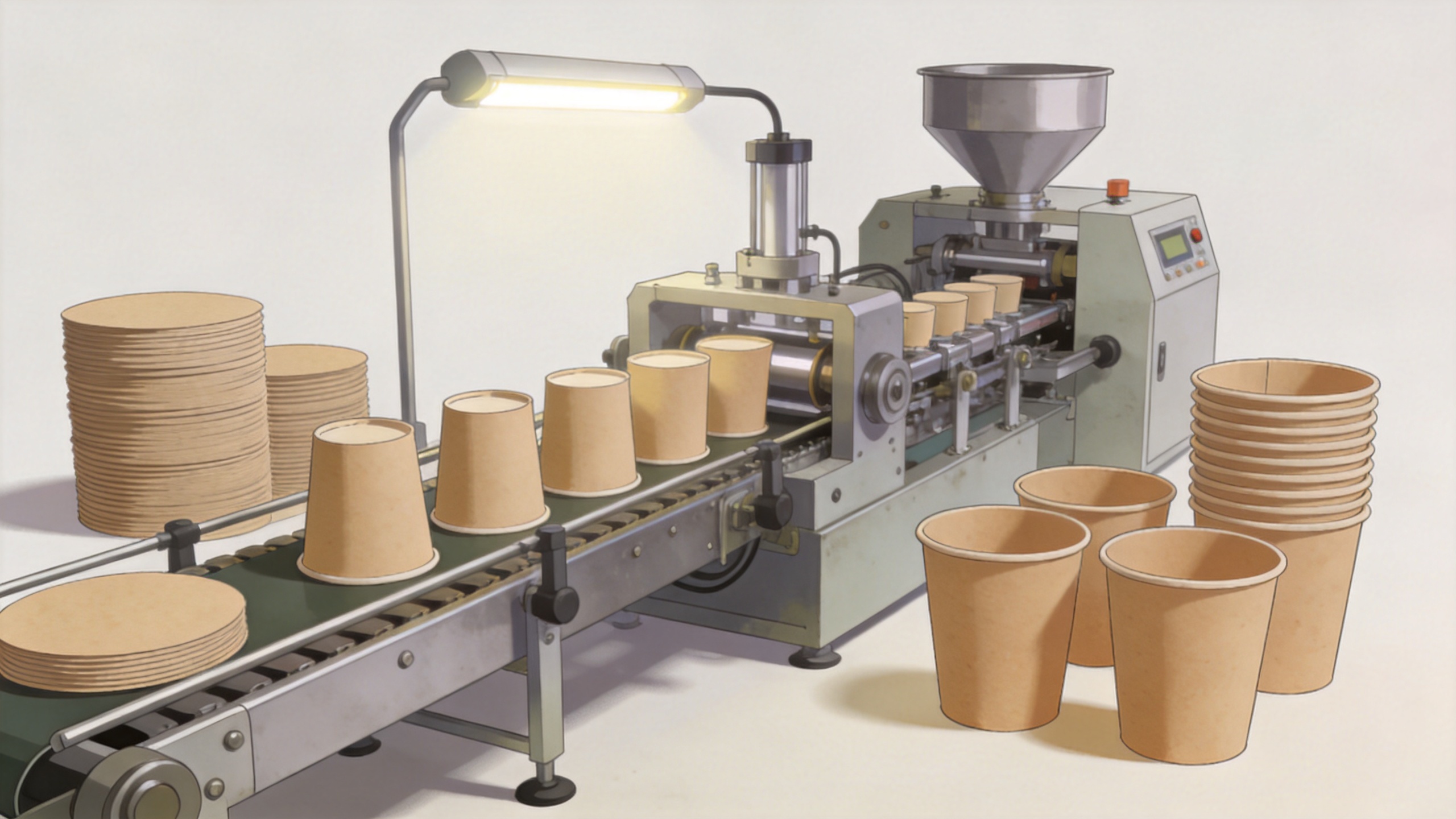
Check material, tooling, and changeover compatibility
Material compatibility deserves the same attention as the frame and drive system. Give candidates representative blanks or detailed material specifications, then ask for documented comments on feeding, forming, sealing, and finished-cup appearance. If paperboard weight, coating, or print coverage may change, explain the likely range. A reliable paper cup making machinery evaluation includes conditions at the edges of your normal material range, not only an ideal sample.
For multi-size programs, request a tooling and changeover matrix. It should show the tooling required for each format, the activities involved, the expected setup sequence, storage requirements, and which adjustments should be verified after changeover. Frequent format changes can make a simpler, repeatable procedure more useful than extra theoretical speed. Keep a record of all consumables and wear items that are tied to a specific cup family.
Inspect quality controls and acceptance evidence
Use finished-cup quality as the center of your paper cup making machinery acceptance plan. Agree beforehand how you will assess rim finish, bottom integrity, side-seam appearance, dimensions, cleanliness, stacking or collection, and defects that trigger rejection. Specify sample sizes, test conditions, allowed adjustment time, and the records supplied at handover. If a cup will serve a food-contact market, align equipment cleaning access and production routines with your own hygiene and material-control program.
Good manufacturing practice guidance for food-contact paper and board highlights scheduled cleaning plus regular maintenance and inspection of equipment and facilities. In practice, this means asking whether guards, collection areas, and service points can be cleaned and inspected without awkward disassembly. It also means clarifying how lubrication, loose parts, and waste are controlled around the process. Those questions make paper cup making machinery easier to evaluate beyond a showroom demonstration.
Price the operating package, not just the base unit
A complete paper cup making machinery comparison includes electrical requirements, compressed air or other utilities where applicable, installation layout, tooling, freight, commissioning, training, recommended spares, and remote or on-site support. Ask each supplier to label what is included, optional, excluded, and dependent on local conditions. A lower base price can be difficult to interpret if the required tooling, commissioning scope, or initial parts package differs.
Plan for the first year of operation. Identify routine inspection points, suggested spare categories, response channels, documentation language, and the information needed when reporting a fault. A supplier that can discuss these boundaries clearly is easier to evaluate than one that gives a broad support promise without a process. For commercial paper cup making machinery, also ask how the quotation handles future formats and whether technical changes need new tooling or revised trials.
Use a supplier comparison sheet before placing an order
Put every candidate for paper cup making machinery into the same comparison sheet. Include cup range, verified trial conditions, output window, material assumptions, automation scope, changeover tasks, utilities, quality checks, safety features, documentation, spares, support, delivery milestones, and commercial terms. Mark unknown items rather than assuming that they are included.
- Provide the supplier with your cup drawings, blanks, paper specifications, and destination-market requirements.
- Request a documented trial using representative material and agreed acceptance criteria.
- Compare sustained usable output, not only headline output.
- Confirm tooling, changeover work, utilities, training, spares, and service responsibilities in writing.
- Review the final paper cup making machinery proposal with production, maintenance, quality, and procurement stakeholders.
Make selection a verification process
The right paper cup making machinery is the option that can demonstrate fit for your cup design, material range, production rhythm, and support capability under defined conditions. Start with a disciplined brief, test the assumptions behind capacity claims, and make acceptance evidence part of the order discussion. That process gives your team a clearer basis for selecting equipment and a stronger starting point for commissioning.
 ONLINE