
 EN

How Workshops Scale Using Cup Manufacturing Machine?
Scaling a cup workshop is rarely a matter of buying one faster unit and waiting for output to rise. A cup manufacturing machine can increase capacity only when blank preparation, material control, forming, inspection, packing, and changeovers are planned as one working system. From a packaging-equipment selection perspective, the practical starting point is not a headline speed. It is the relationship among cup format, paperboard, production rhythm, and the people who keep the line moving.
A small workshop often succeeds because operators can notice a bad blank, adjust a setting, and clear a bottleneck quickly. As orders grow, that informal coordination becomes harder to maintain. The useful question is: where does the next hour of lost output begin? It may start at a die cutting press, at material staging, during a cup-size change, or at collection after forming. Mapping those handoffs makes a scale-up discussion more realistic.
Start with the production flow, not the rated speed
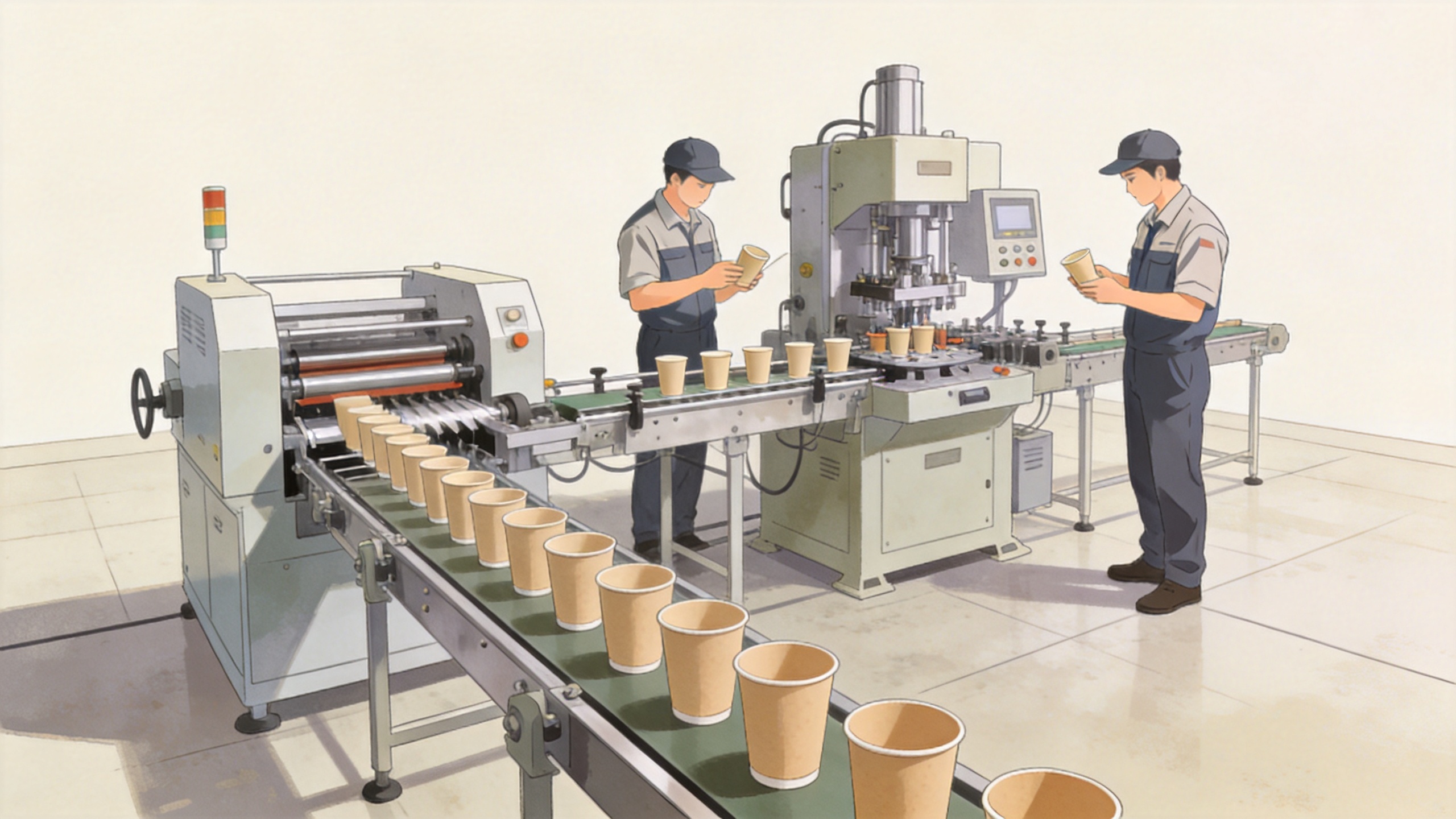
A typical paper-cup workflow moves from printed or prepared paperboard to die-cut blanks, then into forming, bottom sealing, rim finishing, inspection, and collection. A cup blank is the pre-cut piece that feeds the forming operation; its shape, print registration, and paper material can affect whether the next stage runs smoothly. In other words, a cup manufacturing machine is part of a sequence, not an isolated answer to capacity planning.
Before expanding, draw the current route for one cup format. Note who supplies blanks, how many blanks wait at each point, how rejects are separated, and what happens during a size or material change. This simple exercise often shifts attention from an advertised output figure to the actual line rhythm. If the forming station waits for blanks, adding speed downstream does not solve the constraint. If finished cups accumulate at collection, faster forming can make handling and inspection more difficult.
Match die cutting capacity to forming demand
The upstream blank operation deserves the same planning discipline as the forming station. A die cutting press must produce blanks with a consistent profile and in a supply pattern that matches the workshop’s intended run length. The question is not merely whether a press can cut paper; it is whether the blank output, stack quality, waste handling, and changeover routine support the next shift’s forming plan.
For workshops adding decorated formats, a die cutting and embossing machine can introduce another coordination point. Embossing may be relevant to a particular product design, but it should not be treated as a universal requirement. Confirm which formats need it, how it affects blank handling, and whether registration checks happen before or after the finishing operation. A die cutting and embossing machine that is planned independently from forming can create queues, extra handling, or avoidable rework.
A useful planning rule is to set a clear buffer policy. Keep enough approved blanks near the forming area to absorb normal variation, but not so much that mixed lots, damaged stacks, or obsolete printed material become difficult to identify. The correct buffer depends on the cup mix, paperboard availability, shift schedule, and changeover frequency, so it should be tested in the workshop rather than assumed from a catalog.
Scale in stable stages
Workshops commonly benefit from scaling one constraint at a time. First confirm that the existing cup manufacturing machine runs reliably with the intended paperboard and cup format. Then measure the effect of actual stops: blank replenishment, cleaning, routine adjustments, quality checks, and product changes. Next, strengthen the stage that limits the rhythm—often blank preparation, material staging, or collection—before committing to a broader expansion.
This staged method avoids a common mistake: treating nominal machine speed as delivered workshop capacity. More accurately, capacity depends on the combined effect of stable feeding, forming conditions, trained operators, planned maintenance, and downstream handling. If paper material or cup geometry changes, the conditions should be checked again. A cup manufacturing machine may suit a target output only after the surrounding process has been confirmed.
Ask a practical question at each stage: does the team need more machine time, or does it need fewer interruptions? In a high-mix workshop, reducing the time and uncertainty around changeovers may contribute more to usable capacity than simply increasing the highest available speed. If your project favors one stable cup format, the decision factors can be different from a workshop that changes sizes and designs frequently.
Use quality checks as capacity protection
Scaling should not move quality decisions to the end of the line. Define what operators should look for at blank receipt, first-off forming, routine production checks, and finished-cup collection. Keep the checklist specific to the format and material under review. For food-contact applications, buyers may also need to confirm applicable paper and paperboard requirements for the destination market. For example, 21 CFR 176.170 addresses components of paper and paperboard in contact with aqueous and fatty foods for applicable U.S. food-contact uses; it is a verification point, not a blanket claim that any workshop or product is compliant.
Early checks protect capacity because they prevent a long run of unsuitable blanks or inconsistent forming from becoming a larger sorting problem. The same idea applies to the die cutting press: inspect the first approved blanks and maintain a clear way to identify material lots. When operators can trace a problem to a blank batch, a forming condition, or a handling step, corrective action is more focused.
Plan operators, maintenance, and data together
A growing workshop needs a repeatable operating routine, not just additional equipment. Document start-up checks, material settings, approved sample references, cleaning points, and the escalation path for unusual defects. Keep a simple record of stops by category. Over time, the record can show whether a cup manufacturing machine loses time because of feeding, heat-sealing conditions, tooling, operator handoffs, or downstream collection.
Maintenance planning should be linked to the production schedule. Discuss wearing parts, cleaning access, lubrication or inspection requirements supplied by the equipment manufacturer, and planned windows for checks. The goal is not to promise zero downtime; it is to avoid discovering predictable maintenance needs only when a busy order is running. For a die cutting and embossing machine, include the condition and storage of dies or embossing tools in the same discussion.
A workshop scale-up checklist
- List the target cup formats, paperboard types, expected order mix, and changeover frequency.
- Trace the full route from blank preparation through forming, inspection, packing, and dispatch.
- Confirm whether the cup manufacturing machine has stable feeding and forming conditions for each priority format.
- Set a blank-buffer rule and define who releases approved blanks from the die cutting press.
- For decorative formats, verify how the die cutting and embossing machine fits the run plan and registration checks.
- Record stop reasons for a representative production period, then address the most frequent or most disruptive cause first.
- Agree on first-off, in-process, and finished-product checks, including destination-specific material verification where needed.
- Review training, spares, maintenance access, layout, utilities, and collection capacity before adding another shift or unit.
Choose the next constraint to solve
Workshops scale most reliably when they make each handoff visible. A cup manufacturing machine can be the center of a more capable operation, but the outcome depends on how blank preparation, people, materials, and quality controls support it. Start with the intended cup mix, verify the conditions for stable runs, and improve the limiting stage before expanding the next one. This provides a clearer basis for a technical discussion than a speed figure alone.
RUIDA Machinery focuses on paper-cup and food-packaging equipment discussions. For a specific project, prepare your cup drawings or samples, paperboard details, production targets, and expected changeovers so the equipment and workflow questions can be reviewed together.
 ONLINE