
 EN

What Makes a Paper Cup Machine Manufacturer Reliable?
Choosing a paper cup machine manufacturer is not mainly a catalog comparison. It is a decision about whether the supplier can turn your cup format, paper specification, output target, and project constraints into a machine configuration you can evaluate before shipment. A lower quotation can look attractive, but reliability is established through evidence: clear technical communication, documented scope, a meaningful test plan, and support commitments that are specific enough to verify.
From a B2B buyer’s perspective, the useful question is not “Which paper cup machine manufacturer promises the highest speed?” It is “Which supplier helps us define the conditions under which this line must work?” That shift matters when paper grades, coatings, cup geometries, changeover frequency, and local service expectations are still being clarified.
Start with the production requirement, not the supplier’s headline claim
A reliable paper cup machine manufacturer asks for details before recommending a configuration. Prepare a short requirement sheet covering cup sizes and shapes, paper material and coating, intended beverages or end use, target output, shift pattern, changeover expectations, available utilities, and destination country. These points are not paperwork for its own sake. They create the basis for comparing two proposals on the same terms.
For example, a buyer planning one stable cup format may prioritize a different setup from a buyer running several sizes in short batches. More accurately, neither choice is automatically better; the right choice depends on the actual production mix and the time available for training and changeovers. A paper cup machine manufacturer should explain what information is still needed instead of treating an early estimate as a final technical promise.
Look for evidence behind manufacturing capability
When reviewing a paper cup equipment factory, ask how it controls the build and how it documents the result. Useful evidence may include a configuration list, drawings or layout information appropriate to the project stage, component details where relevant, a commissioning plan, operating documentation, and a defined inspection record. The form of the evidence may differ by project, but it should connect the proposed machine to your stated conditions.
It is also reasonable to ask how the supplier handles changes after the initial proposal. A reliable paper cup machine manufacturer can identify what changes affect tooling, lead time, test conditions, scope, or cost. That does not require a guarantee that every change is simple. It requires a traceable response rather than a vague assurance.
- Request a written list of included equipment, optional items, and site responsibilities.
- Ask which cup samples, paper materials, and acceptance criteria must be supplied or approved before testing.
- Confirm which technical documents will be delivered and in which language where applicable.
- For destination-specific requirements, request documentation applicable to the exact configuration rather than assuming a generic certificate covers every project.
Make the factory acceptance test part of the buying decision
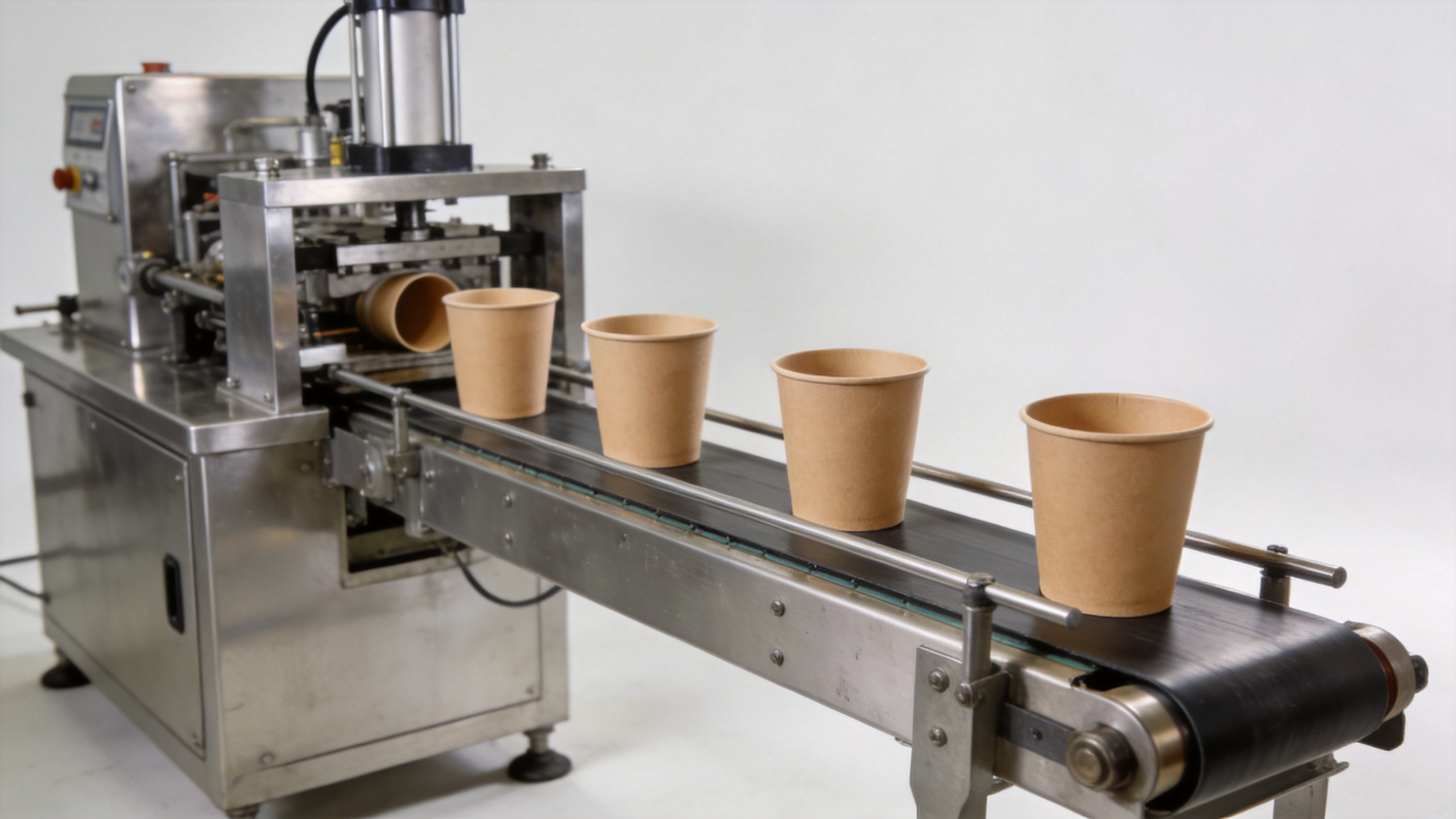
Many buyers judge a disposable cup machine producer by a demonstration alone. A stronger approach is to agree on a factory acceptance test, often called an FAT, before production is complete. The test should define the cup material, cup sizes, trial conditions, observation period, measurement approach, and the items that will be inspected. A paper-cup acceptance checklist can include dimensions, rim quality, side seam, bottom condition, appearance, stacking, and an agreed leakage method.
This is where a paper cup machine manufacturer becomes easier to assess. Ask for test records, photographs or video when appropriate, and a way to document deviations and corrective actions. Do not convert a general test checklist into a universal performance claim; the test is meaningful only when its materials and operating conditions resemble your own requirements. If you are comparing quotations, give each candidate the same draft acceptance criteria.
Evaluate engineering communication and risk awareness
A capable paper cup machine manufacturer should be willing to discuss operating and safety boundaries without overstating them. For machinery headed to markets with CE-related obligations, buyers can ask what risk-assessment and technical documentation apply to the final configuration. ISO 12100 is commonly used as a machinery risk-assessment and risk-reduction framework, but destination requirements and project responsibilities must be confirmed for the specific machine.
Pay attention to the questions a supplier asks. Do they clarify guarding, operator access, paper feeding, heating, collection, utilities, installation space, and training? Do they distinguish a design assumption from an agreed condition? Those habits can be more revealing than a long feature list. A paper cup equipment factory that records open items is easier to work with than one that makes every issue sound already solved.
Check service, spares, and responsibility boundaries
Reliability continues after shipment. Ask a paper cup machine manufacturer for a practical support path: who receives a fault report, what information the buyer should provide, how remote assistance is arranged, which wear parts are recommended, and what is included in commissioning or operator training. Do not rely only on phrases such as “lifetime service.” Instead, ask for the scope, response channel, documentation, and any parts list that apply to the proposal.
This is especially important for export projects. A disposable cup machine producer may be technically competent while the project still suffers from unclear packaging, documents, installation coordination, or destination responsibilities. Write these responsibilities into the commercial and technical discussion early. It is a simple safeguard that reduces avoidable handoffs later.
Use a consistent comparison scorecard
To compare candidates fairly, score every paper cup machine manufacturer against the same categories: requirement understanding, configuration clarity, test plan, quality evidence, safety and documentation discussion, change control, support process, spare-parts planning, commercial scope, and references that you can independently validate. A scorecard does not choose the supplier for you; it makes missing evidence visible.
One common mistake is treating the lowest price as the complete cost. Another is assuming the fastest published output is the right fit. A reliable paper cup machine manufacturer helps you identify the trade-offs among output, cup range, changeover needs, operator capability, maintenance planning, and acceptance conditions. Put unresolved items in writing rather than leaving them in a sales call.
Questions to send before placing an order
- Which cup formats and paper specifications have been used to define this proposal?
- What is included, excluded, or optional in the quoted scope?
- What conditions will be used for the factory acceptance test, and what evidence will be supplied?
- Which documents, training, commissioning activities, and spare-parts recommendations are included?
- How are technical changes, delivery changes, and open risks recorded and approved?
A practical next step is to share this checklist with each paper cup machine manufacturer you are considering. Their answers will not remove every project risk, but they will show whether the supplier is prepared to work from evidence, define boundaries, and support a disciplined buying process.
 ONLINE