
 EN

Machine For Paper Cup Production Benefits
Choosing a machine for paper cup production is rarely just a question of how many cups a line can form in a minute. For a food-packaging business, the useful comparison starts with the cup design, paperboard behavior, production rhythm, and the checks that define an acceptable finished cup. A machine that suits one format or work pattern may not suit another. This article gives buyers a practical way to assess the benefits of a machine for paper cup production before requesting a technical proposal.
Why automation matters in paper cup making
The central benefit of a machine for paper cup production is that it turns a sequence of repeatable forming tasks into a controlled workflow. In a typical setup, prepared cup blanks move through forming, bottom insertion, heating or sealing stages, finishing, and collection. The exact configuration depends on the cup and material, but the operational goal is consistent: reduce avoidable variation while giving the production team a defined process to observe.
That matters when a paper cup manufacturing plant needs to schedule output, train operators, and evaluate quality consistently across shifts. Automation can make the work sequence easier to standardize, provided that the paperboard, blank quality, tooling, and operating conditions are confirmed together. It should not be treated as a substitute for those checks.
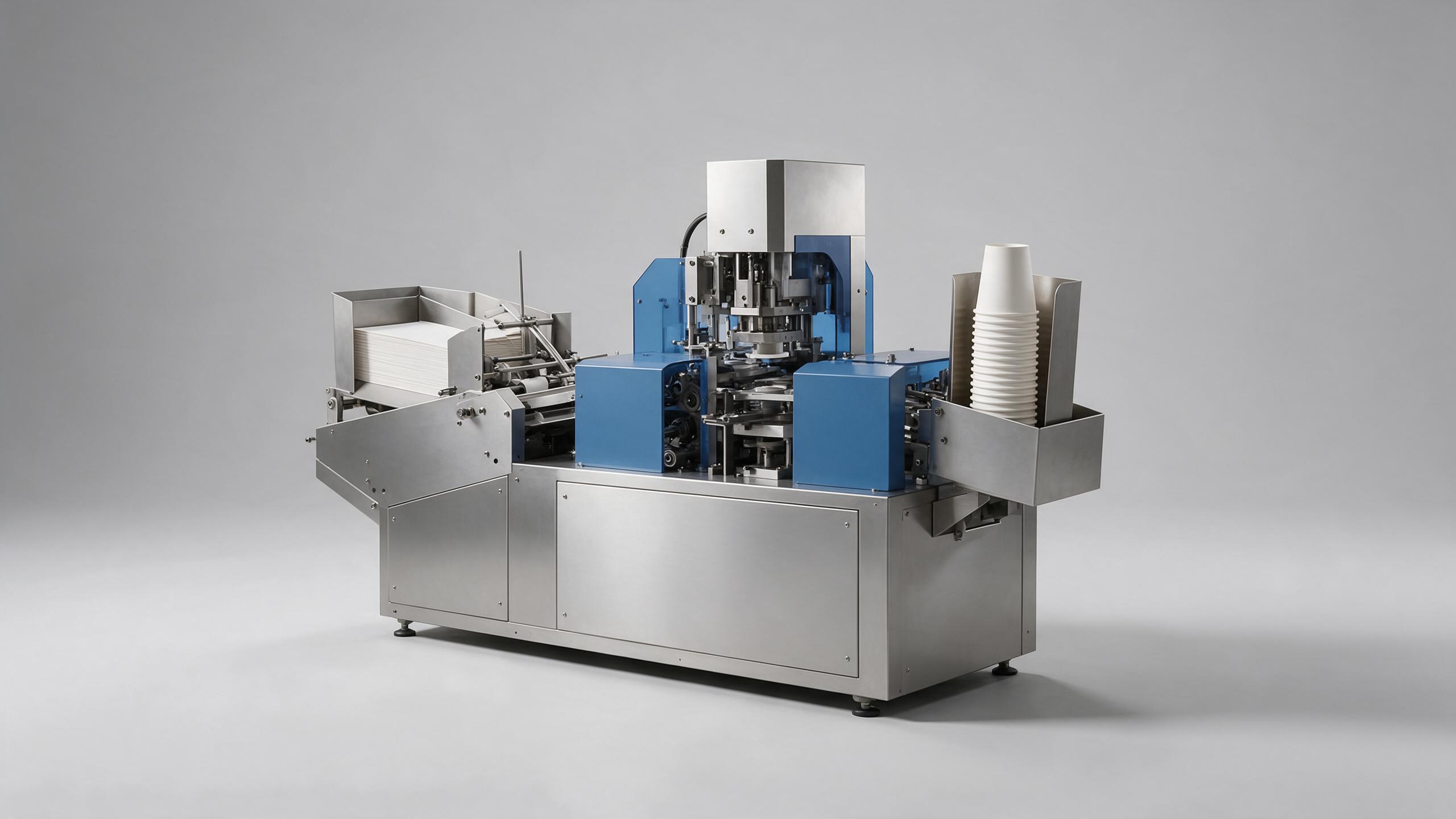
Key benefits of a machine for paper cup production
1. A clearer production workflow
This equipment gives the team a visible order of operations. Instead of judging the whole process only by the final stack of cups, operators can review specific stages and discuss where variation begins. This supports more useful troubleshooting when side seams, bottoms, rims, or cup shape need attention.
2. Better alignment between demand and configuration
The right machine for paper cup production helps translate a commercial requirement into production questions: What cup sizes and shapes are planned? Which paperboard grades and coatings will be used? How often will formats change? What collection and inspection steps are needed? Answering these questions early is more valuable than comparing headline speed alone.
3. More structured quality conversations
With an automated forming line, acceptance criteria can be discussed around observable results, such as cup geometry, seam appearance, bottom fit, and stability after the intended handling process. These observations are not universal performance promises. They are practical prompts for agreeing on samples, test conditions, and inspection records before a project moves forward.
4. A basis for labor and maintenance planning
The equipment also creates a framework for operator responsibilities, routine cleaning, inspection points, and spare-parts planning. The benefit is not that maintenance disappears; it is that maintenance can be planned around known components and production routines. Buyers should ask what training, documentation, remote support, and recommended consumables are included in the proposed scope.
Where printing fits in the production line
Many branded cups require printed cup stock before forming. A machine for paper cup production and a digital flexo press address different stages of the workflow: one forms the cup, while printing equipment prepares the visual design on suitable material. Whether these stages are coordinated as one project or handled separately depends on the plant layout, artwork process, material specification, and production plan.
For that reason, buyers evaluating a forming line should clarify the handoff between printed blanks and forming. Ask how print registration, blank dimensions, storage, handling, and quality checks will be managed. A digital flexo press should be evaluated on its own material and changeover requirements rather than assumed to solve every downstream forming issue.
Questions to ask before selecting a machine
A useful evaluation of a machine for paper cup production begins with a short, shared checklist:
- Which cup diameters, heights, shapes, and intended uses must the machine for paper cup production support?
- Which paperboard grades, coatings, and blank specifications will be supplied for trials?
- What output target is needed per shift after allowing for normal setup, inspection, and changeover work?
- How will the buyer define an acceptable seam, bottom fit, rim, and cup shape during sample approval?
- Which parts are expected to change with cup format, and how will the changeover procedure be documented?
- What installation, training, service, and spare-parts support should be confirmed before purchase?
These questions help a paper cup manufacturing plant move from a broad equipment request to a usable technical inquiry. They also expose a common oversight: paperboard batches can behave differently. A trial should therefore reflect the intended cup blank and expected production conditions whenever possible.
Look beyond the initial quotation
The purchase price is only one part of an equipment decision. Buyers should consider setup time, change parts, operator learning, planned maintenance, availability of technical information, and the cost of an interrupted production schedule. There is no single configuration that fits every plant. A smaller range of cup formats may favor a different approach from a business that changes sizes frequently.
When comparing equipment proposals, ask each supplier to state assumptions rather than leaving them implied. This makes it easier to compare like with like and to identify which facts still need testing. It also keeps the conversation focused on the conditions under which a proposed solution is appropriate.
Turning benefits into a workable project
The most useful benefit of this type of equipment is a more organized route from cup requirements to a repeatable production process. ZheJiang RUIDA Machinery’s site describes its focus on automatic paper cup machines, servo paper cup formers, and flexographic printing presses for food packaging. For any project, buyers should still verify the proposed configuration, documentation, material compatibility, support scope, and destination requirements directly with the supplier.
Before making a final choice, prepare drawings or samples, list the paperboard and blank details, define acceptance checks, and share the expected production plan. That gives both the buyer and supplier a clearer basis for deciding whether the proposed equipment fits the intended application.
 ONLINE