
 EN

Overview of Machine For Paper Cup Production
A machine for paper cup production is not simply a device that turns paper into cups. It is one part of a conversion workflow that begins with the intended cup, the selected paperboard and coating, and the way the finished cup will be inspected and packed. From a packaging-equipment technical adviser’s perspective, a useful selection discussion starts with the cup shape, paper material, and production rhythm before it moves to configuration.
That sequence matters because a machine for paper cup production must work with real operating conditions, not only a headline speed. A single hot-drink cup size made from a stable material calls for a different setup conversation than a line expected to change sizes, handle printed stock, or produce several cup formats. This overview maps the process and turns it into questions a buyer can use in a technical discussion.
Start with the finished cup and production route
Before comparing a machine for paper cup production, describe the finished product in practical terms: cup volume, top and bottom diameter, height, side-wall shape, rim style, intended beverage temperature, and expected production mix. The request should also state the paperboard grade, coating or barrier system, blank format, and whether the material arrives preprinted. These details influence feeding, heating, forming, sealing, and changeover requirements.
For branded cups, a flexo printing press may sit upstream of converting. It is used to apply graphics to suitable paper stock before the material becomes cup blanks. That does not mean every project needs a printing unit in the same purchase scope. The better question is whether artwork registration, ink system, drying, and blank-cutting requirements are already defined well enough to give the forming stage consistent input.
A buyer also needs to separate a machine’s rated conditions from the project’s target conditions. Ask which cup dimensions, paper grades, and tooling assumptions support the stated output. If the plan involves frequent format changes, ask which tools move with each size and how the changeover sequence will be checked. In other words, a machine for paper cup production should be compared against the operating recipe, not against a single number in isolation.
How the cup-forming process is organized
A typical machine for paper cup production receives prepared side-wall blanks, shapes them into a cylindrical body, joins the side seam, inserts a bottom blank, seals the base, forms the rim, and discharges cups for inspection and packing. The exact order, heat settings, and mechanisms depend on the material and cup design, but the workflow highlights why the paper, tools, and forming stations need to be reviewed together.
- Blank preparation: Paperboard is printed when required, then converted into side-wall blanks and bottom pieces. A paper cup die is the tooling used to cut or shape the blank profile for the intended cup geometry.
- Feeding and side-wall forming: The blank is presented to the forming section and wrapped into a body. The side seam is joined using a process compatible with the specified material.
- Bottom insertion and sealing: A bottom disc is placed into the cup body and joined at the base. This is a critical area for checking material compatibility and process consistency.
- Rim finishing and discharge: The upper edge is curled to create the finished rim, then cups are transferred to inspection, collection, or downstream packing.
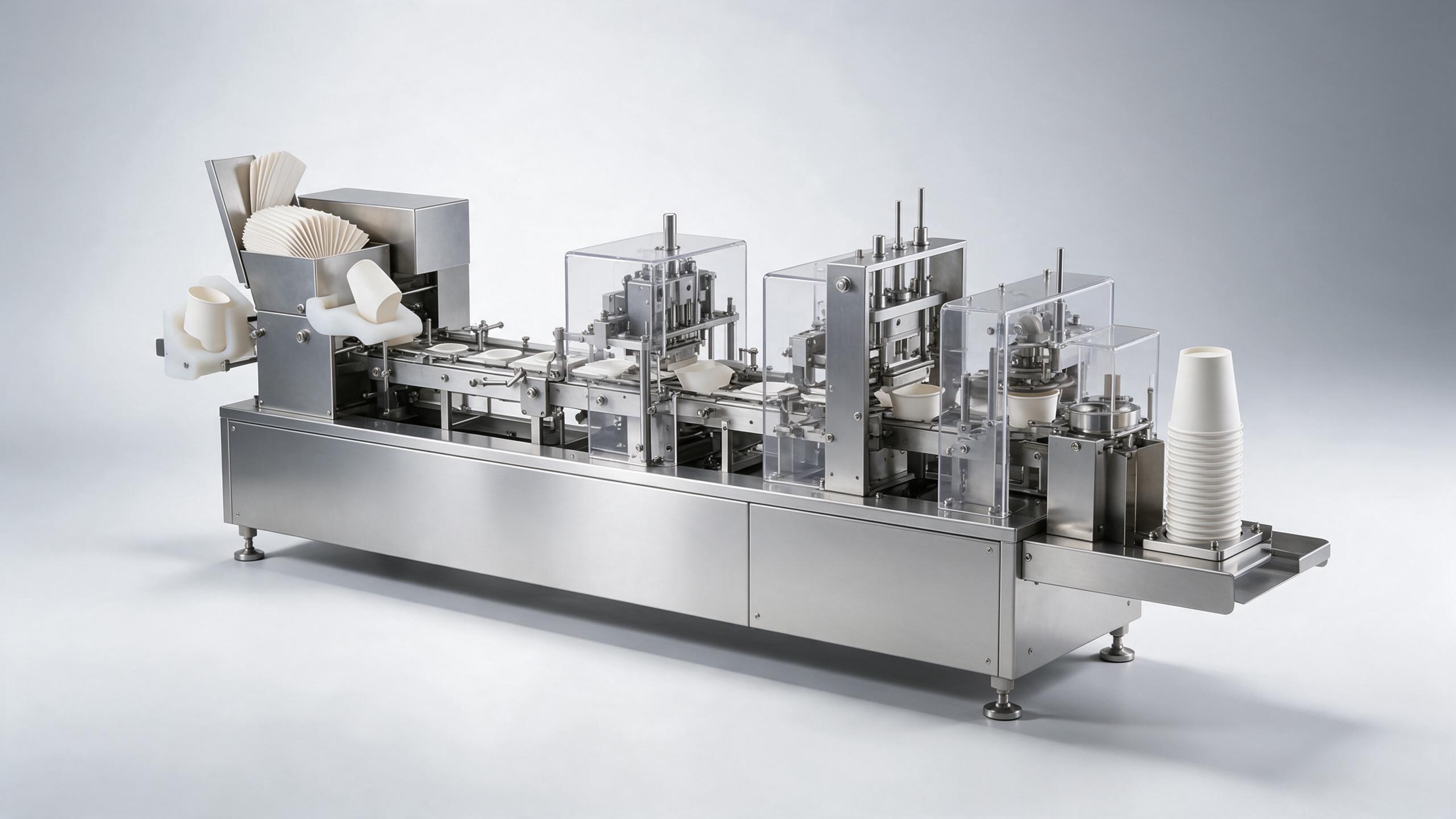
The paper cup die therefore deserves more attention than a simple accessory label suggests. Its profile affects blank geometry, and its condition can influence how a cup is formed. When reviewing a machine for paper cup production, request a clear list of cup sizes covered by the proposed tooling, the material information required for tool confirmation, and the process for adding a new format later.
Configuration questions that affect production stability
The main selection task is to match the machine for paper cup production to the production plan. Feeding design, forming-station layout, heat control, sensors, lubrication points, cup collection, and access for cleaning can all affect the operating experience. Rather than treating these as a checklist of features, connect each item to a production condition.
- For a stable, high-volume format, discuss the target output under the exact cup and paper conditions.
- For multiple sizes, discuss tooling scope, changeover tasks, and how operators will verify the first acceptable cups after a change.
- For coated or specialty paper, discuss the material specification and a sample-based confirmation process before finalizing the machine for paper cup production.
- For printed products, define the handoff between the flexo printing press, blank conversion, and cup forming so artwork and blank orientation are managed consistently.
- For a new paper cup die, define the drawings, trial material, acceptance samples, and maintenance responsibilities before release.
It is useful to distinguish a production issue from a machine issue. A seam, bottom, or rim result can be affected by material variation, blank geometry, heat settings, tooling condition, and operator adjustment. A practical review of a machine for paper cup production should make those dependencies visible instead of assigning every defect to one component.
Build quality checks into the purchase discussion
For cups intended for food contact, material and destination-market requirements should be checked with the responsible parties before production. In the United States, for example, 21 CFR 176.170 addresses components of paper and paperboard in contact with aqueous and fatty foods. This is not a statement that a particular cup, coating, or machine for paper cup production meets a requirement. It is a prompt to obtain the relevant material records, product specifications, and market-specific confirmation for the actual project.
Acceptance criteria should be written in observable terms. They can include the approved cup dimensions, visual seam and rim appearance, bottom-seal checks, feeding behavior, sample quantity, and the conditions under which the trial is run. A supplier quotation is easier to compare when it states what material the trial uses, what tooling is included, what utilities are assumed, and what support is included during commissioning.
A supplier brief that produces clearer answers
Before requesting a proposal for a machine for paper cup production, prepare a short technical brief. Include cup drawings or samples; the paperboard and coating specification; blank and bottom dimensions; required cup sizes; target production schedule; expected changeover frequency; printing status; destination; utilities; packing plan; and the acceptance criteria. If printing is part of the project, identify whether the flexo printing press is already installed or should be considered as a separate upstream process.
Finally, ask for an explanation of the proposed paper cup die scope, spare-parts plan, operator training, routine inspection points, and escalation path for trial observations. Your project may value a steady single format, or it may value flexibility across several cups. Once that priority is clear, a machine for paper cup production can be evaluated as a coordinated production system rather than as a standalone purchase. The final configuration should still be confirmed through technical communication using the actual materials and target cup samples.
 ONLINE