
 EN

Machine For Paper Cup Production Trends
For a buyer planning a machine for paper cup production, the useful trend is not simply faster equipment. The more important shift is toward production decisions that connect paper selection, print preparation, forming stability, changeovers, and documentation. From a packaging-equipment selection perspective, the starting point should be the cup format, substrate, and expected production rhythm; configuration discussions come after that.
That order matters because a cup line is a sequence rather than a single isolated machine. A choice that looks attractive at the forming station can create extra work upstream in blank preparation or downstream in inspection and packing. This article outlines the trends worth watching and the questions that help turn them into a practical purchasing brief.
Trend 1: Production planning is moving from a standalone former to a connected workflow
Paper-cup manufacturing usually links substrate preparation, printing where graphics are required, blank cutting, cup-side forming, bottom insertion, heating or sealing, rim processing, inspection, and collection. The exact sequence varies with cup design and material. Still, the trend is clear: buyers increasingly assess how each stage hands work to the next instead of comparing a former only by a headline speed.
For printed cups, roll-fed flexographic printing is often considered as part of the upstream workflow because it can work with continuous paper-based substrates. A flexo plate mounting machine belongs to the print-preparation side of that conversation. Its relevance is not that it makes a cup; it helps the print operation prepare plates and verify registration before printed material reaches converting and forming. If branded cups are part of the plan, ask how print repeat, blank layout, graphic orientation, and the forming seam will be checked together.
The practical trend is therefore line-level coordination. Before selecting a machine for paper cup production, map where material arrives, how printed or plain blanks are supplied, which checks occur between stations, and where finished cups are counted or packed. This is more useful than assuming that every upstream process must be integrated.
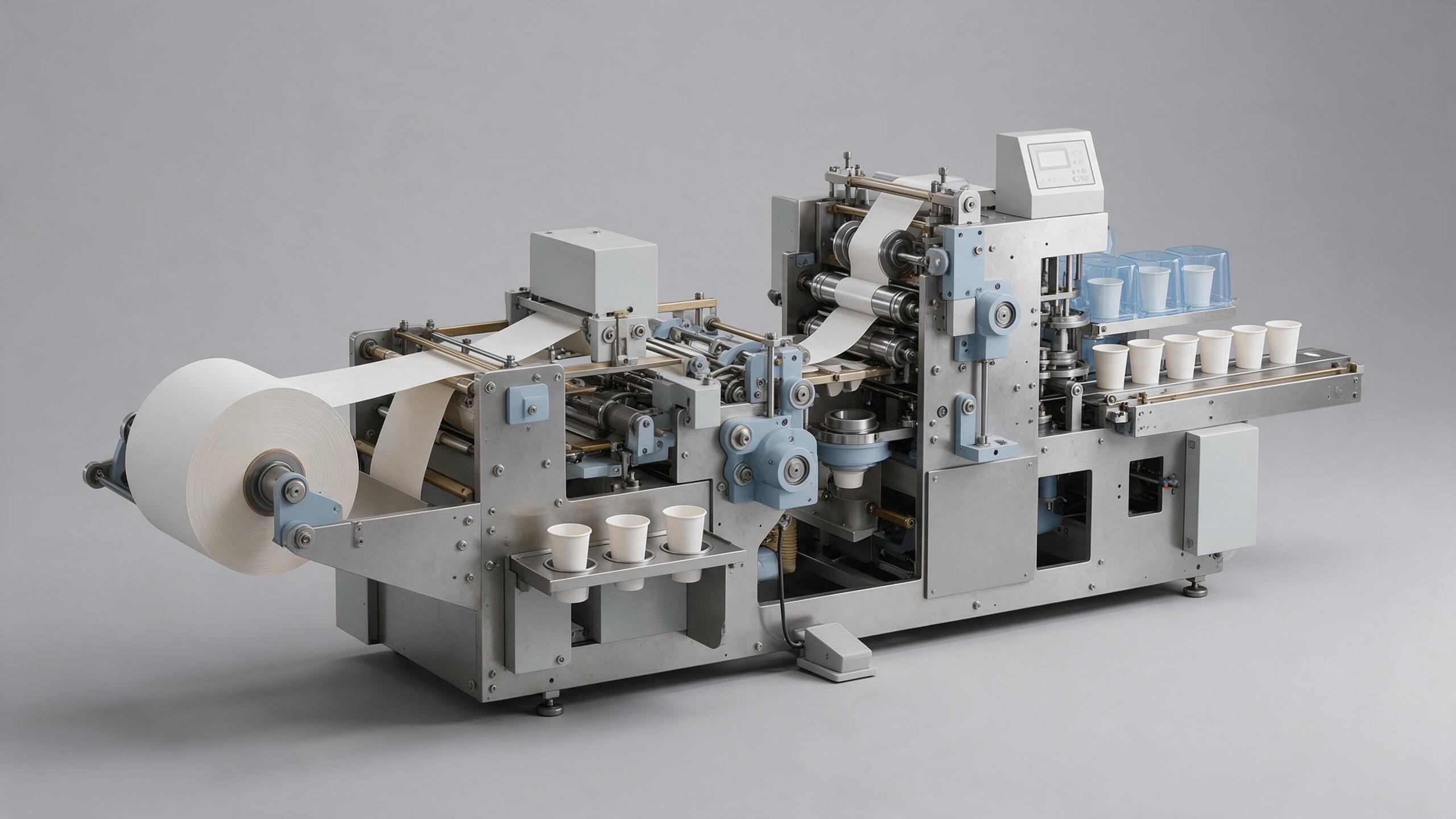
Trend 2: Material variation is shaping configuration discussions
Food-service cup projects can involve different paperboard grades, coatings, cup geometries, and temperature-use expectations. Those choices influence handling, heating or sealing conditions, and the checks required during trial runs. A production target that is sensible for one material and cup profile may need a different setup for another.
That is why material confirmation should happen before a buyer views a catalogue configuration as final. Provide representative stock, state the intended cup size and wall construction, and identify whether the project will run one stable specification or frequent variations. The result is a clearer conversation about feeding, forming, and quality checks without presenting general industry observations as a promise about a specific line.
Market access adds another layer. For food-contact packaging, documentation expectations depend on the destination market and the materials used. For example, buyers serving relevant European markets may need to review applicable food-contact requirements such as EC 1935/2004 with their compliance team. The machine supplier’s role and the material supplier’s role should be separated in the project file; current requirements and supporting documents should be verified before production approval.
Trend 3: Changeover discipline is becoming a productivity issue
Many projects are no longer judged only by long, single-SKU runs. Smaller brand programs, seasonal graphics, and a broader mix of sizes can make changeover planning influential. Here, a machine for paper cup production should be evaluated with the real schedule in mind: how often will cup diameter, height, print artwork, or paper specification change?
It is tempting to begin with maximum output. In practice, it is usually better to turn the discussion from a single-machine figure to the rhythm of the full line. A high stated speed has limited value if operators need lengthy adjustments, materials are not ready, or the next process cannot absorb output. Ask the supplier to explain which adjustments relate to cup tooling, which relate to material, and which checks the operating team performs after a change.
- List every cup format expected in the first operating period.
- Identify planned change frequency rather than treating it as an afterthought.
- Define sample approval points for appearance, seam condition, dimensions, and stackability.
- Reserve time for operator training and routine cleaning access.
These items do not replace an equipment specification, but they make the specification more usable.
Trend 4: Printing partners are part of the equipment decision
When cups carry graphics, the forming project is connected to printing capability. Buyers may work with in-house printing, a converter, or one of several flexo printing machine manufacturers. The selection question is not which option sounds more advanced; it is whether the selected print method, ink system, substrate, and converting plan align with the intended cup application and local compliance review.
During early discussions, compare the following interfaces: roll width or blank format, artwork repeat, print registration expectations, material storage conditions, inspection responsibility, and the way printed stock is identified before it enters cup forming. A flexo plate mounting machine can be relevant where flexographic plates are prepared internally, while a converter-led workflow may place that responsibility elsewhere. Either route can be workable if responsibilities are explicit.
Trend 5: Validation is taking precedence over broad performance claims
Buyers increasingly ask for a defined validation path rather than a long feature list. This is a constructive change. It moves the discussion toward samples, agreed material, target cup design, acceptance criteria, and operator procedures. For a machine for paper cup production, validation should address the real application rather than a generic demonstration.
A useful acceptance brief can include the supplied paper specification, cup drawing, intended product use, visual criteria, sealing or forming observations, count method, trial duration, and any market-specific documentation to be checked by the responsible parties. Keep the boundary clear: a trial can show how a defined sample behaves under defined conditions; it does not automatically prove the same outcome for all materials or future production environments.
A buying checklist for the next paper-cup project
- Describe the cup before the machine. Record diameter, height, volume, wall construction, artwork needs, and anticipated SKU mix.
- Trace the material flow. Decide whether the project uses pre-printed rolls, blanks, plain stock, or a separate printing and converting partner.
- Clarify the printing connection. If flexo is involved, define what the print team, plate preparation team, and forming team each verify.
- Set a realistic operating rhythm. Include changeovers, inspection, packing, and planned maintenance in the schedule.
- Prepare validation materials early. Align samples, drawings, acceptance criteria, and documentation questions before final configuration approval.
What these trends mean for your next decision
The direction of paper-cup equipment procurement is toward better-defined interfaces: material to former, print to blank, operator to changeover, and supplier discussion to validation. A machine for paper cup production is easier to assess when the request contains a complete operating picture rather than only a preferred speed or price range.
Start by writing the requirement as a checklist, then use supplier conversations to close the unknowns. If paper type and cup format are already confirmed, the comparison becomes more meaningful. If they are not, confirm those inputs first; it is often the steadier route to a configuration that fits the project.
 ONLINE