
 EN

Overview of Paper Cup Glass Making Machine Specs
When buyers search for a paper cup glass making machine, the most useful answer is rarely a single speed figure or a short list of stations. A machine is a forming system whose practical fit depends on the cup format, paperboard and coating, production rhythm, available utilities, operator routine, and changeover plan. This overview explains how to read a paper cup glass making machine specification sheet as a decision tool rather than a brochure.
Start With the Product You Need to Form
The first specification for a paper cup glass making machine is not the main motor rating. It is the supported cup range. Confirm the finished cup volume, top and bottom diameter, overall height, rim style, and whether the project includes standard beverage cups, cold-drink cups, paper bowls, or specialty shapes. A supplier may state that a machine can make multiple formats, but buyers should ask which molds and change parts are needed for each one.
Paper stock deserves the same attention. Board weight, coating type, blank geometry, print condition, and stiffness can affect feeding, side sealing, bottom forming, curling, and final appearance. Published GSM ranges vary by model and cup construction. Instead of treating a generic range as a guarantee, send representative cup blanks or a detailed material specification for validation on the proposed paper cup glass making machine.
Read the Forming Process Station by Station
A typical paper cup glass making machine receives a fan-shaped sidewall blank, forms the cup body, applies the bottom disc, heats or seals the relevant joints, knurls the bottom, curls the rim, and discharges the finished cup. The exact station layout and drive design differ by model. What matters is whether the specification explains how the machine handles the steps that are critical for the selected material and cup geometry.
- Feeding: Ask how the machine separates and delivers blanks, and what checks help prevent double feeding or misfeeds.
- Side sealing: Confirm the sealing method and the paper/coating conditions it is designed to process.
- Bottom insertion and knurling: These stages influence base integrity and should be reviewed with the target cup and material.
- Rim curling: Check the rim profile required by the end use and whether it remains consistent across the planned cup sizes.
- Discharge and counting: Consider how completed cups move to inspection, packing, or downstream automation.
This is also where a buyer should distinguish a paper plate and paper cup making machine from a dedicated cup former. Some suppliers use broad category terms. The actual process, tooling, and supported product range must be confirmed model by model.
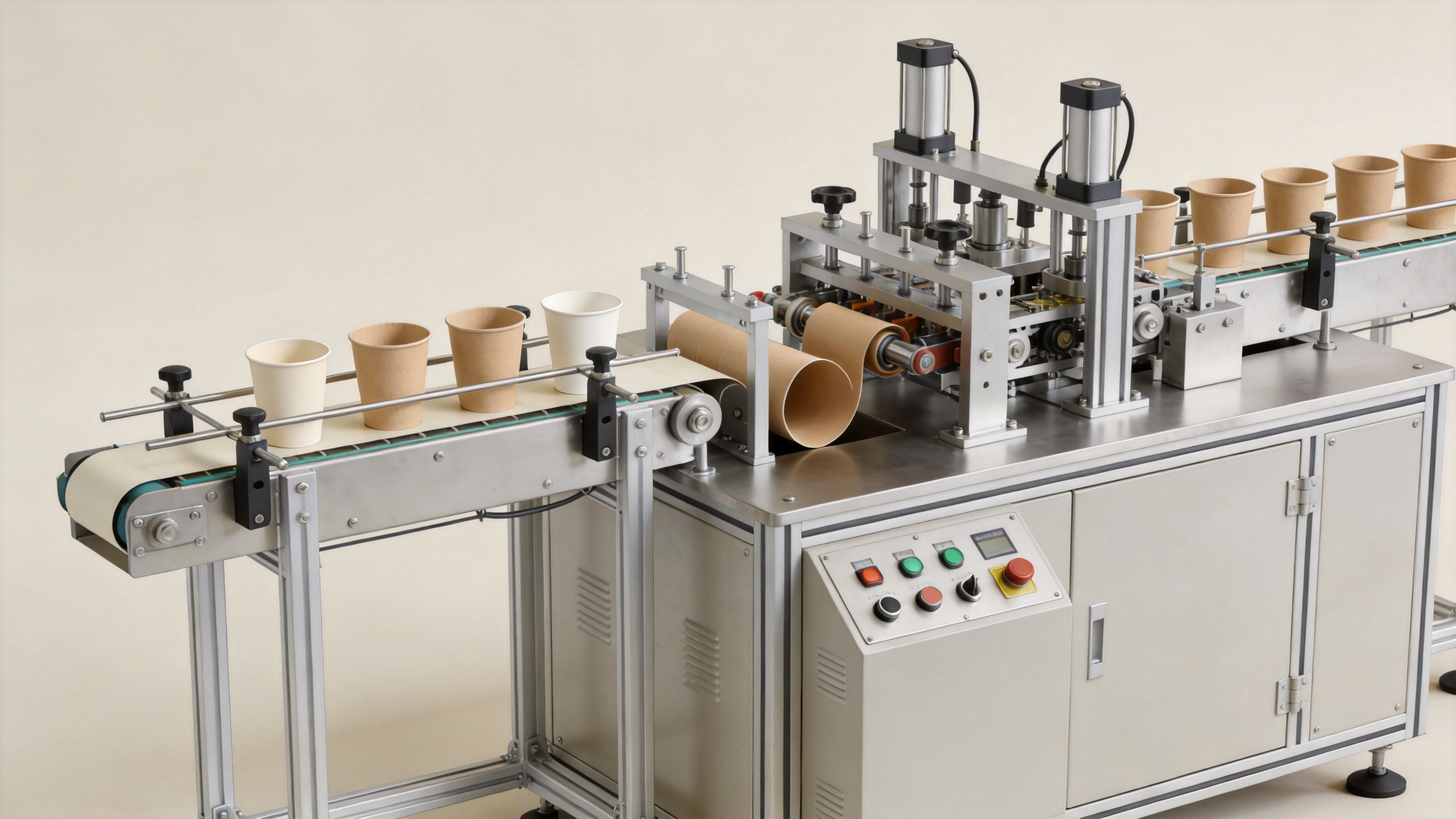
Speed Is a Verified Output, Not Just a Headline
Speed is one of the most visible paper cup glass making machine specs, but it should be compared under stated operating conditions. Search results show that market examples can range widely; one cited single-turntable model, for example, lists 60–130 cups per minute. That value is not a universal benchmark. Real output can vary with cup size, paper quality, coating, sealing settings, reject rate, operator intervention, and the stability expected by the buyer.
For a meaningful comparison, request a production test protocol. It should define the cup format, material, test duration, target output, accepted reject criteria, and measurement method. If output is important, ask the supplier to separate nominal speed from stable production speed. A paper cup glass making machine that runs at a lower nominal rate but delivers predictable cup quality may be more suitable than a faster option that requires frequent adjustment.
Check Drive, Controls, and Daily Usability
The drive system, cam arrangement, sensors, control interface, lubrication approach, and alarm logic determine how a paper cup glass making machine is operated and maintained. Buyers do not need to prescribe a single technology. They should ask what each feature changes in the daily workflow: setup time, adjustment visibility, fault tracing, preventive maintenance, and access to wear parts.
Request practical answers to these questions:
- Which settings are stored or adjusted through the control interface?
- Which parts are format-specific, and how long does a planned changeover normally take under the supplier’s stated conditions?
- What alarms or sensors help identify missing blanks, material jams, or incomplete forming?
- Which components need routine inspection, lubrication, or replacement?
- What training and remote-support scope is included in the quotation?
A disposable paper glass device may look simple at a trade show, but installation and daily operation depend on utilities, layout, material handling, and the team’s familiarity with the process. Confirm the electrical supply, compressed-air requirement if applicable, footprint, service clearance, noise expectations, and integration points before finalizing the layout.
Make Quality and Compliance Part of the Specification Review
For food and beverage applications, a paper cup glass making machine is only one part of the finished-product compliance picture. The cup paperboard, coating, inks, production controls, and destination-market requirements may all need review. One search result references EU Regulation 1935/2004 for food-contact materials, but applicability must be checked for the particular market and product. Avoid relying on an unverified machine certificate as proof that a finished cup meets every requirement.
Define observable acceptance points for the paper cup glass making machine: seam appearance, bottom integrity, rim consistency, cup dimensions, stacking behavior, and the reject-handling process. Use samples and a documented trial to align technical, purchasing, and quality teams before shipment.
A Practical Request-for-Quotation Checklist
Before comparing quotations for a paper cup glass making machine, prepare a single sheet that lists the target cup drawings, paper and coating information, planned output, expected production schedule, utilities, destination, preferred automation level, available floor space, and required support. Then ask each supplier to state what is included: molds, format parts, installation guidance, training, spare parts, commissioning, packing, documentation, and warranty boundaries.
This approach also helps clarify whether the project requires a dedicated cup line or a broader paper plate and paper cup making machine solution. The better the input package, the easier it is to compare like-for-like proposals and avoid assumptions hidden inside a low initial price.
Final Takeaway
The right paper cup glass making machine is the one whose verified cup range, material compatibility, forming sequence, stable output, changeover plan, controls, utilities, and support scope match the actual production plan. Use supplier specifications as a starting point, then confirm the critical details with drawings, material samples, trial criteria, and an acceptance checklist. That disciplined review gives a disposable paper glass device project a more reliable basis for purchasing and commissioning.
 ONLINE