
 EN

Why Machine For Paper Cup Production Speeds Output?
A machine for paper cup production can raise output, but not simply because its nameplate speed is higher. In a paper-cup factory, the usable result is accepted cups per shift. That result depends on how consistently material preparation, printing, die cutting, forming, inspection, packing, and changeovers work together. A fast former that waits for blanks, rejects unstable cups, or stops repeatedly is not delivering the output the schedule needs.
From a packaging-equipment selection perspective, a machine for paper cup production should first be matched to cup format, paper stock, and the required production rhythm. Only then does it make sense to compare controls, tooling, automation, or a quoted cycle rate. This approach gives production and procurement teams a clearer way to discuss speed without treating one number as the whole answer.
Output is a line result, not just a machine rating
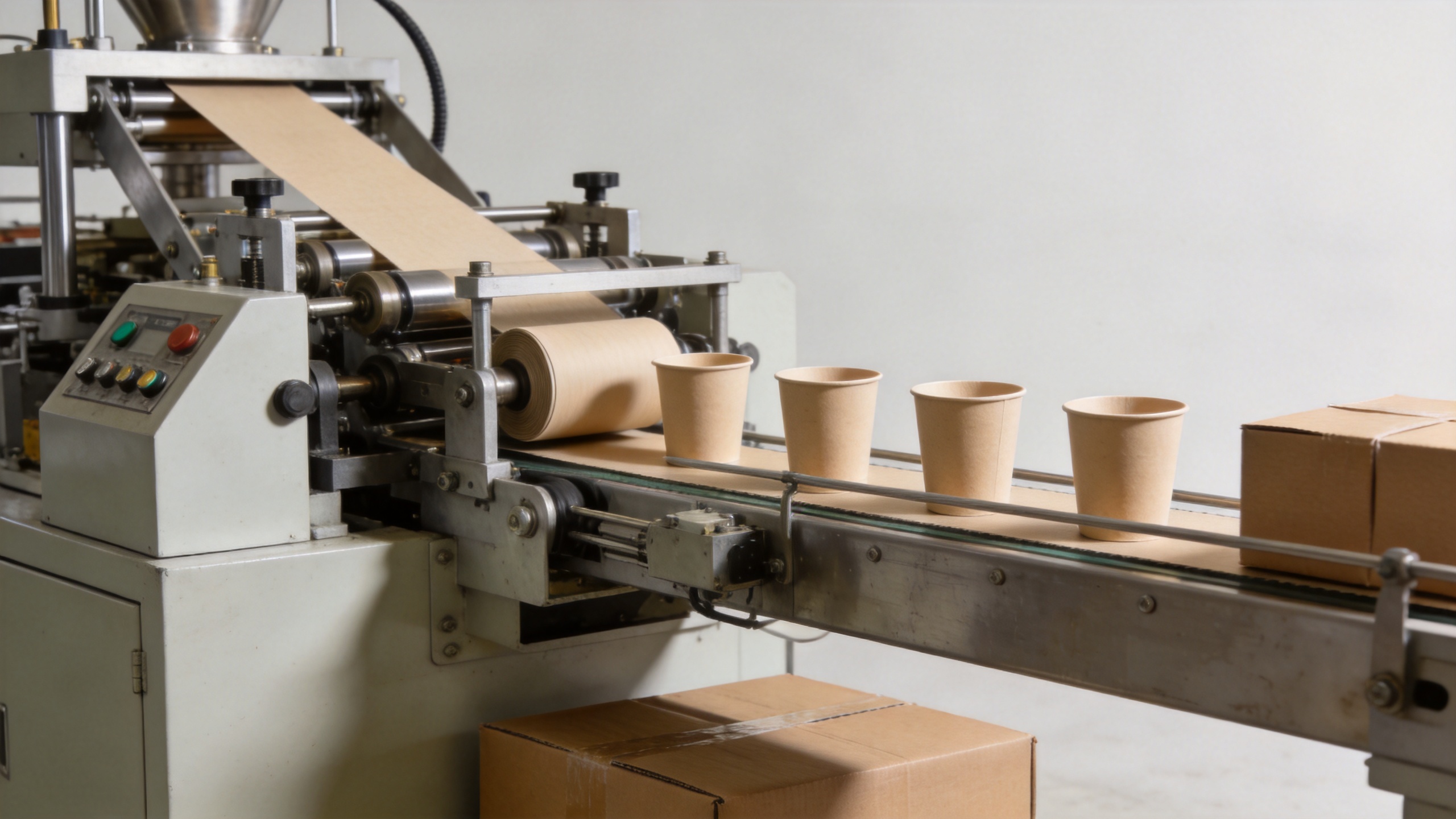
The basic job of a machine for paper cup production is to convert prepared paper blanks into consistently formed cups. The equipment may feed blanks, form the side seam, shape and attach the bottom, knurl the base, curl the rim, and discharge finished cups. Yet the rate of this sequence is only one part of line capacity. If printed blanks arrive late, if a die-cut edge varies, or if packing creates a queue, the former will be forced to slow or stop.
Industry process summaries commonly describe paper-cup manufacturing as a linked flow: material preparation, printing and die cutting, cup forming, bottom knurling and curling, side-seam sealing, checking, and packing. Published discussions also show a broad range of forming speeds, roughly 50 to over 300 cups per minute depending on equipment and process conditions. That is useful context, not a production promise. The achievable rate for any machine for paper cup production must be verified with the target cup, paper, coating, print condition, and quality standard.
Where a machine for paper cup production gains speed
1. A steady forming cycle reduces small interruptions
A well-matched machine for paper cup production can improve output when feeding, heating, forming, and cup discharge operate with a stable rhythm. Small interruptions matter. A sensor adjustment, a misfed blank, or a cup that does not release cleanly can cause brief stops that add up over a shift. Instead of asking only for maximum cycles per minute, ask how the proposed configuration supports stable operation with your own cup size and substrate.
This is where control logic and operator visibility are important. Clear alarms do not eliminate faults, but they can make it easier to separate a material issue from a machine setting or an operating step. More accurately, not every quality issue comes from the former. Paper stiffness, coating behavior, blank accuracy, and heat-sealing settings can all affect the same cup defect.
2. Material compatibility protects usable throughput
A machine for paper cup production runs faster in practical terms when the paper and forming conditions are understood before production begins. Paper weight, coating, moisture behavior, blank dimensions, and print coverage can change how blanks feed and how seams seal. If these conditions are unstable, raising the nominal speed may increase reject handling rather than accepted output.
For this reason, a pre-production trial should define both a planned rate and the acceptance conditions around it. Confirm the intended cup dimensions, paper specification, coating type, sample artwork, and allowable visual or seal defects. If the paper and cup design are already confirmed, a speed comparison becomes more meaningful; if they are not, the quoted rate needs more context.
3. Changeovers determine the output of mixed production
For a plant that makes several cup sizes, a machine for paper cup production can speed output by making changeovers orderly and repeatable. The highest speed during a long single-format run may not be the most useful measure for a schedule with short batches. Tooling changes, material adjustment, first-piece inspection, and restart stabilization consume time that a nameplate rate does not show.
Ask a supplier to map the changeover sequence: which parts change, what settings are recorded, what training is needed, and which checks are required before regular output resumes. A documented sequence helps supervisors plan labor and reduces the temptation to skip quality checks while chasing a target.
How printing and converting affect the former
If cups require branding or graphics, upstream printing deserves the same attention as the former. A flexo press may be part of the workflow when graphics are applied to paper stock before conversion. Registration, ink drying, web handling, and die-cut accuracy affect whether blanks arrive consistently at the machine for paper cup production. A meaningful output improvement often comes from a balanced handoff between printing, blank preparation, and forming rather than a faster former alone.
This is also relevant when evaluating adjacent formats. A bagasse cup making machine addresses a different material and forming context, so its process assumptions should not be transferred automatically to a paper-cup line. When comparing equipment, start with the actual material route and product requirement rather than treating all disposable-cup equipment as interchangeable.
Measure the bottleneck before you buy
Before selecting a machine for paper cup production, convert the sales forecast into an accepted-cup target per shift. Then work backward through the line. Record the planned run time, expected breaks, changeovers, material replenishment, inspection points, packing capacity, and likely maintenance windows. The slowest reliable stage sets the practical output ceiling.
| What to verify | Why it affects output | Useful question |
|---|---|---|
| Accepted cups per minute | Separates finished good output from a theoretical cycle rate. | What defects are excluded from the stated rate? |
| Paper and blank specification | Feeding and seam stability depend on consistent inputs. | Can this material be demonstrated on the target cup format? |
| Changeover method | Frequent size changes reduce available run time. | Which tooling, settings, and checks change? |
| Printing-to-forming handoff | Blank variation can constrain the former. | How will the flexo press and die cutting be coordinated? |
| Maintenance and spare parts | Unplanned stops lower shift output. | Which wear items and inspections should be planned? |
Run an acceptance test that reflects real production
The right way to assess a machine for paper cup production is with an agreed test plan, not a short demonstration at an ideal setting. Define the cup format, material, print condition if applicable, trial duration, expected operating rate, reject criteria, and records to be taken. Monitor starts and stops as well as speed. A short peak is less useful than a repeatable run with known conditions.
During the test, ask operators to note feeder behavior, seam appearance, bottom formation, rim quality, cup ejection, and the time required to return to stable production after an adjustment. Those observations give a buyer a realistic baseline for training, maintenance, and planning. They also make it easier to compare two options on common conditions.
A practical next step
A machine for paper cup production speeds output when it fits the whole production system: the cup design, paper stock, upstream blank supply, operator workflow, inspection standard, and packing rhythm. It does not have to be presented as the fastest option to be valuable. The more useful question is whether it can produce the required number of accepted cups consistently under your working conditions.
Prepare a short inquiry sheet with your cup drawings, material details, production target, print requirements, format-change frequency, and acceptance criteria. Then ask for a configuration discussion and a test plan. This keeps the decision focused on dependable throughput rather than an isolated speed claim.
 ONLINE