
 EN

Paper Cup Forming Machine Industry Outlook
The paper-cup market is changing from a simple volume business into a more demanding packaging operation. For converters, cafés, food-service suppliers, and contract manufacturers, a paper cup forming machine is no longer judged only by its stated speed. The more useful question is whether its forming process can maintain cup quality with the selected paperboard, barrier coating, cup geometry, and downstream packing rhythm.
That shift matters because buyers are being asked to balance automation, food-contact documentation, material changes, and delivery reliability at the same time. From a food-packaging application perspective, the outlook is less about one universally suitable machine and more about matching the right process controls to a defined cup program. If paper grade and cup style are already fixed, the discussion becomes far more concrete.
Why the outlook centers on process fit, not headline speed
Search results for a paper cup forming machine commonly emphasize automatic operation and output. Those are relevant, but they do not describe the conditions behind stable production. A quoted cycle rate can be meaningful only after the buyer and supplier agree on cup size, blank quality, coating type, seam-heating method, bottom curl requirements, and the acceptable inspection criteria.
In practice, the industry is moving from comparing single machine parameters to examining the production rhythm around the machine. Blank feeding, side-seam forming, bottom insertion, heating, knurling, rim processing, discharge, counting, and packing all influence the usable result. This is why a paper cup forming machine should be reviewed as a forming cell rather than an isolated purchase.
For projects with frequent format changes, a slightly lower nominal rate may be more appropriate if tooling changes, setup checks, and operator guidance are easier to manage. For a stable, high-volume single-cup program, repeatability, material consistency, and a clear preventive-maintenance routine can be more important than flexibility. These are not competing ideas; they are different operating scenarios.
Material and compliance pressures will shape equipment decisions
Packaging buyers are increasingly evaluating paperboard and barrier systems alongside equipment. Coatings, basis weight, stiffness, print treatment, and blank accuracy affect how a cup body forms and how the seam and bottom seal perform. As new lower-plastic, recyclable, or fiber-focused formats are evaluated, a paper cup forming machine needs to be assessed against actual trial material instead of assumed compatibility.
Market access adds another layer. In the United States, 21 CFR §176.170 covers components of paper and paperboard intended for contact with aqueous and fatty foods. In the European Union, Regulation (EC) No 1935/2004 establishes general safety and inertness principles for food-contact materials. These references do not certify a machine or a finished cup by themselves. They do show why buyers should define material records, intended food use, destination-market requirements, and validation responsibilities early in a project.
More accurately, compliance is a supply-chain task. Cupstock suppliers, converters, equipment teams, and brand owners may each hold different records. A practical purchase review should ask which samples will be run, what seal and appearance checks will be used, who keeps the relevant documentation, and which conditions remain to be verified after installation.
Automation will be judged by control points, not by how many features appear on a list
Automation remains a clear direction in the paper cup forming machine industry, but useful automation reduces uncertainty at key control points. Buyers should look for a coherent approach to material feeding, timing, temperature or sealing control, jam response, reject handling, counting, and handoff to downstream equipment. The right level depends on the line and on the operator model.
Consider a common decision: should a plant prioritize maximum automatic handling or easier intervention during changes? If production runs are long and cup specifications are tightly controlled, integrated handling and inspection may support consistency. If a converter makes varied promotional, seasonal, or regional formats, accessible adjustments and unambiguous setup procedures may have equal value.
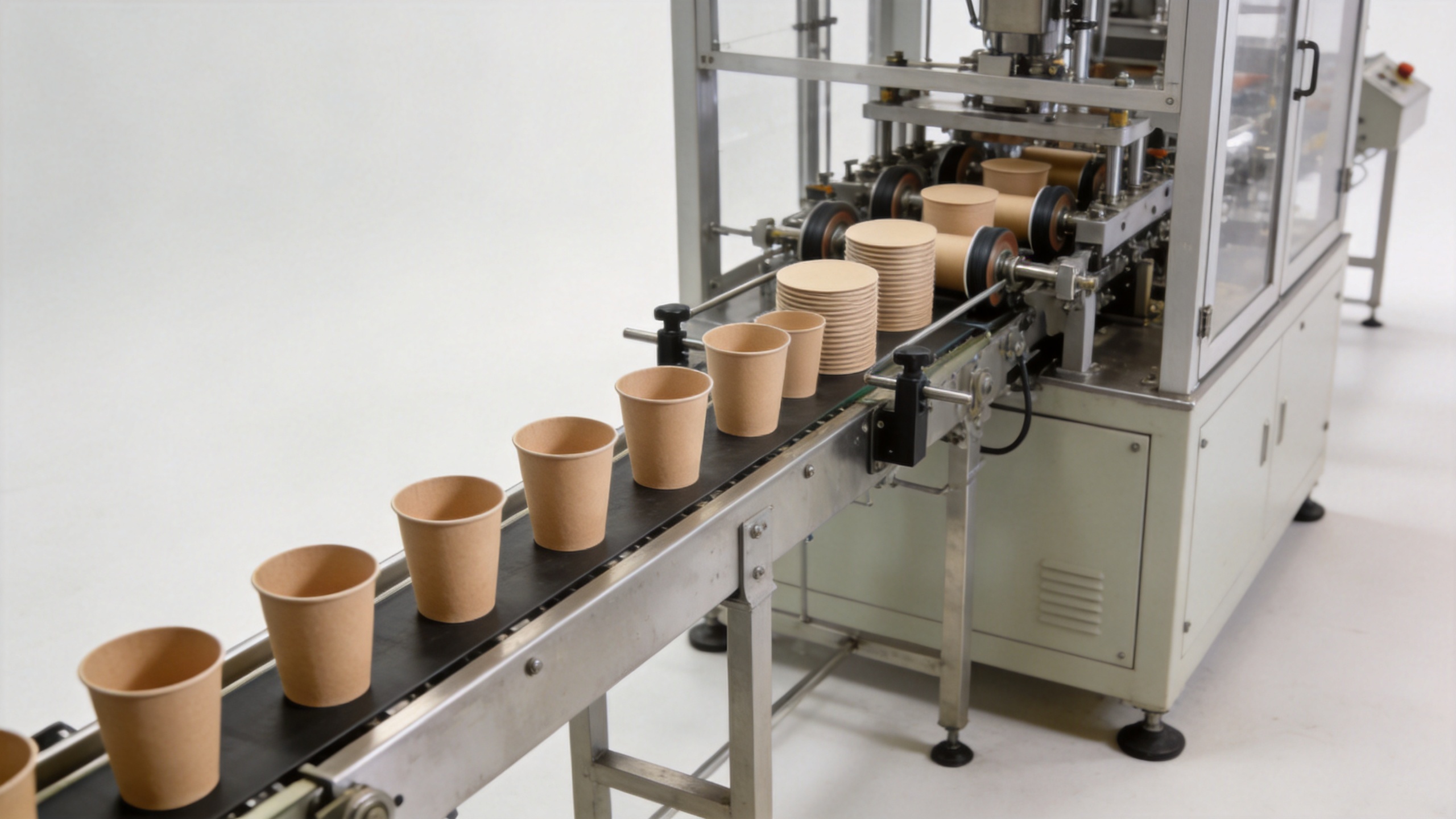
This is also where paper cup shaping equipment deserves a more specific review. The forming stages must suit the intended blank and cup profile, while adjustments must be repeatable enough for operators to recover a stable condition after a change. Ask the supplier to separate confirmed machine functions from items that require sample trials. That small distinction avoids treating a general configuration as proof of performance on every material.
Quality consistency will move closer to the center of the investment case
As food-service brands seek more uniform presentation and as downstream packing becomes more automated, cup geometry and seam quality matter beyond the forming station. A paper cup forming machine may be selected for its rated output, yet the operational cost can be driven by rework, inspection time, rejected cups, or interruption downstream. Buyers should define the product characteristics that actually matter: seam appearance, bottom integrity, rim finish, stackability, dimensional consistency, and the conditions used to inspect them.
Paper cup pleating is a useful example. Paper cup pleating equipment is not merely an extra mechanism to compare; it is part of the process that can influence bottom formation and the final look of the cup. Its suitability should be checked with the actual cup diameter, paperboard construction, coating, and forming sequence. If those inputs differ, the observed result may differ as well.
Rather than promise defect-free output, a stronger approach is to write acceptance criteria into the project plan. Define trial samples, inspection intervals, operator training needs, spare-parts expectations, and the escalation path if cup quality changes. From procurement discussions, acceptance boundaries are often the point that is noticed too late.
What buyers should compare in an industry outlook review
A forward-looking comparison can be organized around five questions:
- Application: What cup sizes, shapes, beverage uses, and market requirements will the line support?
- Material: Which paperboard and coating combinations will be tested, and what is still subject to validation?
- Process: How do blank feeding, body forming, seam sealing, bottom forming, rim treatment, and discharge work together?
- Operations: How often will formats change, who will run the line, and what checks are practical per shift?
- Lifecycle: What documentation, commissioning support, routine maintenance, wear parts, and troubleshooting path should be agreed before purchase?
For international projects, this checklist should also cover communication timing, installation boundaries, destination requirements, and the evidence each party must provide. ZheJiang RUIDA Machinery focuses on paper-cup and food-packaging equipment and can structure the early discussion around cup application needs, size and shape requirements, forming-process configuration, and production-rhythm planning. Specific machine suitability, however, should be confirmed against the project’s materials and samples.
Where the industry is likely to go next
The next phase of the paper cup forming machine industry will likely favor better integration rather than a single universal configuration. Demand for food-service packaging, pressure to reconsider material systems, and the need for reliable repetitive output are encouraging buyers to connect forming decisions with inspection, handling, maintenance, and documentation.
That means a disciplined investment conversation begins before a quotation. Start with the cup program, map the material and quality conditions, then compare the controls and support needed to sustain that program. A paper cup forming machine is most valuable when the machine, material, operating routine, and acceptance plan are aligned. The same principle applies when evaluating paper cup shaping equipment and paper cup pleating equipment: confirm the full process, not only the individual mechanism.
Conclusion
The industry outlook is positive for manufacturers that treat paper-cup forming as a controlled packaging process. Automation, sustainable-material evaluation, and quality expectations are raising the value of disciplined technical review. Before selecting a paper cup forming machine, prepare representative samples, define food-contact and market requirements, identify the critical quality checks, and agree on the verification plan. That approach supports a clearer comparison today and a more resilient production line tomorrow.
 ONLINE