
 EN
EN

Paper Cup Machine for Continuous Paper Container Production Lines
When a factory plans a continuous paper-container line, the paper cup machine should not be evaluated as an isolated forming unit. From a packaging-equipment selection perspective, it must fit the cup format, paper stock, print workflow, production rhythm, and inspection handoffs around it. A high stated speed can be useful, but it is not by itself evidence that the complete line will run steadily.
A practical starting point is to define the finished container before comparing a paper cup machine. Record the cup sizes, wall construction, bottom shape, intended beverage temperature, paper or coated-board specification, artwork changes, pack count, and expected changeover frequency. These conditions influence tooling, heating and forming settings, blank preparation, and the way operators verify finished cups.
Start with the line flow, not only the forming speed
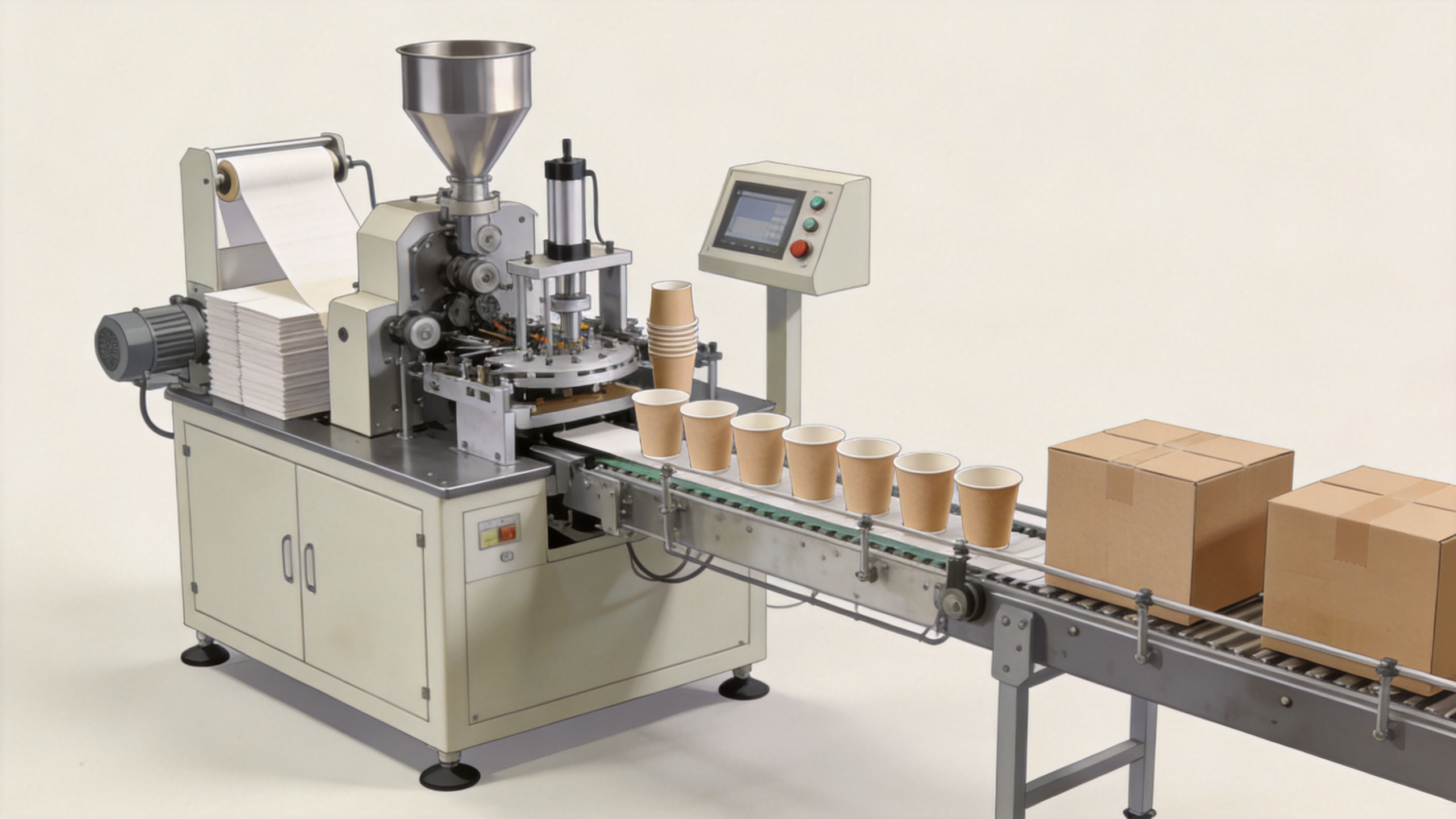
A continuous production line connects several decisions. A common general process map includes material preparation, printing where required, die cutting of blanks, cup forming, inspection, and packing. The exact sequence varies with the plant and product, so it should be treated as a planning map rather than a universal machine specification. The paper cup machine occupies the forming stage, but upstream blank supply and downstream collection can decide whether its available capacity is usable.
Ask each supplier or project team to map the handoff before and after the paper cup machine. For example, can die-cut blanks arrive in the expected orientation and condition? Where are rejects removed? Does the packing area have enough buffer for normal variation? More accurately, not every interruption starts at the former; material variation, tooling condition, and operating practice can also affect output.
Match the paper cup machine to the container and material
The first technical check is compatibility. A paper cup machine should be reviewed against target diameter, height, taper, bottom profile, and the paperboard or coated-paper range proposed for the job. If the line will produce more than one format, distinguish between occasional planned changeovers and frequent mixed production. This difference can affect the tooling plan, setup procedure, spare parts list, and the time reserved for verification after a change.
Material deserves the same attention. Paper stiffness, coating behavior, blank accuracy, and storage conditions can influence feeding, side-seam formation, bottom attachment, and rim finishing. For food-contact applications, confirm the applicable target-market requirements with the material and finished-container documentation; for example, U.S. rules include provisions for paper and paperboard components in contact with aqueous and fatty foods. That reference is a compliance checkpoint, not a claim that any particular line or cup is automatically compliant.
Decide whether printing belongs inside the line plan
The phrase disposable cup printing machine can describe a separate printing workflow rather than a function built into a paper cup machine. Clarify this early. Printed roll stock or sheets may need coating, color control, drying, slitting, and die cutting before blanks reach the forming area. Treat the print stage as its own quality handoff: approved artwork, registration expectations, color-control method, blank inspection, and storage protection should be agreed before production starts.
This matters when forecasts call for frequent design changes. A line can be mechanically capable of forming cups while still losing time because the blank supply, print approval, or die-cut inventory is not ready. Instead of assuming one system solves every task, compare the interfaces and assign responsibility for each handoff.
Use capacity as a verified line calculation
For a continuous line, calculate output from the slowest verified stage, not from the headline rate of a paper cup machine. Build a working table with planned shifts, target formats, expected changeovers, planned inspection, packing rhythm, and the buffer allowed between stations. Then ask what conditions were used to demonstrate the proposed rate: cup size, material, tooling, operator actions, and the definition of acceptable output.
This approach is also useful for a buyer searching for a coffee cup banane wala machine. The right answer depends on whether the project needs a stable single format, branded printed cups, several sizes, or a gradual scale-up. Before comparing speed, write down the acceptance sample, defect categories, sampling frequency, and response to a rejected cup. A stated throughput is more meaningful when these conditions are visible.
Plan quality checks around the forming process
Quality control should follow the container through the line. At incoming inspection, confirm blank dimensions, print condition, and material identity. At the paper cup machine, define checks for side seams, bottom attachment, shape, rim finish, and visual appearance. At packing, confirm count, protection, labeling, and traceability needs. The exact test method and frequency should be agreed for the product and market rather than copied from another project.
It is helpful to separate machine acceptance from product acceptance. Machine acceptance may cover installation, safe operation, and agreed demonstration conditions. Product acceptance may cover the selected cup formats, material combination, appearance criteria, and any required leak or functional testing. Putting both lists in the project record reduces ambiguity when the line is commissioned.
Build a commissioning checklist before purchase
- List each cup format, material construction, print condition, and expected production mix.
- Document the interfaces before and after the paper cup machine, including buffer and reject handling.
- Define setup, changeover, cleaning, inspection, and maintenance responsibilities.
- Request an acceptance plan that states conditions, samples, records, and escalation steps.
- Confirm what technical documents, spare parts, remote support, and operator training are included.
For a continuous paper-container project, the most useful paper cup machine discussion moves from a single number to a repeatable production route. First confirm the application, then check cup geometry and material, then validate the pace of the full line. With those conditions defined, technical and purchasing teams can compare configurations on a clearer and more defensible basis.
 ONLINE