
 EN

Paper Cup Making Machinery Advantages
For a converter, café-supply business, or food-packaging startup, paper cup making machinery is more than a way to form a disposable cup. It is a production system that brings blank feeding, side-seam forming, bottom insertion, heating, knurling, rim finishing, and cup collection into one controlled workflow. The practical advantage is not simply a higher headline speed. It is the ability to make decisions about material, cup format, staffing, quality checks, and downstream packing from the same operating picture.
From a food-packaging application perspective, the useful question is: which advantages of paper cup making machinery matter for the cups you intend to supply? A machine that suits one cup size and a steady material specification may be a sensible choice, while a different configuration may fit a business that changes formats often. The sections below explain what buyers can evaluate before they turn a machine specification into a production plan.
1. A repeatable forming sequence supports more consistent cups
The central benefit of paper cup making machinery is repeatability. Instead of relying on separate manual operations, the machine moves each blank through the same forming stages. That repeatable sequence can help a team observe whether side seams, bottom joints, cup shape, and rim finishing remain within its agreed inspection standard.
This matters because a cup can look acceptable while a weak side seam or bottom joint still creates a leakage risk. A sound evaluation of paper cup making machinery therefore includes more than a demonstration of completed cups. Ask how the intended blank, coating, and cup geometry will be run, then agree on representative finished-cup checks. Visual inspection, dimensional checks, and leakage testing can each reveal a different issue.
Machine consistency does not replace material control. Paperboard batch variation, coating behavior, storage conditions, and blank quality can affect the result. Still, a stable forming path makes it easier to separate a material question from an equipment-setting question when quality changes.
2. Automation can make line rhythm easier to plan
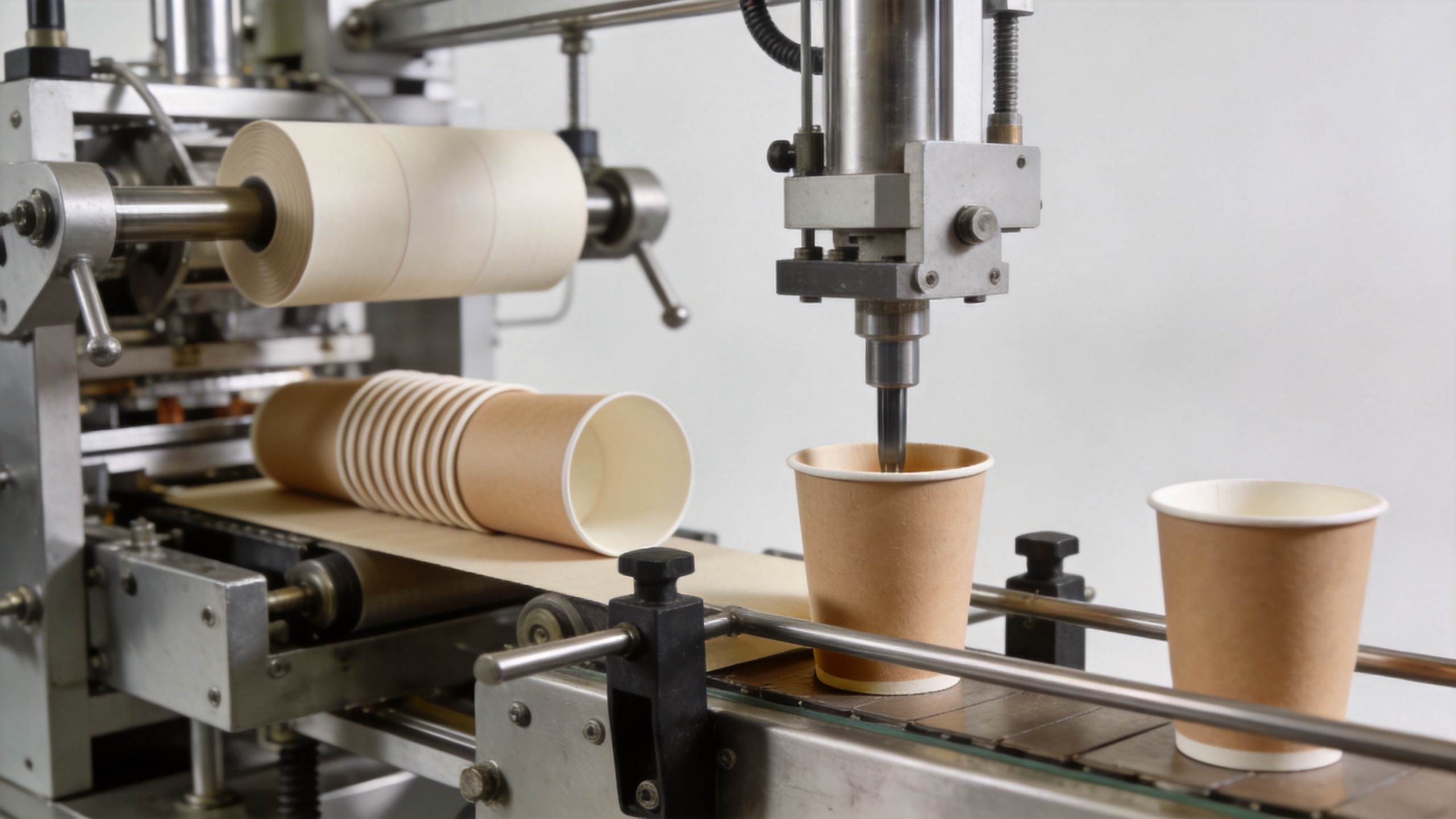
Another advantage of paper cup making machinery is that it links several tasks into a predictable rhythm: feeding blanks, forming the body, placing the bottom, finishing the rim, and collecting cups. That can simplify staffing and downstream packing planning when the input material and target cup specification are stable.
A maximum-speed figure is only one part of the picture. A production plan must also account for material loading, inspection, cup collection, packing, planned cleaning, and changeovers. When comparing paper cup making machinery, ask what conditions are assumed for the proposed output and whether those conditions match your cup diameter, height, paperboard, coating, and operator workflow. A stated output is useful only when the associated setup is clear.
For some businesses, a single paper cup machine is a practical starting point because it concentrates the workflow in one place and allows the team to learn the process on a defined cup range. Its value depends on whether the planned range remains narrow enough for the available tooling and changeover routine. If frequent format changes are expected, the time and training needed between runs deserve as much attention as the running rate.
3. Configuration can be matched to cup formats and materials
Well-chosen paper cup making machinery gives a buyer a clearer way to connect application requirements with configuration choices. Begin with the cups: hot or cold use, intended volumes, top and bottom dimensions, wall construction, coating type, artwork requirements, and anticipated product mix. Then review whether the proposed tooling, heating or sealing arrangement, and collection method fit those requirements.
This approach avoids a common purchasing error: choosing only by cup capacity. Two cups with a similar nominal volume may have different diameters, heights, board stiffness, or sealing behavior. For that reason, a supplier discussion about paper cup making machinery should use actual drawings or samples where possible. It should also define which material samples will be used in a trial and which observations will decide whether the result is acceptable.
Packaging paper cup making machinery is especially relevant when the cup-forming station must work as part of a broader packaging operation. The forming machine may need to align with print handling, inspection, packing, storage, and delivery requirements. Mapping the handoffs early can uncover bottlenecks that are not visible in an isolated machine demonstration.
4. Quality control becomes easier to organize around checkpoints
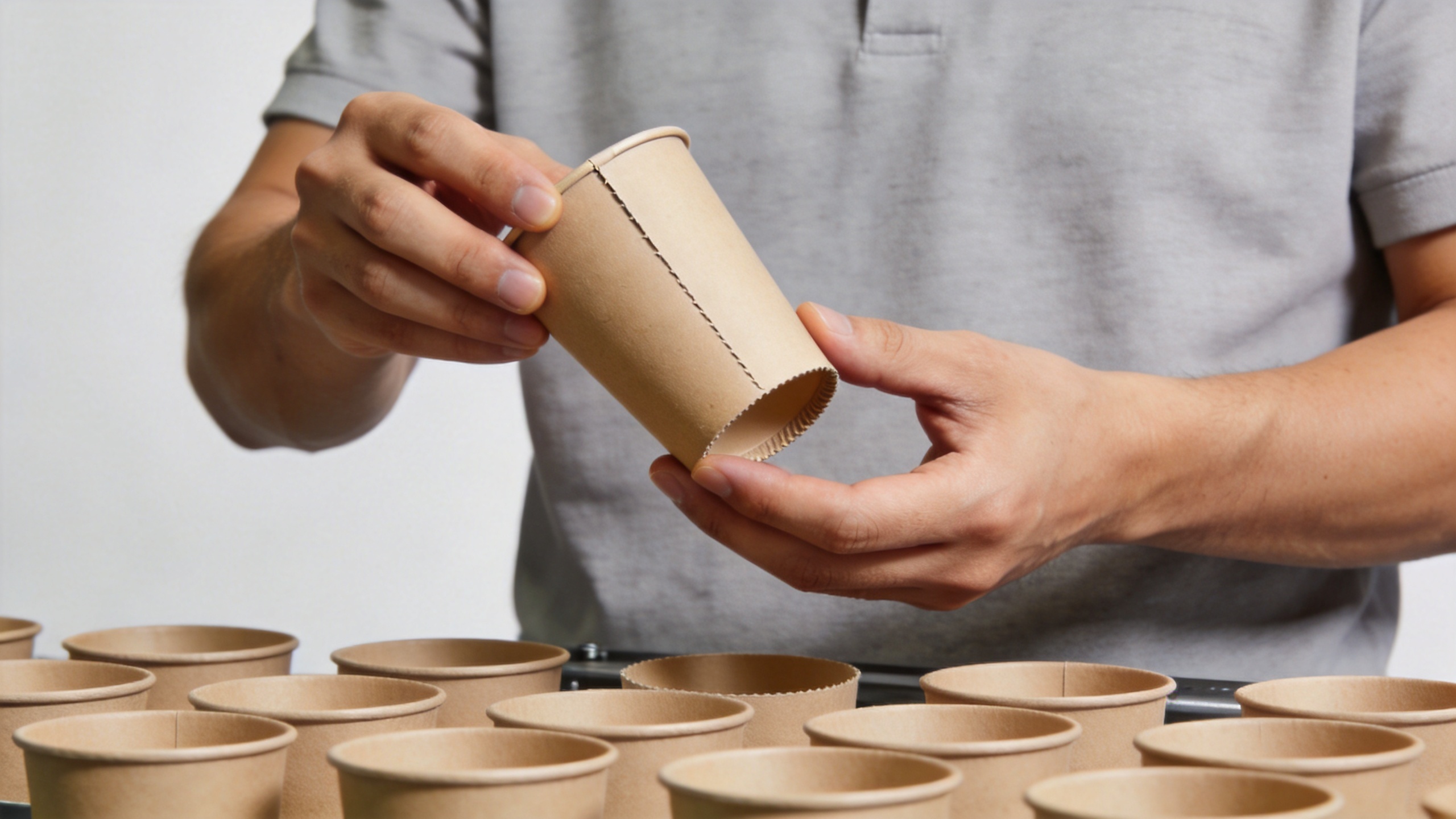
A further benefit of paper cup making machinery is the opportunity to place quality checks beside identifiable process stages. Operators can document observations around blank feeding, body formation, bottom insertion, sealing conditions, rim formation, and final collection. This gives a production team a shared vocabulary for reporting a defect rather than describing only the final appearance.
For liquid-containing cups, side-seam integrity and bottom-seal condition are sensible checkpoints. Representative finished-cup leakage tests are useful because they test the finished structure rather than appearance alone. When reviewing paper cup making machinery, ask where operators can safely view critical steps, how adjustments are recorded, and how the team will distinguish recurring issues from isolated material defects.
- Define the cup sample, paperboard, coating, and intended use before a trial.
- Agree on visible seam, bottom, shape, and rim criteria.
- Document the trial conditions so later runs can be compared fairly.
- Set a process for retaining samples and recording anomalies.
5. Clear acceptance criteria reduce uncertainty in procurement
The business advantage of paper cup making machinery is stronger when acceptance conditions are agreed before shipment or installation. A buyer can use the same checklist during quotation review, sample confirmation, factory testing, installation planning, and operator handover. That continuity makes it easier to compare proposals on scope, not only on a single quoted figure.
A useful checklist for paper cup making machinery includes the intended cup range, materials to be tested, trial samples, utilities, production handoff, training scope, spare-parts discussion, documentation, and the quality observations that will be recorded. It should also state which points remain to be confirmed. Being precise about open items is often more valuable than making a broad promise about results.
If cups will contact food or beverages, material and process decisions should be reviewed against the rules that apply in the destination market. In the United States, for example, paper and paperboard food-contact components are addressed in 21 CFR Part 176, but applicability depends on the material system, food type, and conditions of use. That is a compliance-planning issue, not a claim that a particular machine or cup meets a given requirement.
6. The right advantage is fit, not an oversized feature list
The practical value of paper cup making machinery comes from matching its configuration to the planned product, materials, operating rhythm, and verification method. A long list of functions is not automatically useful if it increases training demands or does not support the intended cup range. Conversely, a focused machine can be productive when the process conditions are understood and the team has a repeatable inspection routine.
Before moving forward, prepare a short project brief: cup drawings or samples, material details, target product mix, anticipated changeovers, utility conditions, quality checks, packing method, and destination-market considerations. Use that brief to discuss paper cup making machinery with a supplier and to compare the proposed setup against real operating conditions. This approach turns the machine from a standalone purchase into a more deliberate production decision.
 ONLINE