
 EN

Why Paper Cup Making Machinery Is Efficient?
Efficiency in cup manufacturing is not simply a number on a brochure. A line can cycle quickly and still lose productive time when a seam is unstable, blanks feed poorly, or operators must stop repeatedly to correct a condition. From a packaging-equipment technical adviser’s perspective, paper cup making machinery is efficient when its forming sequence, material handling, controls, and routine checks work together to produce usable cups at a steady pace.
That distinction matters when comparing a paper cup production line equipment proposal. Nominal speed is one input, but usable output also depends on cup geometry, paperboard behavior, coating or barrier material, tooling condition, and the time required to change or inspect the process. The right question is not “What is the highest cycle rate?” but “Under our cup specification and operating conditions, where can the line keep a stable rhythm?”
Efficiency begins with a connected forming sequence
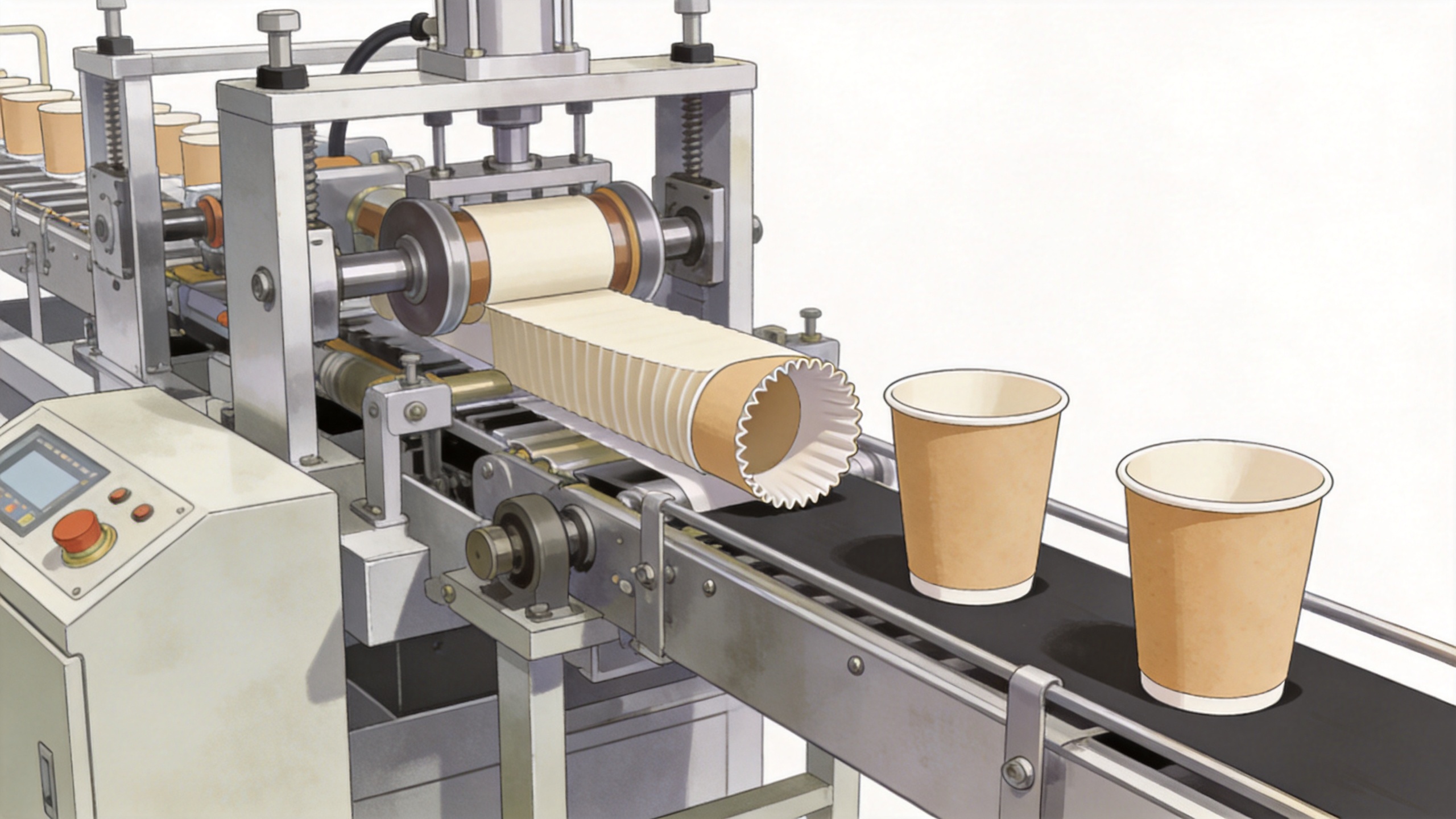
Paper cup making machinery turns a printed or cut blank into a finished cup through linked operations. Depending on the configuration, the workflow can include blank feeding, sidewall forming, bottom insertion, heat-and-pressure sealing, knurling, curling, discharge, and collection. Each station influences the next one. When a blank is not positioned consistently, for example, the correction may appear later as a seam or bottom issue rather than at the feeder.
This is why a well-matched paper cup production line equipment setup can support stable throughput: it coordinates repeatable movements instead of relying on manual handling between every operation. It does not remove the need for process control. Rather, it gives operators a clearer sequence to monitor and a more consistent baseline from which to investigate variation.
Why automation can improve usable output
Fully automatic paper cup making machinery can improve workflow continuity by integrating actions that would otherwise require separate handling steps. Automated feeding, indexed transfer, forming, and discharge can make cycle timing more repeatable. For a buyer, however, automation should be assessed in the context of the intended product mix. A machine suited to a narrow, stable cup range may have a different operating profile from one expected to accommodate more frequent changes in diameter, height, paper grade, or print design.
In practical terms, paper cup making machinery earns its efficiency through fewer avoidable interruptions and clearer control of repeat operations. That is more useful than treating any advertised cups-per-minute figure as a universal result. A supplier’s stated rate should be reviewed alongside the relevant cup sample, material specification, tooling, test conditions, and acceptance method.
Sealing quality protects the value of every cycle
A finished cup must do more than look formed. The side seam and bottom seal must be consistent enough for the intended use. Industry process descriptions identify forming, bottom sealing, and rim finishing as connected stages, while technical descriptions of forming machines explain that sealing mechanisms use heat and pressure. If heat, dwell, pressure, alignment, or material response drifts, a fast cycle can create more pieces that need inspection or rejection.
For that reason, paper cup making machinery should be evaluated for how it supports repeatable sealing conditions, not only for how fast it indexes. During technical discussions, ask which settings relate to the target material, how operators verify seam quality, and what signs indicate that adjustment is needed. Those questions turn efficiency into a measurable operating discipline rather than a vague promise.
Material and tooling match the machine to the job
Paperboard stiffness, coating or barrier construction, blank accuracy, and cup design all influence how paper cup making machinery behaves in production. A configuration that runs smoothly with one material may require different settings when the paper grade, thickness, or cup profile changes. The same applies to tooling: wear or contamination at critical contact points can affect forming consistency even when the rest of the line appears normal.
Before choosing a fully automatic paper cup making machinery configuration, document the actual cups to be made: top and bottom dimensions, height, paper specification, barrier type, artwork constraints, forecast mix, and anticipated change frequency. Then ask for a sample-based discussion of process settings and verification points. This moves the decision from a generic capability list to a fit-for-purpose review.
Availability depends on maintenance habits
Speed has little value when the line is waiting for an unexpected correction. Routine inspection of lubrication points, fasteners, moving assemblies, and wear items helps a team identify developing issues before they turn into longer interruptions. The exact maintenance interval should follow the machine documentation, production schedule, and operating environment; it should not be copied blindly from another plant.
Efficient paper cup production line equipment therefore needs a practical maintenance path: a shift-level check, a planned inspection routine, a record of recurring symptoms, and access to the appropriate parts information. Operators also need a clear escalation route when they see changes in feeding, sealing, noise, or finished-cup appearance. These routines support availability without assuming that one maintenance action produces the same result in every factory.
How to assess efficiency before purchase
Use a short validation checklist when comparing paper cup making machinery:
- Match the test cup and paper specification to the planned production range.
- Review the complete process, from blank feeding through discharge, rather than a single speed figure.
- Ask how seam and bottom quality are checked during a run.
- Clarify changeover tasks for the cup formats you expect to make.
- Discuss operator training, routine checks, wear parts, documentation, and technical support boundaries.
- Define the acceptance conditions and the information needed to verify them.
This approach helps procurement teams compare paper cup making machinery on the conditions that affect usable output. It also makes it easier to identify where a particular fully automatic paper cup making machinery option fits—and where further testing is needed.
Conclusion
Paper cup making machinery is efficient because it can organize repetitive forming work into a controlled sequence. Its value comes from coordinated handling, repeatable sealing, material-and-tooling fit, and maintenance practices that support steady operation. Efficiency is not a fixed label attached to every model. It is the result of matching the machine, cup design, material, operating team, and verification plan. Buyers who evaluate those conditions before committing are better positioned to choose equipment that supports a stable production workflow.
 ONLINE